


Driven by resilience and a passion for lifelong learning, Joe Nino Eliab Orapa has built a remarkable engineering career spanning major infrastructure projects across the Middle East. Through his studies at EIT, he continues to champion sustainable engineering and digital transformation within the global engineering industry.
In this feature, Joe shares his journey, the challenges he has overcome, and how his experience at EIT, through the Doctor of Engineering, continues to shape his vision for the future of engineering.
From Humble Beginnings to Mega Projects
Engineering journeys are shaped by early experiences and a drive to create meaningful impact, built through perseverance and continuous growth across different roles and environments. For Joe Orapa, his journey reflects this progression across two decades of work in major infrastructure projects across the Middle East. Joe shared: “My engineering journey began in the Philippines, where I initially worked as a Computer Technician before pursuing my Bachelor of Science in Civil Engineering at Mindanao State University. Coming from humble beginnings as the son of a farmer, I learned early in life the value of perseverance, discipline, resilience, and continuous learning. Over the past two decades, I have worked across major infrastructure and development projects in Saudi Arabia and the Middle East. These experiences exposed me to complex engineering challenges involving quality management, digital transformation, BIM, AI integration, sustainability, and large-scale project delivery.”
The Road to EIT
As his professional responsibilities expanded across complex infrastructure projects, Joe reached a point where further development became essential. “After many years in engineering and project management, I reached a point where I wanted my career to create broader and meaningful impact – not only through project delivery but also through research, innovation, mentorship, sustainability leadership, and digital transformation. The construction and infrastructure industry is undergoing major transformation driven by artificial intelligence, BIM, automation, sustainability, and resilient infrastructure systems. I recognized that to remain effective as an engineering leader, I needed to continue growing academically and technically. I realized the importance of staying ahead of industry transformation, and that led me to pursue advanced studies at the Engineering Institute of Technology (EIT). I was particularly drawn to EIT because of its strong industry-focused approach, practical learning environment, and flexible online delivery model.“
The Doctoral and Infrastructure Balance
Advanced engineering education is most impactful when it directly connects academic learning with real-world applications, especially professionals working in fast-evolving industries. For Joe Nino Eliab Orapa, this balance between studying for his Doctor of Engineering and work has been a defining part of his EIT experience. “As someone actively working on major infrastructure projects while pursuing doctoral studies online, I appreciate how EIT’s learning model accommodates working professionals without compromising academic quality. The flexibility of online learning combined with high-quality instruction has allowed me to balance my studies with leadership responsibilities in the construction industry.”
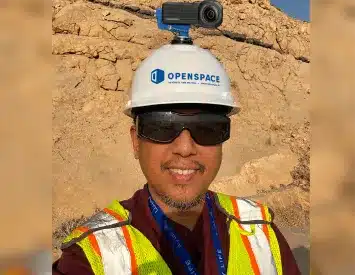
Joe also shared what he appreciates most about his learning experience at EIT: “One of the aspects I value most is the strong connection between academic learning and real-world engineering practice. Unlike traditional academic programs that focus heavily on theory alone, EIT emphasizes practical industry application. Many of the assignments, discussions, and research activities directly relate to real engineering problems encountered in the workplace.” When asked how this experience has influenced his professional work, Joe reflected on the broader impact of his studies: “One aspect I particularly value is EIT’s emphasis on ethical AI usage, paper integrity, originality, and responsible research practices. In today’s rapidly evolving digital environment, AI is becoming a powerful engineering tool, but EIT reinforced the importance of using technology ethically and responsibly. The most valuable aspect for me has been the opportunity to integrate sustainability, digital engineering, AI, OpenSpace technology, Python programming, and advanced research methodologies into my professional work.“
A Mission for Sustainable Infrastructure
Building on his academic journey, Joe reflects on how his studies at EIT have strengthened both his technical expertise and professional capabilities. Joe shared: “One of the biggest developments for me was learning how to translate complex engineering and research concepts into practical real-world solutions. My doctoral research deepened my understanding of sustainable concrete technology, recycled construction materials, machine learning applications, and performance evaluation methods for infrastructure materials. Professionally, I also improved my communication, technical writing, presentation, leadership, and strategic thinking skills. Through my studies at EIT, I strengthened my skills in advanced research methodologies, sustainability assessment, engineering data analysis, AI integration, Python programming, BIM applications, and statistical analysis.”
A Student Ambassador of Change
Beyond his academic journey, Joe also takes on the role of an EIT Student Ambassador, and he reflects his commitment to the wider engineering community. “Becoming an EIT Student Ambassador was a natural extension of my professional and personal values. Throughout my career, I have always believed in mentoring engineers, sharing knowledge, and uplifting the engineering profession. As an ambassador, I was able to encourage close friends and fellow professionals to explore EIT programs and pursue lifelong learning regardless of age or career stage. I wanted people to understand that learning never stops and that engineers can continue evolving while actively contributing to industry and society.”

Joe shared his aspirations for what comes next in his journey and leaves a message for future engineers grounded in experience and continuous learning. “I aspire to become a recognized leader in sustainable engineering, AI-driven construction innovation, digital transformation, and resilient infrastructure development. I also aspire to contribute to academia, industry transformation, and international engineering collaboration while mentoring future engineers and professionals. Beyond engineering, I enjoy mountaineering and being an Open Water Diver. These experiences taught me discipline, resilience, risk awareness, and respect for nature – qualities that also strongly apply to engineering leadership.”
“My advice to future EIT students is to embrace lifelong learning and never underestimate the value of persistence. There will be challenges, sacrifices, and sleepless nights, but growth happens through those experiences. Stay curious, remain ethical in your work and research, especially in the use of AI, and always focus on creating meaningful impact through engineering.”
Are you ready to embark on a similar journey?
Contact Us