


Driven by his desire to tackle South Africa’s energy challenges and contribute to sustainable innovation, Sikhumbuzo Ncube from the Western Cape is on a journey to complete his Master of Engineering (Electrical Systems) at the Engineering Institute of Technology (EIT). Discover how this ambitious professional is balancing work, study, and life while shaping his future in electrical engineering.
EIT Student Passionate South Africa’s Energy Challenges
Sikhumbuzo Ncube’s passion for electrical engineering began long before he enrolled in the Master of Engineering (Electrical Systems) program at EIT. After completing his undergraduate studies, he found himself immersed in a rapidly evolving engineering field.
“I wanted to deepen my understanding of electrical systems and formalize the practical experience I had already gained,” says Sikhumbuzo. His motivation wasn’t just about career advancement but also about making a tangible impact on his community and his country.
In his quest for knowledge, Sikhumbuzo sought out an institution that aligned with his professional goals. He found that many traditional programs focused too heavily on theoretical research rather than practical, real-world applications. After careful research, he chose EIT for its unique blend of hands-on, industry-aligned learning.
“EIT’s approach to integrating practical skills with theoretical knowledge was the perfect fit for my aspirations,” he explains.

He is particularly drawn to the program’s focus on emerging technologies and its relevance to the modern energy sector. He believes that by gaining advanced skills in electrical systems, he will be better equipped to tackle issues such as energy sustainability and grid stability, which are increasingly vital to South Africa’s future.
The course’s flexibility also played a significant role in Sikhumbuzo’s decision. As a working professional, he needed a program that could accommodate his busy schedule. The online learning format provided the perfect solution, allowing him to study without disrupting his career.
Looking ahead, Ncube envisions this degree as a stepping stone to greater involvement in designing smarter, more efficient electrical systems that can address the country’s energy challenges.
Embracing Online Learning with Confidence
Unlike many traditional students, his experience with online learning has been overwhelmingly positive.
“I’ve taken online courses before, but none quite like this,” he says. EIT’s innovative approach to online learning, combining live sessions, recorded lectures, and virtual labs, has made the experience both engaging and accessible.
The program’s blend of live interaction and on-demand resources means that Sikhumbuzo can learn at his own pace while still benefiting from the collaborative and dynamic learning environment. “I truly feel like I’m part of a community,” he explains, referring to the strong sense of camaraderie that exists between students, despite geographical and time-zone differences.
The learning support from the institution is another standout feature, with dedicated Learning Support Officers offering timely assistance when needed.
One aspect of the online format that he particularly appreciates is the clear, well-structured delivery of lessons. “The thoughtful planning of the curriculum ensures that you’re never overwhelmed with long, continuous blocks of learning,” he shares. This flexibility has been key to balancing his work, study, and personal commitments.
For Sikhumbuzo, the accessibility of course materials and the opportunity to revisit lectures and tutorials as needed has made the entire learning process more manageable. He credits the interactive elements, such as virtual labs and discussions, for keeping him engaged and motivated.
Overall, he believes that the online learning model at EIT has far exceeded his expectations, and he feels confident in the path he’s chosen.
Bridging Theory with Real-World Applications
One of the most impactful aspects of the Master of Engineering (Electrical Systems) program for Sikhumbuzo has been its focus on practical, real-life applications. He has found that the course content is constantly updated to reflect the latest technological advancements in the electrical engineering field.
“I appreciate how EIT incorporates current industry challenges into the curriculum,” he says. Topics such as renewable energy integration, power system stability, and energy efficiency are not just theoretical; they are part of ongoing conversations in the industry. His background in electrical engineering allows him to see how these lessons are directly relevant to the future of South Africa’s energy landscape.

A standout feature of the program is its emphasis on practical simulations and industry-standard software tools. This hands-on approach ensures that students can apply what they’ve learned to real-world scenarios. Sikhumbuzo has already started applying his knowledge from the power system stability unit at work, where he is actively involved in addressing challenges related to energy resilience and grid stability.
He believes that mastering these advanced tools will allow him to contribute meaningfully to energy reform in South Africa. “It’s about designing systems that can stand up to the challenges of modern energy demands,” he explains.
By focusing on both traditional engineering principles and cutting-edge technology, EIT has provided Sikhumbuzo with a well-rounded education that will serve him well throughout his career.
Mastering Time Management and Balance
Balancing work, study, and personal life is one of the most significant challenges faced by many postgraduate students, and Sikhumbuzo is no exception. With a demanding job in electrical engineering and a busy study schedule, Ncube has had to become adept at managing his time and energy.
“I’ve developed a personal study plan to stay disciplined and consistent,” he shares. He dedicates specific time blocks for study each day and reserves weekends for more in-depth coursework. But he also knows the importance of flexibility.
“Life happens, and sometimes things get in the way,” he says. In those instances, he leans on his support network and communicates openly with both his employer and his family.
Fortunately, Sikhumbuzo has found that EIT’s structure allows for a reasonable work-study-life balance. The program’s online format and flexible schedule give him the freedom to adapt when necessary. He emphasizes that staying organized and avoiding burnout by ensuring sufficient rest and exercise is essential for maintaining his energy levels.
He also acknowledges the role of his employer in supporting his academic journey. “Having a supportive work environment makes a big difference,” he explains. His company has been understanding about his study commitments, which has allowed him to focus on his studies without added stress.
Ultimately, Sikhumbuzo believes that effective time management and maintaining clear communication are the keys to juggling his various responsibilities successfully.
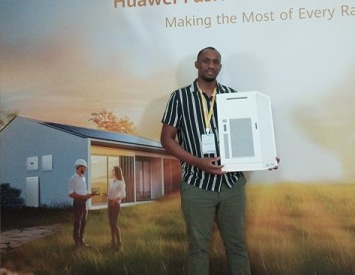
Preparing for a Future of Sustainable Energy
Looking to the future, Sikhumbuzo sees his Master of Engineering (Electrical Systems) as a crucial step toward contributing to South Africa’s energy transformation. The country’s energy challenges, particularly in terms of grid stability and the integration of renewable energy, are issues Ncube is eager to address.
“The world is at a critical point where energy resilience, sustainability, and innovation are more important than ever,” he says. His goal is to use the knowledge and skills he’s acquiring through the program to design and implement sustainable electrical systems that will contribute to a cleaner, more efficient energy landscape in South Africa and beyond.
He envisions himself being at the forefront of this transformation, leading projects that drive the integration of renewable energy sources into the national grid and developing smarter, more resilient power infrastructures. “I want to be part of the solution to global energy challenges,” he says, speaking to his broader vision of being involved in policy, innovation, and research.
By 2026, Sikhumbuzo hopes to have made a significant impact in the field, whether through leading cutting-edge projects or influencing energy policy. His focus will be on creating electrical systems that are not only innovative but also sustainable and scalable.
With his EIT education as the foundation, he is poised to contribute to the global energy revolution, shaping the future of electrical engineering in the process.
Are you ready to embark on a similar journey?
Contact Us