


With growing demand for specialized skills in electrical and instrumentation engineering within the oil and gas sector, engineering professionals are increasingly seeking industry-relevant learning pathways. For Abdelrahman Magdy Rashed, this need for practical, accessible training led him to an online learning experience that effectively supported his ongoing professional development.
This article features Abdlrahman Magdy Rashed’s efforts to build stronger technical competencies through targeted training, and how enrolling in EIT’s Professional Certificate in Essential Practices for Electrical Safety, Earthing, and Lightning Protection provided a practical way to support his professional growth and enhance his skills.
Grounded in Power Instrumentation
Oil and gas facilities rely heavily on monitoring and control systems to ensure safe and reliable operations. For Abdelrahman Rashed, this forms the core of his work as an engineering professional based in Cairo, Egypt. “I am an electrical and instrumentation engineer based in Cairo, Egypt. I often work on oil and gas facility projects, where a strong understanding of instrumentation and electrical safety is essential.” Alongside his industry experience, his academic background provided technical grounding for his career. “Before I took my course at EIT, I have a Bachelor Degree in Electrical and Power Engineering.”
Abdelrahman’s Search for Suitable Training
Building on this foundation, Abdelrahman reflects his efforts to further develop his skills through professional training. “I began searching for institutions and training providers in Egypt that could offer courses that would genuinely benefit my work. However, despite my efforts, I could not find any options that fully met my needs or provided schedules that were convenient for me. This led me to explore online study opportunities, and that is when I discovered EIT. When I visited the website, I found that the course covered all the topics I needed. The three-month duration was also ideal for me, and because it was delivered online, it fit well with my work commitments. The combination of relevant course content and a flexible study format gave me the confidence to enroll. I thought, ‘Why not give it a try?’ That decision marked the beginning of my journey with EIT.”
Online Learning That Matters
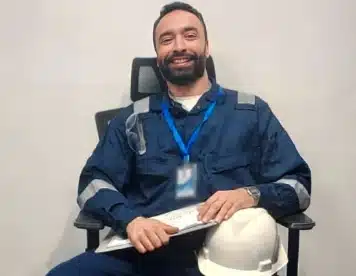
As Abdelrahman reflects his experience studying with EIT, he highlights how the practical and industry-focused nature of the courses has directly supported his engineering work and professional development. His learning journey includes completing the Professional Certificate of Competency in Instrumentation, Automation & Process Control in January 2026 and the Professional Certificate of Competency in Safety Instrumentation Systems for Process Industries in May 2026. He is currently further expanding his expertise through the Professional Certificate in Essential Practices for Electrical Safety, Earthing and Lightning Protection, which he is expected to complete in August 2026. “Studying online with EIT has been very convenient, and I found all the courses I was looking for to enhance my skills and better support my work. What stood out most for me is how practical the courses are, which is exactly what I needed to apply directly in my job.” He particularly appreciates the learning materials provided, which he found useful both during and after the course. “I think the IDC eBooks are beneficial. For each course, you receive the webinar slides, which serve as a valuable engineering reference both during your studies and after completing the course. You can always return to them in your professional work, and they include references to relevant standards, including electrical standards.”
Support Systems That Work
Discussing his experience with EIT, he points to the learning tools and course structure that supported his studies. “The remote labs are also very useful, as they provide access to different software applications that are required throughout the course. I also appreciate the flexibility of webinars. Typically, there are six live webinars spread across 12 weeks, with one 90-minute session every two weeks. During these sessions, you can ask the instructor about anything you do not understand, which I found extremely helpful.” He shares his experience of the support system provided throughout his studies and the key challenge he encountered. “The Learning Support Officers (LSOs) have been very supportive in every course I have taken so far, and the instructors have been equally helpful. To be honest, I have not faced many challenges apart from managing my time.
Other than that, EIT provides all the materials and resources needed to study effectively and gain a strong understanding of the subject matter. So, from my perspective, the only real challenge has been time management.”
Electrical Safety Put to Work
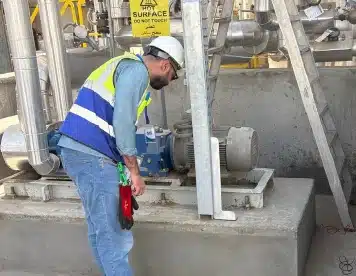
For Abdelrahman, the knowledge gained through his studies has been directly applied to his engineering responsibilities in the oil and gas field. “Time management, for instance, and also communicating with instructors and LSOs, as well as the technical skills for my career in instrumentation and electrical safety – these were the most beneficial. It really impacted my career because I work on topics like those covered in the course. I use them every day. I’m designing electrical systems and working in an engineering services office, so we handle projects like this regularly. The technical knowledge from each course really helped me throughout, and this has been the most valuable aspect for me.” He was also able to directly apply what he learned to a real engineering project in the oil and gas sectors. “We had this project with an oil and gas client. They had a storage tank for oil, and it required an Electrical Safety System and a Safety Instrumented System (SIS) design – essentially a new design for the safety instrumentation system.

Before I took the course, I didn’t have much knowledge about safety instrumented systems, but after I finished the SIS course, it really helped me design their new system. It covered things like SIL calculations, what SIL is, and safety PLCs. All of that was new knowledge for me, and I was able to directly apply it to my project.”
From Egypt to Global Electrical Leadership
As Abdelrahman concludes, he reflects on how internationally accredited certifications have supported his career progression in the oil and gas sector. “Electrical safety is very critical, especially in my field of oil and gas. So, I need to have internationally accredited certificates to help me progress in my career and move from one opportunity to better ones. It has really benefited my resume.” He also shares his future career aspirations and offers advice for professionals considering EIT studies. “My aspiration is to seek better opportunities because here in Egypt, it is not an oil and gas country. I am aiming to work in leading oil and gas countries, and I believe these certificates will help me achieve that opportunity. My advice for anyone studying with EIT is to focus on good time management and make full use of all the available resources. EIT is not a system where the instructor provides all the information – you need to commit to self-study.”
Are you ready to embark on a similar journey?
Contact Us