As the engineering industry evolves through digital transformation and infrastructure expansion, women are stepping into leadership roles across mechanical and civil disciplines. This article unpacks how lifelong learning, reskilling, and institutional support are helping female engineers break barriers, build expertise, and thrive in traditionally male-dominated fields.
Technical Skills Alone Are Not Enough
The fields of mechanical and civil engineering are undergoing rapid transformation.
Automation, sustainable design, and smart infrastructure have introduced new complexities that demand continuous learning, reskilling, and adaptation. For women in engineering, this evolving environment brings both challenge and opportunity.
Technical degrees remain foundational, but alone they no longer guarantee long-term career growth. Contemporary engineers must expand their competencies through certifications, postgraduate study, and exposure to cutting-edge technologies.
Professional credentials, ranging from project management to BIM or AI-assisted design, open pathways to leadership and specialization.
Across sectors such as transportation, renewable energy, and resilient infrastructure, employers now seek engineers who can navigate technical design, regulatory complexity, stakeholder engagement, and digital collaboration. Women who continually upskill position themselves to meet these expanded expectations effectively.
In short, learning does not end upon graduation; for women who aspire to lead in engineering, it must become a lifelong practice, one that empowers credibility, agility, and influence.
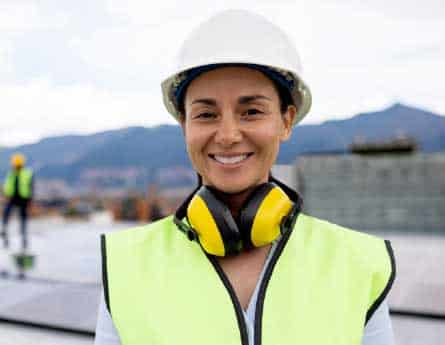
Women Driving Change Through Lifelong Learning
Concrete examples of women leveraging lifelong learning to advance impressive careers abound.
Dame Jo da Silva, Global Director of Sustainable Development at Arup, began her journey in disaster-relief engineering and evolved into an international leader in urban resilience and sustainability.
Through continued professional immersion and project leadership, she founded Arup International Development and steered rebuilding efforts that integrate human-centered infrastructure with environmental stewardship. In the sphere of mechanical engineering, Delphine Biscaye exemplifies drive and progression. A graduate in mechanical engineering, she joined Williams F1’s KERS department before transitioning to Venturi Formula E.
She rose through roles in research and development, project management in land-speed initiatives, and ultimately became team and logistics manager for Venturi’s Formula E squad.
These women illustrate how ongoing education, flexibility, and tenacity enable transitions into leadership, even within specialized and highly competitive technical domains. Lifelong learning becomes not merely a credential, but a platform for achievement and representation.
Civil and Mechanical Fields Need Diversity
Mechanical and civil disciplines have long skewed male, though momentum is shifting. Diverse teams bring richer problem-solving capability, particularly when tackling multifaceted issues such as infrastructure resilience and sustainable design.
Despite progress, women still constitute under 15 percent of global engineering professionals, with even fewer in senior technical roles. Advancing expertise through lifelong learning can help close this gap, empowering women to assert authority and drive innovation in settings where their voices have been historically underrepresented.
Organizations are recognizing this, increasingly linking diversity goals with leadership development. Women who pursue advanced qualifications, certifications, and specializations are being tapped for leadership, consultation, and advisory roles, transforming representation across mechanical and civil engineering landscapes.
By coupling strong technical grounding with lifelong learning, women can help reshape engineering cultures to be more inclusive, equitable, and strategically forward-thinking.
Institutions Supporting Women in STEM Careers
Engineering education institutions play a pivotal role in enabling women to thrive in technical fields. For example, the Engineering Institute of Technology (EIT) offers flexible pathways, both online and on-campus, for engineering education, including among others the Master of Engineering (Civil: Structural) and the 52873WA Advanced Diploma of Mechanical Engineering Technology.
These programs focus on practical, industry-aligned learning, covering remote labs, project-based assessments, and real-world problem solving. EIT also champions gender equity through its Women in Engineering Scholarship, which provides both financial support and mentorship opportunities for female-identifying students. This commitment is reinforced institutionally; over 45 percent of EIT’s permanent academic staff are women, including leadership positions such as Deputy Dean and course coordinators.
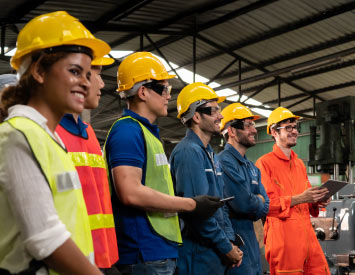
By fostering an inclusive environment, encouraging networking, and reducing barriers to education, EIT supports women not only in entering engineering fields, but in advancing to leadership roles.
Through these initiatives, EIT helps produce capable, confident female engineers equipped to lead in both civil and mechanical domains.
The Future Needs Women Engineers
As climate change, urbanization, and technological innovation reshape our world, the engineering sector faces mounting demand for smart, inclusive design. Mechanical and civil engineers will play a central role in developing resilient bridges, green buildings, efficient systems, and sustainable infrastructure.
Women must be at the forefront of these transformations. Whether through designing climate-adaptive systems, leading infrastructure modernization, or generating circular economy solutions, their perspectives are vital. But presence alone is not enough; leadership is essential.
Lifelong learning serves as the bridge from participation to leadership. It equips women to engage emerging fields like digital twin modeling, low-carbon construction, and autonomous systems. It empowers them to influence engineering decisions and outcomes, for infrastructure, communities, and environments.
Female engineers who continually invest in their expertise are redefining possibility, becoming mentors, innovators, and role models for the next generations. Empowering more women through ongoing education is not just equitable; it is essential for the ingenuity, resilience, and sustainability of engineering worldwide.
References
Empowering Female Engineers: Addressing Industry Challenges
The Power of Lifelong Learning for Mechanical Engineers
EIT Student Ambassador Hanane Oudli Electrifies Pathways for Global Women in Engineering
This article was published September 1st, 2025 and the content is current as at the date of publication.
Back to news