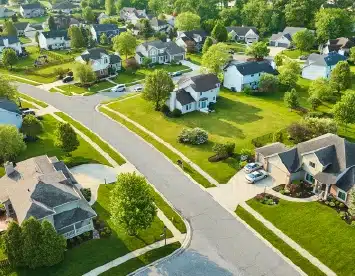
Whether passing by a newly developed residential community or exploring a growing suburb, it’s easy to notice the neatly paved streets, rows of homes, and inviting public spaces. These visible elements often shape a community’s first impression. But are these enough to determine whether a subdivision is truly successful?
This feature looks beyond the visible outcomes to highlight the engineering considerations that ultimately determine whether a subdivision is designed to serve its community for years to come. Drawing insights from EIT‘s All Things Engineering podcast episode, “Building from the Ground Up,” highlights the engineering skills required to transform raw land into resilient, functional communities that stand the test of time.
The Face of Urban Living
Subdivision developments are now a familiar part of modern cities, but communities were not always planned this way. Long before they became part of urban planning, towns and neighborhoods developed differently. People settled near rivers, fertile land, trade routes, and centers of employment. As cities expanded and populations increased, this pattern of growth became more difficult to sustain. In response, developers and planners adopted a more coordinated approach to creating residential spaces, giving rise to subdivision developments that could accommodate housing alongside essential infrastructure, public spaces, and everyday amenities.
As demand for housing increased, subdivisions became an increasingly common choice for both residents and developers seeking organized communities that could support modern lifestyles. This trend reflects a broader movement towards urban living. According to the United Nations, 55% of the world’s population lived in urban areas in 2018, and that figure is projected to reach 68% by 2050.
The increase represents an estimated 2.5 billion more people living in urban areas in the years to come, with almost 90% of this growth expected to occur in Asia and Africa.
Built to Last or Built to Impress?
As more people experience urban living, subdivisions are often judged by what is immediately visible. Well-connected roads, landscaped areas, recreational spaces, and convenient amenities shape how communities are perceived and influence the decisions of potential residents. However, the finished neighborhood represents only the outcome of a much more complex process. Behind the completed homes and streets are engineering decisions involving land use, infrastructure placement, stormwater management, and essential services that shape how the community performs over time. While attractive streetscapes and modern amenities may create a strong first impression, the true measure of a subdivision lies in the decisions that support its long-term function. Ultimately, these choices determine whether a community is truly built to last, not simply built to impress.
Subdividing the Complexity
Subdivision development is far more than preparing land for new homes. It requires engineering professionals to design and build an entire community where every system must work together from the very beginning. This complexity is driven by five key engineering challenges:
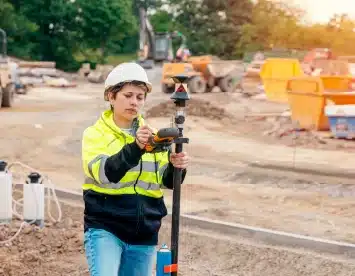
- Understanding the land – Every subdivision begins with understanding the land. Before residential lots are planned or roads are laid out, engineering professionals investigate the site’s topography, soil conditions, groundwater, drainage patterns, flood risks, and environmental features. These findings guide how the land can be safely divided, where infrastructure should be located, and what site preparation is needed before construction begins. This stage requires expertise in site investigation, geotechnical engineering, surveying, and hydrology. Engineering professionals must interpret complex site data, anticipate potential risks, and develop practical solutions that work with the land’s natural conditions while meeting engineering standards and regulatory requirements.
- Designing integrated infrastructure – Before a subdivision can support homes and everyday living, every essential infrastructure system must be carefully planned. Engineering professionals design road networks, stormwater drainage, water supply, sewerage, electricity, telecommunications, and street lighting to ensure every part of the community functions as intended. This stage requires expertise in civil infrastructure design, utility coordination, and systems integration to ensure each network works together and supports future demand.
- Planning for long-term performance – A subdivision is designed to serve a community for decades, not just during its initial years. Engineering professionals assess future population growth, traffic volumes, utility demand, and maintenance requirements to ensure infrastructure can continue to operate safely and efficiently over time.
This stage requires a combination of strategic, systems thinking and risk assessment where professionals must anticipate and evaluate competing priorities to develop practical, sustainable solutions.
- Coordinating multidisciplinary teams – Subdivision development brings together civil, geotechnical, environmental, and utility engineers, alongside surveyors, contractors, developers, and government authorities. Engineering professionals coordinate these disciplines to ensure designs are aligned, and construction activities are sequenced efficiently, wherein it requires strong project and technical coordination as well as interdisciplinary problem-solving skills. Maintaining this level of collaboration is essential to delivering a subdivision that is functional and built for long-term success.
So, the next time a subdivision comes into view, look beyond the homes and amenities, for behind every community are engineering decisions that shape its functionality, resilience, and ability to support people’s needs over time. Recognizing these factors helps future homeowners and communities make more informed decisions while highlighting the role of engineering in creating places designed to thrive.
References
The Subdivision Process
UN World population in Urban Areas
This article was published July 15th, 2026 and the content is current as at the date of publication.