Leadership transitions are significant moments for any institution. In academia, it is shaped through experience, vision, and service.
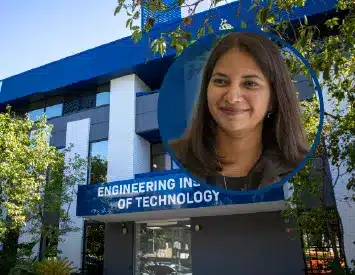
Having guided EIT as Deputy Dean for the past 7 years, Indumathi V now steps into the role of Dean, bringing purpose and a steadfast commitment to academic excellence. Her journey reflects not just a new title, but a continuation of leadership that inspires both staff and students alike.
This article takes a closer look at Indumathi’s thoughts and perspectives as she steps from Deputy Dean into being EIT’s newly appointed Dean. Through her insights, we explore the journey that shaped her leadership, the challenges and opportunities she sees ahead, her vision for EIT, and the advice she offers to the wider academic community.
The Journey to Deanship
Every leadership role has a story. For Indumathi, her path to becoming the new EIT Dean reflects years of experience and academic dedication.
Her time as Deputy Dean gave her insight into the faculty’s operations, curriculum, and student experience, and it prepared her to step into this next stage of leadership. When asked about how it feels to take on this new responsibility, Indumathi shared: “It feels both humbling and energizing. I’ve been part of EIT’s journey for some time now, so stepping into the role of Dean feels deeply personal. EIT’s purpose, delivering practical, future-focused engineering education globally, resonates strongly with me. Being entrusted to guide the institution at this stage is a privilege, and I’m conscious of the responsibility this role carries for our students, faculty, and staff. At the same time, I’m genuinely excited about what we can create together in the next chapter of EIT’s story.”
Her perspectives are grounded not only in years of academic leadership but also in extensive professional experience. Indumathi is a Chartered Professional Engineer with over 20 years of expertise in electrical and electronics engineering, as well as engineering education. She worked as a failure analysis engineer in Singapore’s semiconductor manufacturing industry early in her career, where she gained practical industry experience that continues to inform her approach to teaching and guiding future engineers.
Facing Challenges and Opportunities
Stepping into the Dean role comes with responsibilities that require balancing strategic planning with active engagement across the faculty.
Indumathi recognizes the areas that will require careful attention, as well as the opportunities to advance EIT’s mission in its next phase of growth. When asked about the aspects she anticipates as she navigates into her new role, she shared, “One key challenge is balancing growth with quality. As EIT expands across regions and delivery modes, maintaining consistent academic standards and student experience becomes more complex. The higher education landscape and regulatory environment are constantly evolving, so our teams need clarity, support, and empowerment. Technology, particularly AI, is transforming learning. It’s an exciting opportunity but requires careful integration to enhance education meaningfully rather than as a buzzword. Another challenge is ensuring graduates are prepared not just for jobs but to contribute meaningfully to society. Preparing engineers with both technical excellence and ethical, adaptable thinking remains central.”
Every challenge can also open doors for collaboration and growth. Building strong connections and open communication with both faculty and students is central to Indumathi’s leadership approach.
“I want to be an accessible, present Dean. For faculty, that means supporting innovation in teaching, research, and curriculum design, and helping ideas come to life. For students, it’s about creating meaningful opportunities to shape their learning, take on impactful projects, and connect with industry, regardless of location or time zone. Technology, including AI, can enhance learning through virtual labs and personalized support, but always in ways that keep students at the center.
Engagement starts with listening: open conversations, forums, and spaces where everyone feels heard. Vibrant institutions are built on trust, and trust grows when people feel valued, respected, and connected.”
Her approach to leadership is shaped not only by her roles at EIT but also by a rich and varied career in education. After moving to Perth, Western Australia, Indumathi built a successful career in both higher education and vocational training. Over the years, she taught in various engineering fields and earned recognition for her work, including being named North Metropolitan Trainer of the Year in 2017 and a finalist for the WA Trainer of the Year, which reflected her dedication to teaching and mentoring future engineers.
Vision and Priorities
Stepping into the Dean role offers the chance to guide the faculty’s direction while keeping students and staff at the center of decision-making.
For Indumathi, her new role goes beyond managing academic operations; it is about supporting a future where academic rigor aligns with practical, real-world engineering experience. She sees this as an opportunity to foster growth and ensure EIT continues to meet industry expectations while preparing graduates for the challenges ahead. When asked about her vision and priorities for the institution, she shared, “I envision EIT as a global leader in innovative, industry-connected engineering education. Graduates will stand out not just for technical skills, but for ethical practice, adaptability, and ability to tackle complex societal challenges. Programs will combine applied learning, interdisciplinary projects, and professional skills development. Technology, AI, and sustainability are tools to empower students to create meaningful, real-world impact.”
Building strong connections with industry is also one of the ways EIT ensures its programs remain relevant and impactful. In her view, these partnerships are essential to bridging theory and practice, benefiting both students and faculty.
“Industry engagement is central at EIT. Many students are already working in engineering, so partnerships through CACs, guest lectures, webinars, internships, and site visits bring theory to life. Industry informs curriculum design, enriches teaching, supports applied research, and enhances employability. It’s integral, not optional.”
Indumathi also emphasizes the importance of nurturing a sense of belonging among EIT’s diverse, global student community. Maintaining strong connections across regions and time zones is key to ensuring all students feel included and supported throughout their learning journey.
“We are expanding Engineer Connect events, creating opportunities for students to collaborate and share experiences globally. Student Councils and student ambassadors, along with structured input mechanisms, amplify student voices. Inclusive teaching practices, academic support, and professional development for staff ensure high-quality, consistent experiences across time zones. The goal is a connected, inclusive community where every student feels part of EIT.”
Indumathi’s vision for EIT is shaped not only by her experiences as an educator but also by a strong academic foundation. She holds a Bachelor of Electrical and Electronics Engineering from the University of Western Australia, a Graduate Diploma of Adult and Vocational Education from Charles Sturt University, and a Master of Business Administration from the University of Canberra.
Advice and Inspiration
Leadership for Indumathi is shaped by reflection as much as it is by experience. Over the years, she has navigated challenges and learned lessons that now guide her approach to mentoring and supporting others.
When asked about the leadership lessons that have stayed with her throughout her career, she reflected, “The most important lessons I’ve learned in leadership are to stay curious, embrace challenges, and lead with integrity. Both successes and setbacks teach you something, and reflecting on them helps you make better decisions in the future.”
Providing mentorship is also an important part of helping future leaders develop, whether they are students or faculty. Indumathi believes that sharing lessons learned can inspire growth and meaningful impact.
When asked what advice she would offer to faculty and students who aspire to leadership roles in the future, she simply said, “Be curious and embrace a mindset of continuous learning. Seek feedback actively, and don’t underestimate the power of listening. Leadership isn’t about titles; it’s about integrity, impact, accountability, and the difference you make. Don’t shy away from opportunities that feel uncomfortable or unfamiliar. I often take on tasks or projects that others might avoid, knowing that even if I make mistakes or fail, these experiences are some of the most powerful ways to learn and grow. Be adaptable and intentional, look for ways to solve meaningful, real-world problems, and collaborate across disciplines. Leadership is ultimately about responsibility, empathy, and the ability to inspire and empower others.”
Indumathi’s focus on collaboration and growth sets the stage for EIT’s next chapter, that is, to inspire faculty and students to reach their full potential.
This article was published February 20th, 2026 and the content is current as at the date of publication.