Modern manufacturing plants rely on continuous process control coordinated through PLC (Programmable Logic Controllers) systems to meet high production demands. As these streamline operations, a quiet issue emerges – are PLCs simply improving industrial efficiency, or are industries becoming reliant on systems that only a few people fully understand?
PLCs at the Core
Programmable Logic Controllers (PLCs) sit at the center of modern industrial automation, forming the control backbone of systems across multiple engineering fields. They coordinate robotic assembly in automotive manufacturing, regulate pressure and flow rates in chemical processes, and support load management and fault-response functions in smart grids and substations in coordination with SCADA systems, RTUs (Remote Terminal Units), gateways, and protection IEDs (Intelligent Electronic Devices). With the rise of Industry 4.0, PLC systems are being integrated with IoT-enabled sensors to send real-time operational data which is then processed through industrial platforms for performance optimization and predictive maintenance. With this, their operation is no longer limited to basic logic control – it extends into a more complex digital ecosystem that requires advanced technical expertise, and this is where the concern emerges.
Dependence in Disguise
As PLCs become interconnected with IoT-enabled devices, their operation increasingly depends on coordinated data exchange between sensors, controllers, networks, and industrial platforms. While many PLC-controlled systems can still maintain local control or fallback functions, their optimized performance often relies on continuous communication and synchronization across multiple systems. This creates a more complex layer of operational dependency, where processes must be monitored and coordinated to maintain efficiency. As this complexity deepens, the knowledge required to manage these systems becomes more specialized and dependent on expert support. Industries therefore become reliant not only on the technology itself, but also on highly skilled professionals who can interpret, troubleshoot, and manage interconnected systems under pressure.
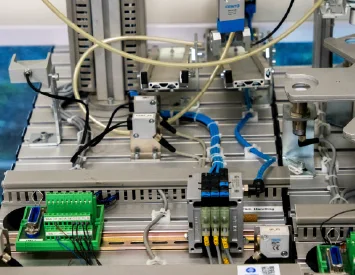
In highly integrated operations, unresolved faults may lead to production delays, operational backlogs, and supply-chain disruptions, especially when recovery requires specialized diagnostics and expert intervention. In this way, efficiency can also introduce vulnerability, as industrial systems become more complex and sensitive to disruption.
The Human Bottleneck
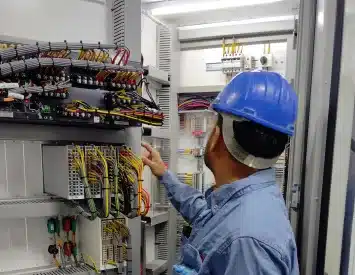
Even the most advanced PLC networks depend on human expertise to interpret system behavior and resolve faults. The problem is it becomes concentrated among a limited group of engineering professionals who fully understand the depth of PLC programming and industrial communication networks, thus creating a clear bottleneck in industrial performance wherein the efficiency of the system is constrained no longer by the machines themselves, but by the availability of specialized human knowledge required to diagnose them. This form of dependence can create broader effects even to normal day-to-day operations because even simple routine processes in advanced industrial systems nowadays work properly only when the right experts are available at the right time. If those people are not around, small issues escalate in the whole system. As a result, the bottleneck lies in the imbalance between technological advancement and the distribution of knowledge required to control it.
The Expanding Skill Gap
The gap between rapidly advancing industrial systems and the availability of skilled professionals is increasingly evident because reliability is no longer defined by machine performance alone. Instead, it depends on how quickly human experts can respond when something goes wrong. This has led industries to place greater value on focused, practice-based engineering education pathways that can emphasize real-world automation systems and industrial control.
Looking ahead, the future of industrial efficiency will not be shaped by automation alone, but also by how effectively workforce capability develops alongside it. Ultimately, progress will depend on whether the growing skills gap can be narrowed or whether it will define the limits of modern industrial automation.
References
Programmable Logic Controllers in the Context of Industry 4.0
This article was published May 21st, 2026 and the content is current as at the date of publication.
Back to news