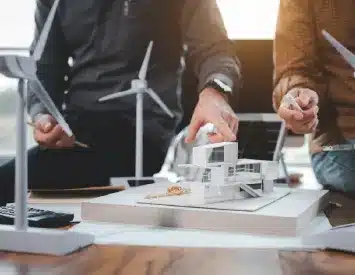
A city grid strains under rising demand as power fluctuates; infrastructures show signs of fatigue, and environmental thresholds are pushed closer to their limits. In this context, a single perspective cannot fully capture the scope of the system. To better understand its behavior, a civil engineer examines structural stress, an electrical engineer maps energy flow, and an environmental engineer evaluates the broader system impacts. It is through careful alignment of these interdisciplinary viewpoints that the problem becomes clearly defined, and a path toward a solution begins to take shape.
As next-generation engineering continues to evolve, the demand for hybrid skill sets becomes increasingly evident, reinforcing the need for interdisciplinary approaches. Engineers are now expected to navigate multiple domains that technical expertise in systems thinking and adaptability.
This article explores how this shift has taken shape, beginning with the previous separation of disciplines and moving toward their convergence in current practice. It looks at the advantages and challenges of working across fields, with the aim of providing a clearer understanding of how modern engineering problems are approached and how connecting ideas across disciplines can support a more complete and adaptable way of thinking about complex challenges.
When Disciplines Worked in Parallel
In earlier engineering practice, disciplines were typically applied within clearly defined boundaries, with each field focusing on its specific scope of work. Civil, mechanical, electrical, electronics, and environmental roles were generally handled separately, resulting in limited interaction during design and development processes. This separation was particularly evident in traditional project structures, such as linear project delivery and design–bid–build methods, where work is divided into sequential phases that follow a fixed order. Within this setup, each stage must be completed before the next begins, with each discipline operating within its area of specialization. While this approach allows each discipline to develop strong expertise within its own field, it often leads to fewer opportunities for early collaboration and integrated input.
The Shift Toward Integration
As engineering challenges grow increasingly complex, the interaction between disciplines has begun to shift toward closer collaboration and shared problem-solving. In the context of next-generation engineering trends, different fields now engage earlier in the process, allowing ideas to develop input from multiple perspectives. This convergence enables civil, mechanical, electrical, electronics, and environmental considerations to be addressed collectively, rather than in separate stages, leading to solutions that are more aligned with the overall system. As this shift continues, emerging engineering trends further the need for collaboration across disciplines. Advancements in technology are not confined to a single field; they require the combined expertise of multiple domains working together to achieve integrated and efficient solutions.
Below are some ways this is reflected in current practice:
- Building Information Modelling (BIM) – A shared digital platform where civil, structural, and MEFPS (mechanical, electrical, plumbing, and fire protection systems) plans are collaboratively developed on a unified model to detect conflicts and optimize building performance before construction begins.
- Renewable energy systems – Solar and wind projects require collaboration among electrical engineers for power generation and grid integration, mechanical engineers for turbine and system design, and environmental engineers for site impact and sustainability analysis.
- Automated and smart manufacturing – Robotics and production systems integrate mechanical design, electrical control systems, and software engineering to create efficient and adaptive manufacturing processes.
- Digital twins in system monitoring – Virtual replicas of physical systems allow mechanical, electrical, and data engineers to monitor performance, predict failures, and adjust operations in real time using shared data models.
Smarter, Stronger Solutions
This interdisciplinary approach leads to outcomes that align more closely with real-world demands and support the development of dynamic solutions across both academic and professional settings. For students, it builds a stronger foundation for future work, while for professionals, it enables more effective contributions to complex and evolving systems.
The following points highlight how this approach directly benefits you:
- More comprehensive problem-solving – You will learn to consider how different systems interact that can lead to more complete and well-rounded solutions.
- Stronger collaboration skills – Working across disciplines helps you develop hybrid skills that are essential in both academic and professional practice.
- Increased opportunities – If you are already in the field, developing interdisciplinary skills can expand your role that allows you to take on more complex projects and contribute to large-scale systems.
- Enhanced creativity – By engaging with multiple perspectives, you are motivated to think beyond traditional approaches, and it allows you to develop new and more effective solutions.
Navigating Complexity Together
The challenges ahead will only become more complex and interconnected. Addressing these demands requires more than individual expertise. This is where environments that encourage collaboration become especially valuable. Institutions like EIT provide a space where different disciplines come together, allowing you to engage with diverse perspectives while strengthening both your technical and collaborative skills. In doing so, you not only prepare to meet current challenges but also equip yourself to contribute to the kind of integrated solutions that define the future of the engineering field.
Reference
Interdisciplinary Engineering Solutions
This article was published April 1st, 2026 and the content is current as at the date of publication.