HomeNewsNext-Gen Engineering: What’s Ahead in 2026
Next-Gen Engineering: What’s Ahead in 2026
Imagine stepping outside on a regular morning. As streetlights automatically adjust to sunlight, delivery riders follow the fastest routes while a drone inspects a nearby building under construction. At work, your smartwatch reminds you to stay hydrated after last night’s workout, and the coffee machine brews your coffee just the way you like it. On your way home, smart shelves suggest your favorite products, and traffic lights adapt dynamically to reduce congestion.
Imagine stepping outside on a regular morning. As streetlights automatically adjust to sunlight, delivery riders follow the fastest routes while a drone inspects a nearby building under construction. At work, your smartwatch reminds you to stay hydrated after last night’s workout, and the coffee machine brews your coffee just the way you like it. On your way home, smart shelves suggest your favorite products, and traffic lights adapt dynamically to reduce congestion.
This is engineering in 2026, making everyday life safer, smarter, and more efficient. It is changing fast, and 2026 is set to bring some exciting breakthroughs, from smarter cities to next-gen materials. Here are four next-gen engineering trends you need to watch.
Hybrid Collaboration
What’s happening now:
Today’s teams are finding new ways to work together across continents and time zones where they stay connected as if they were sitting in the same room. For instance, a multidisciplinary engineering project may have a team composing of mechanical designers, graphic artists, software developers, civil engineers and environmental specialists from different parts of the world who collaborate through cloud-based platforms, shared dashboards and virtual meetings ensuring coordination and instant problem-solving.
By 2026:
Hybrid collaboration will be a defining feature of engineering and technology workspace. It will boost flexibility and teamwork throughout all professions from different places and time zones. However, this shift might also come with challenges such as miscommunication, reliance on technology, and potential feelings of isolation that can hinder productivity if not carefully managed. This trend will work best when communication is clear wherein tools are reliable, and everyone stays connected, whether working remotely or in person.
How EIT adapts:
At EIT, we embrace this blended learning by offering practical programs that mirror the way projects operate today, virtually dynamic and fast-paced. EIT’s Engineering Management programs are designed to prepare students for the realities of hybrid work setup, where leading a team often means guiding people across screens and borders. EIT’s Professional Certificate of Competency in Project Management for Engineers and Technicians, for example, gives learners hands-on strategies for delivering projects in today’s highly competitive engineering environment.
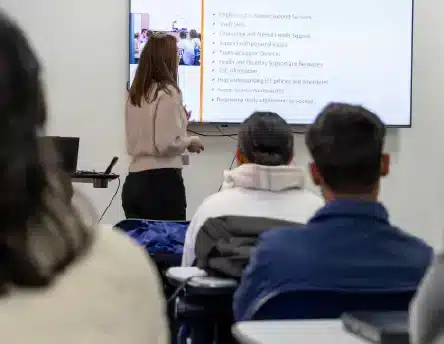
EIT’s on-site classroom course
Expanded AI
What’s happening now:
As technology evolves, teams across industries are increasingly relying on a hybrid form of Real-Time Digital Intelligence powered by Expanded AI. It is not only to collect and analyze data but can also predict outcomes and suggest smarter decisions. Picture this: sensors are embedded on city bridges that send live structural data into AI platforms, and these can detect early signs of wear and predict maintenance needs before they develop into major problems. Even in factories where machines monitor vibrations, AI operates automatically to prevent operational downtime. Even across the city where energy managers monitor the power grid from their laptops, rerouting electricity the moment a fault is detected-and these are all being watched through AI-powered dashboards. Software teams do the same with applications and networks to prevent debugging.
By 2026:
This approach will not only speed up work, but it will also help teams in faster decision-making and early problem detection. However, the challenges to this trend might include data overload and potential security risks if the information is not properly handled.
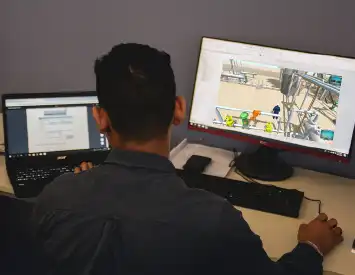
EIT’s Data Comms & Industrial IT Programs
How EIT adapts:
As AI becomes essential in modern engineering workflows, the need for professionals who understand both intelligent systems and real-world process control is growing fast. This is where EIT’s Industrial Automation, Instrumentation and Process Control courses come in, where students learn how to work with sensors, control systems, industrial networks and IoT devices, which are the very technologies that feed live data into AI systems. Our Data Comms & Industrial IT programs also give learners deeper expertise in selecting, installing, and troubleshooting control systems. The Professional Certificate of Competency in Machine Learning & Artificial Intelligence, for example, equips students to develop AI models and interpret data outputs to solve real-world engineering problems.
Increased Cybersecurity
What’s happening now:
Our lives become a little more digital every year, from banking to healthcare to transportation, and with all this information moving around, keeping data safe is as important as building technology itself. Imagine a structure where the lighting, elevators and air-conditioning are all controlled through a central online system; or in transportation where railways rely on automated signals; airports depend on digital communication between towers and planes, and one system glitch could trigger massive delays or worse, safety concerns. Cybersecurity is becoming an essential part of engineering and technology as modern systems are increasingly being automated, making them more vulnerable to potential attacks.
By 2026:
Cybersecurity will become even more critical as industries increase their reliance on AI and real-time monitoring. Engineers and technical professionals will need to anticipate potential threats before they happen and must level up digital security measures at every stage of design.
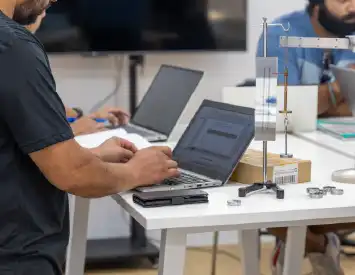
EIT’s Industrial Automation, Instrumentation and Process Control Programs
Continuous Sustainability
What’s happening now:
Sustainability has evolved significantly over time. It was often seen as an optional consideration in the past, but today it has become a core part of design and operations across all fields and industries. Civil teams nowadays are designing bridges and buildings not only for strength and functionality but also to minimize carbon footprints. Modern construction projects are using recycled concrete with low-carbon cement and reclaimed steel; Mechanical specialists optimize HVAC systems with smart thermostats; Electrical and Electronic professionals develop smarter power grids for energy-saving, and modular designs can be upgraded instead of replaced to reduce electronic waste. Even in healthcare, biomedical teams are creating eco-friendly medical devices and equipment for patients.
By 2026:
Sustainability is expected to be fully integrated into every stage of planning, construction, and operations. Multidisciplinary teams need to engage in a continuous journey to constantly seek new ways that can either innovate, improve, or upgrade the process so that every phase of the project does not disadvantage people or the planet.
How EIT adapts:
With regards to sustainability, EIT equips students to lead in this evolving landscape through our Renewable Energycourses where students explore sustainable power sources such as solar, wind, hydro, biomass, hydrogen, geothermal and tidal gaining hands-on experience in the application and operation of these technologies.
By combining practical skills with forward-thinking approaches, EIT ensure our graduates are ready to take on the challenges of hybrid collaboration, expanded AI, increased cybersecurity and continuous sustainability-leading projects that make a real difference today, into 2026 and beyond.
This article was published January 16th, 2026 and the content is current as at the date of publication.