Confused by concurrency? Struggling to picture feedback loops or circuit theory? Don’t worry, your brain might just be hungry. Sometimes, the easiest way to understand complex engineering concepts is through food. Yes, really. From spaghetti to tacos, these tasty metaphors make technical stuff finally make sense. Read on, and you’ll never look at your lunch the same way again.
Engineering Concepts Explained with Food
Delicious Work: 6 Engineering Concepts Explained with Food: Let’s face it, engineering isn’t always intuitive. Terms like “abstraction layer” or “load balancing” can feel like code words from a secret club. But what if we told you those ideas are already in your kitchen?
Food is full of parallels to systems, circuits, and software logic. And no, this isn’t just a gimmick, it actually helps the brain make sense of abstract ideas.
If you’ve ever struggled to explain recursion to your roommate, or wished control systems had subtitles, you’re not alone. That’s why food metaphors work so well. They’re familiar, relatable, and often just the right amount of ridiculous.
Here are six engineering concepts that become deliciously clear when explained with food; each one more snackable than the last:
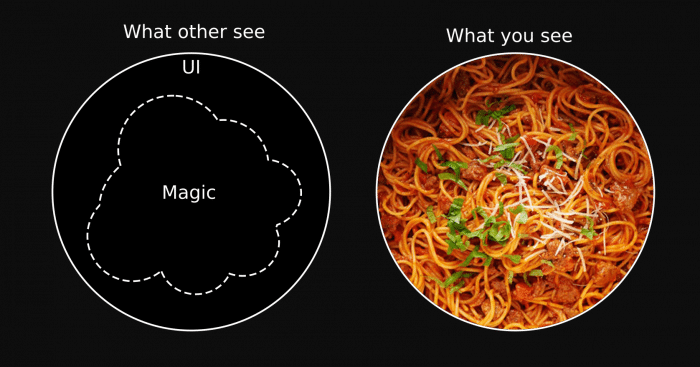
1. Spaghetti Code, Exactly What It Sounds Like
Imagine a plate of spaghetti. Now imagine trying to trace a single noodle from one end to the other without getting lost. That’s what bad code looks like, tangled, messy, and impossible to follow.
Spaghetti code has no structure; functions call each other unpredictably, logic loops on itself, and debugging becomes a full-time job. Want to clean it up? Think lasagna instead, layers, separation, and clear paths.
2. Load Balancing, Like a Buffet Line
In a buffet, you don’t want everyone crowding one dish. Instead, you want people to spread out evenly across all stations. That’s load balancing, distributing requests across multiple servers so no single one gets overwhelmed.
Whether it is users hitting a website, or guests piling up at the mashed potatoes, proper distribution keeps everything running smoothly and prevents crash-level chaos.
3. Caching, Like Leftovers in the Fridge
Why cook every meal from scratch when you’ve got perfectly good leftovers? Caching works the same way. Instead of fetching fresh data every time, your system saves frequently used info so it loads faster next time.
Just like pizza tastes even better the next day, cached content is quicker, more efficient, and way easier to serve on demand.
4. Feedback Loops, Like Tasting While You Cook
Ever taste your sauce and realize it needs more salt? That’s a feedback loop, measuring output and using it to adjust the input. Engineers use feedback loops in everything from thermostats to robot arms to audio filters.
Without feedback, you’re just guessing. With it, you’re constantly refining, improving, and eventually reaching the perfect flavor, or voltage level.
5. Abstraction Layers, Like a Taco
Think about a taco. The shell holds everything together, but you don’t need to understand the tortilla-making process to enjoy the meal. Abstraction layers work the same way. They hide complexity and give you a simple interface.
Whether it’s a REST API or an operating system, abstraction means you can focus on the part that matters to you, like eating the taco, without worrying about what’s underneath the guacamole.
6. Multithreading, Like a Busy Kitchen
A kitchen with one chef making one dish at a time is slow. But a kitchen with multiple cooks preparing different parts of the meal simultaneously?
That’s multithreading. Everyone works in parallel, sharing resources, avoiding collisions, and getting more done.
It requires coordination, like not putting the dessert in the oven while the roast is still in, but when it works, it’s deliciously efficient.
A Delicious Recipe for Success
Engineering concepts might sound intimidating, but when you break them down into bite-sized, flavorful metaphors, they go down a lot easier. So, the next time someone asks you what multithreading is, serve up a kitchen analogy with confidence.
After all, the best engineers aren’t just builders, they’re chefs of understanding; serving up clarity with a side of curiosity.
Stay curious, stay hungry, and never underestimate the power of a well-timed taco metaphor.
References
Inspiring Tomorrow’s Engineers: EIT’s Workshops at PCACS
Engineering a better way to eat
Engineering Innovations That Integrates Renewable Energy Into the Grid
This article was published August 29th, 2025 and the content is current as at the date of publication.
Back to news