


From the Namibian military to mining, discover how Ruben Nuseb’s BSB60420 Advanced Diploma of Leadership and Management from EIT helped transform his career and inspired his roles as an author, youth pastor, and motivational speaker.
EIT Graduate Inspiring Change in Mining and Beyond
Ruben Nuseb, a Namibian from Otjiwarongo region, has carved a remarkable path across diverse industries, from serving in the military to excelling in the mining sector.
With a Bachelor of Arts in Disaster and Safety Management from a previous institution and an BSB60420 Advanced Diploma of Leadership and Management from the Engineering Institute of Technology (EIT), Ruben has honed his skills to become a transformative leader.
Currently serving as a Controller Quality Drum Filling at Rossing Uranium Mine, Ruben’s professional expertise is matched by his passion for community service.
As a youth pastor, author, and motivational speaker, he embodies the principles of servant leadership, striving to empower young people and foster positive change.
In this Q&A, he shares insights into his career, the impact of his studies at EIT, and his vision for the future of leadership in Namibia.
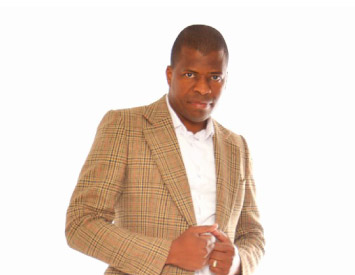
What inspired you to pursue this Advanced Diploma, and how has it complemented your Bachelor of Arts degree in Disaster and Safety Management?
I am in a supervisory position and was recently appointed in the youth ministry of Moria Assemblies International (Namibia) as a Youth Pastor. I wanted to be equipped both spiritually and physically in terms of leadership. The desire to inspire and be of service to people has inspired me to get an Advanced Diploma.
The leadership skills and techniques I’ve acquired gave me a comprehensive understanding of problem-solving, critical thinking, leadership, leading innovation, and how to communicate with influence.
How has your experience in the military and mining industry shaped your approach to leadership, and how did the course at EIT help refine those skills?
My experience in the military has instilled discipline and structure in my life. It has taught me the value of order and teamwork because there was a rule of, “injury to one, injury to all.” Everything was done and performed as a team, and military drills were done in unity. My decision-making also improved due to intense training and making quick decisions in high-stress situations.
In terms of the mining industry, it is a blessing indeed. I have learned about the importance of safety and risk management because safety and risk management are a priority at the mines—the rule is, “Zero Harm.” Now I know about operational effectiveness and production. In the mining industry, it is all about meeting deadlines and preventing breakdowns. Finally, my skills from EIT have refined my approach to problem-solving, risk assessment, and effective communication.
As someone with a diverse career spanning the military, mining, and motivational speaking, how do you balance these roles while continuing to grow as a leader?
To be able to balance these roles is purely by the grace of God. If the Lord is not your strength, it is hard to accomplish many things and balance your life. He gives me strength and the ability to grow as a leader and lead. To grow, I read content that can enhance my leadership skills and practice for effectiveness. I now reflect and adapt with the help of the Lord. In some cases, I delegate and take care of my wellbeing to gain more strength and ability to do more.
What specific skills or knowledge from this program have you applied in your current role at Rossing Uranium Mine?
I have applied effective communication, leadership, and problem-solving skills thus far.
How do you think your leadership style has evolved since completing the course, and what impact has it had on your team or organization?
Well, I have now shifted my focus from my team to the standards. The rule I now apply is, “Soft on people and hard on standards.” Oftentimes, when there is a problem, it will be a blame game, but now I communicate my expectations clearly, and the instructions are clear. I am now transitioning to a transformational and visionary leader, to make the vision clear to everyone I meet on this path.
Not only at the organization but also in the civil setting. Now I prefer to be liberal and authoritative and will decide according to the conditions in the workplace, and these depend on the team of people I have on the ground. I now believe in letting people contribute to the issues on the ground because this will give everybody a sense of responsibility on the team.
As an author, youth pastor, and motivational speaker, how do you incorporate leadership principles into your work with young people and your community?
Well, for me, it’s important that I demonstrate integrity and authenticity in my actions and words because if somebody must follow me, I must lead by example. I believe in serving and encouraging young people to adopt a service-oriented mindset.
As an author, I believe that whatever we bring forth must inspire and motivate people to pursue their goals and have hope in the midst of storms. And most importantly, it is important that we learn continuously to stay effective and efficient in our community. For me, growth and slow progress are more important than no progress.
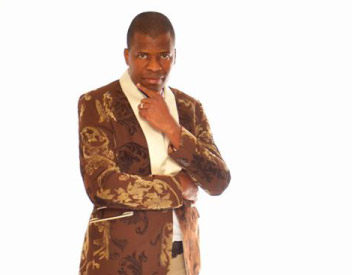
What challenges did you face while studying for the Advanced Diploma, and how did you overcome them while managing your professional and personal commitments?
There were competing interests, as every area of my life required time. EIT’s recorded webinars and webinar summary submissions were very helpful to me. Studying at EIT, you had enough time to keep up with the modules. This made the challenges less challenging, but by the grace of God, all things were possible.
What advice would you give to someone in Namibia or elsewhere who is considering pursuing a similar course in leadership and management?
I would say, don’t hold back and go for it. This is your chance to be equipped with well-structured and informative content. It’s never too late to sharpen your skills. It is better to put your money into something that has value and is beneficial to your growth. You won’t regret equipping yourself and pursuing an Advanced Diploma.
How do you see the role of leadership evolving in industries like mining, especially in Namibia, and what role do you hope to play in that evolution?
First, I would like to say the role of leadership is needed to benefit the economy. Jobs need to be created, and infrastructures developed. In industries like mining, leaders need to adopt sustainable practices. Which is, “meeting the needs of today’s generation without compromising and impacting the needs of future generations.”
When we produce, we must produce with the future in mind. I would like to contribute to building strong relationships with local communities and ensure they are developed through mining activities. This will build trust and collaboration with local communities. Like the mine I work for has the slogan, “Rossing Uranium, working for Namibia,” and they truly live up to their words.
Looking ahead, what are your aspirations as a leader, and how do you plan to use your education and experience to achieve them?
Well, looking ahead, I aspire to be a visionary leader with a clear vision for the future. I want to be an effective communicator through public speaking and to empower team members. For example, before the beginning of every shift, I give a short motivational word for the day. Thus, I believe that I would draw from my past experiences to build resilience and perseverance to lead effectively during hard times.
Are you ready to embark on a similar journey?
Contact Us