Get expert insights from two EIT lecturers on how AI is revolutionizing construction practices and shaping the future of greener, more efficient urban environments and what it all means for civil and electrical engineers.
Artificial intelligence (AI) is reshaping how civil and electrical engineers approach building design, construction, and ongoing maintenance.
As urban populations grow and environmental concerns intensify, the need for smarter, more sustainable buildings have never been greater.
AI offers innovative tools to design energy-efficient structures, reduce waste, and predict maintenance needs—helping cities adapt to climate challenges while reducing their environmental impact.
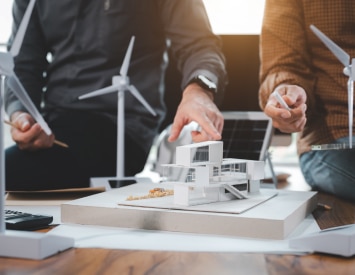
AI in Civil Engineering: Optimizing Building Design and Sustainability
Civil engineers are increasingly using AI to reduce a building’s environmental footprint during its construction and operation. Building Information Modeling (BIM), one of the most important tools in the civil engineering sector, is enhanced by AI technologies.
BIM enables engineers to create digital models of buildings before they are built, which helps identify potential issues and optimize designs. AI allows engineers to run simulations to test different materials and construction methods, ensuring that the final design is energy-efficient and resource-conscious.
For example, AI can identify the most sustainable materials and suggest ways to minimize waste during construction. AI-powered systems can monitor the entire building process to make sure that resources like concrete, steel, and glass are used as efficiently as possible.
This helps reduce the environmental impact of a building’s construction, as less material is wasted and energy consumption is minimized. Additionally, AI’s predictive capabilities allow engineers to assess the future performance of a building’s structure, reducing the likelihood of costly repairs or replacements.
A practical example of AI’s role in reducing environmental impact can be seen in China’s use of AI to incorporate recycled materials into the construction process. AI systems analyze large datasets to select materials that have the lowest environmental impact, helping engineers choose the most sustainable options for new buildings.
However, it’s important to note that AI is not foolproof and cannot always be relied upon to meet every safety standard or building code worldwide. While AI can significantly enhance the design and optimization process, it still carries a degree of failure, especially when applied across different regions with varying regulations.
Therefore, all AI-generated designs and models should be thoroughly reviewed and verified by local experts to ensure they comply with local safety standards and building codes.
AI in Electrical Engineering: Improving Energy Efficiency and Resource Management
AI’s impact on electrical engineering is equally transformative, particularly in designing smart buildings that manage energy use more efficiently. AI is integrated into building systems to control heating, cooling, lighting, and other electrical systems.
For example, in buildings like The Edge in Amsterdam and The Bullitt Center in Seattle, AI dynamically controls energy use based on real-time occupancy, weather conditions, and energy demand. This ensures that energy is used only when needed, making the building more efficient and reducing overall energy consumption.
Moreover, AI can help optimize energy use in existing buildings. AI-powered systems can learn from past data and predict future energy demand. This allows for more effective energy management, with AI adjusting settings to prevent overconsumption and energy waste.
For instance, smart thermostats and lighting systems can be programmed to adjust automatically based on factors such as room occupancy, time of day, and weather conditions, further reducing the energy load.
These AI-driven innovations also play a role in creating buildings that generate more energy than they consume. The Bullitt Center, for example, uses AI to monitor and manage energy consumption, ensuring that the building remains energy-positive. This is part of a larger trend of buildings striving to meet energy goals such as net-zero energy use, where the building produces as much energy as it consumes.