AI and automation are transforming engineering, but not replacing it. As machines handle routine tasks, human engineers must evolve. By embracing lifelong learning, digital tools, and interdisciplinary collaboration, today’s professionals can remain not just relevant, but indispensable in the automated future.
Lifelong Learning Is the New Baseline
Automation is not a threat; it’s a shift. The future of engineering belongs to those who adapt quickly, think critically, and continuously evolve their skillsets.
Gone are the days when a degree guaranteed a 30-year career. In a rapidly changing technical landscape, engineers must now commit to lifelong learning. This includes staying current with industry-specific software, understanding emerging technologies like AI and machine learning, and mastering systems-level thinking.
Engineers are now enrolling in micro-credentialing programs, earning certifications in data analytics, cloud infrastructure, or digital twins. Platforms like Coursera, edX, and MITx offer modular courses tailored for working professionals. Many employers are also supporting these efforts through tuition assistance and internal training portals.
Upskilling is no longer optional; it’s a survival strategy, and those who adopt a learning mindset are better positioned to lead, not follow, in the digital revolution.
Cross-Disciplinary Skills Are Game-Changers
Technical depth will always matter, but so will breadth. Tomorrow’s most valuable engineers won’t just be good coders or designers; they’ll be strategic thinkers, communicators, and collaborators across disciplines.
As artificial intelligence (AI) takes over repetitive design and analysis tasks, soft skills rise in value. Systems engineering, for example, now demands understanding not just technical interactions but also how those systems affect business models, user behavior, and regulatory landscapes.
Mechanical engineers fluent in data science can design smarter sensors. Civil engineers with knowledge of behavioral psychology can design more intuitive public infrastructure. And electrical engineers with cybersecurity training are vital as IoT devices proliferate across critical networks.
Interdisciplinary fluency also improves team collaboration, enabling engineers to work seamlessly with designers, developers, and business analysts. The result: more holistic solutions that meet technical, economic, and human needs alike.
Digital Tools Enhance Human Ingenuity
Far from replacing engineers, digital tools are enhancing their capabilities, expanding what’s possible in design, simulation, and real-time decision-making.
From AI-powered generative design software to immersive AR/VR simulations, modern engineering tools allow for faster prototyping, smarter testing, and fewer errors. CAD platforms now offer real-time physics engines, and digital twins replicate entire systems in software, enabling continuous performance monitoring and improvement.
Engineers are also using tools like MATLAB with AI integration, or Python libraries for machine learning, to analyze data streams in real time. Civil and structural engineers increasingly use LiDAR scanning and drones for site inspections and 3D mapping.
By automating the repetitive and augmenting the creative, these tools don’t diminish human engineers; they amplify them. Those who embrace digital augmentation stand to outperform those who resist it.
Agile Thinking Beats Static Expertise
The traditional notion of deep specialization is giving way to something more fluid: adaptability. In a world where tech stacks, tools, and priorities change constantly, agility beats static expertise.
Agile engineers think like entrepreneurs. They test ideas rapidly, adapt to feedback, and pivot when needed. This mindset is especially critical in startups, R&D environments, and innovation labs where speed and flexibility are essential.
More engineering firms are adopting agile methodologies, think sprints, iterative testing, and cross-functional teams, borrowing from the world of software development. Engineers who understand these processes can deliver value faster and more efficiently.
In essence, adaptability is not just about learning new tools; it’s about rewiring how engineers approach problems, collaborate with others, and measure success.
Real Engineers Navigating Real Transitions
Around the world, engineers are already responding to automation with resilience and creativity. Their strategies provide a roadmap for others preparing to make the shift.
Here are a few real-word examples of where and how they are doing this:
Siemens (Germany): The company launched an internal “AI Upskill” initiative, enabling thousands of engineers to train in machine learning, automation protocols, and edge computing. The result: more employees now contribute to product innovation, not just maintenance.
WSP Global (Canada): Civil engineers at WSP are using generative design algorithms to produce hundreds of infrastructure layouts in hours. Engineers then refine these with local knowledge, blending automation with human insight.
L&T Technology Services (India): Engineers trained in both mechanical design and software programming are leading the charge in embedded systems for electric vehicles. Their dual skills allow them to operate at the intersection of hardware and AI.
GE Renewable Energy (USA): By integrating drones and AI-based image recognition into turbine inspections, engineers at GE cut manual inspection time by over 70%. Engineers now spend more time interpreting insights and making strategic decisions.
These stories highlight how engineers who adapt not only survive, but thrive.
Mentorship and Networks Matter More Now
As technology reshapes roles, the value of human networks grows. Engineers with mentors, strong peer communities, and support systems are navigating automation transitions more successfully.
Mentorship, whether formal or informal, helps junior engineers understand how to align their skills with future opportunities. Reverse mentorship, where younger engineers teach older engineers new tech, is also gaining popularity, creating a two-way knowledge flow.
Professional networks are becoming lifelines for insights into new trends, job opportunities, and technical challenges. Online communities like Stack Overflow, GitHub, or LinkedIn groups foster collaboration, while professional societies such as IEEE and ASME now offer AI and automation-specific events.
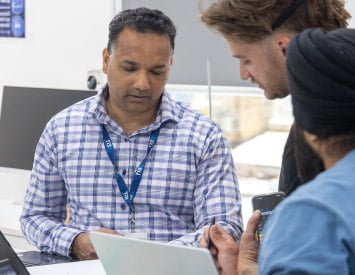
Some companies are even forming internal “future of work” task forces where engineers, HR leaders, and technologists co-develop strategies to manage transitions. Engineers who actively participate in these ecosystems are more informed, more agile, and more future-ready.
Engineering a Role in the Future
The path forward is not one of resistance, but redefinition. Engineers must envision themselves not just as practitioners of equations and schematics, but as architects of the future workplace itself.
Tomorrow’s engineering leaders will shape how automation is applied, not just react to it. They’ll create the ethical frameworks for AI deployment, design inclusive technologies, and build resilient systems for a rapidly changing world.
New career paths will emerge; think human-centered automation designers, AI-ethics engineers, or sustainability technologists; roles that don’t exist today but will be critical tomorrow.
The fusion of engineering creativity and digital intelligence opens up a future limited only by our imagination. Those who embrace this new frontier will do more than survive; they’ll lead the transformation.
References
How to Future-Proof Your Career in the Age of Automation
Future-Proofing Your Mechanical Engineering Career in the Age of Industry 4.0
This article was published August 19th, 2025 and the content is current as at the date of publication.
Back to news