As Europe races toward net zero, electrical engineers are taking the lead. Armed with new skills in smart grid design, power electronics, and battery innovation, they’re helping rewire the continent for cleaner energy, greater resilience, and long-term energy independence.
Legacy Grids Can’t Support Future Energy
Europe’s electricity infrastructure was built for a different era: centralized fossil fuel generation, one-way distribution, and predictable demand. Today’s energy needs are radically different. The European Union’s Green Deal has accelerated the shift toward decentralized renewables, such as wind and solar, and with it, the need for smarter, more flexible electrical networks.
Traditional grids were never designed to handle two-way energy flows, variable power inputs, or millions of connected microgenerators. The rise of electric vehicles (EVs), rooftop solar, and home energy storage has transformed energy consumers into “prosumers” who also produce electricity. This requires an entirely new approach to grid design and control.
Electrical engineers across Europe are responding with a wave of upskilling. Training in grid modelling, distributed energy resources (DERs), and frequency stabilization is now a core requirement for both new and experienced professionals. Power companies, universities, and EU-funded programs are offering retraining to bring legacy grid operators into the digital age.
In Germany, the Energiewende policy has triggered a massive overhaul of grid infrastructure. Engineers are learning how to safely integrate fluctuating wind and solar inputs without destabilizing the system. Smart substations, voltage control automation, and remote diagnostics are now standard components of modernization efforts.
Without continuous learning, legacy systems risk becoming bottlenecks in Europe’s transition to renewables. With it, engineers are not only keeping the lights on but making those lights 100% green.
Power Electronics Drive Cleaner Energy Systems
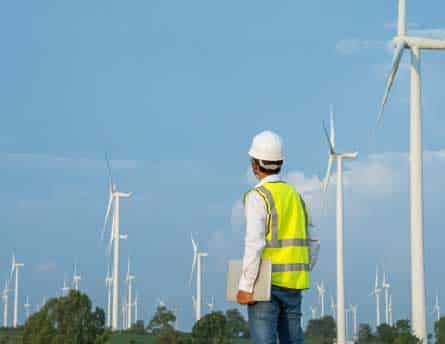
At the heart of every modern energy device (from solar inverters to EV chargers) is power electronics. This field, which deals with the control and conversion of electrical power, is crucial for managing renewable sources.
Unlike fossil fuels, which deliver constant output, renewables need advanced electronic controls to smooth and optimize their variability.
Upskilling in power electronics is now essential for electrical engineers across the EU. Inverters, converters, and dynamic voltage restorers must be tailored to specific use cases, often in real-time. Engineers are being trained in both hardware design and software integration, as the line between traditional electronics and embedded systems blurs.
This is particularly important for integrating offshore wind farms, where power must be converted from high-voltage DC to AC at scale. In the Netherlands, engineers are building HVDC (high-voltage direct current) converter stations to transmit renewable energy from the North Sea to inland grids efficiently.
The field of power electronics is advancing rapidly, and with it, so are the skills required. Without targeted learning, engineers may risk being left behind. With it, they become the architects of a smarter, cleaner grid.
Battery Storage Demands New Technical Expertise
As Europe transitions to renewables, energy storage has become the key to stability. The wind doesn’t always blow, and the sun doesn’t always shine. Battery systems fill that gap; storing excess energy when it’s available and releasing it when needed. But these systems are complex, and managing them requires specialized engineering knowledge.
Battery storage is no longer just about lithium-ion chemistry. Engineers now work with solid-state batteries, flow batteries, and hybrid systems that combine fast discharge and long-duration storage. Each has its own challenges: thermal runaway, degradation, energy density, and cost management among them.
The EU’s Battery Passport initiative, which aims to standardize and track battery systems, is already changing how engineers design and deploy energy storage. Professionals are training in lifecycle assessment, materials recycling, and performance diagnostics. This knowledge is crucial for aligning engineering decisions with environmental goals.
One standout project is the Stockholm Energy Hub, a smart grid-connected battery bank designed to stabilize Sweden’s capital city during peak load. Engineers involved in the project received upskilling in dynamic energy balancing and fault tolerance systems to ensure reliability.
Portugal, too, is pioneering grid-scale battery storage through the Alqueva floating solar plant. Engineers here are working with AI-optimized battery management systems that predict demand and adjust charge cycles automatically. The future of batteries lies not just in chemistry, but in code—and engineers must master both.
As storage becomes more embedded in the grid, the need for up-to-date, specialized knowledge will only grow.
Smart Grids Require Smarter Engineers
Smart grids are more than just an upgrade, they represent a fundamental shift in how electricity is generated, distributed, and consumed. These systems rely on sensors, data analytics, and automated control to match supply and demand in real time. For engineers, this requires fluency not only in electrical systems but also in software, cybersecurity, and data architecture.
Europe’s push toward smart grids are well underway. The EU’s Clean Energy for All Europeans package mandates member states to develop digital, interoperable energy systems. This creates enormous demand for engineers trained in SCADA (Supervisory Control and Data Acquisition), IoT integration, and grid-edge computing.
In Spain, the Smart Rural Grid project is transforming how power is managed in remote communities. Engineers are deploying edge-based automation to detect outages and reroute energy instantly. This kind of decentralized control requires deep technical understanding and agile learning; skills that universities and energy companies are now embedding into training.
In Denmark, engineers at Ørsted are designing “self-healing” networks that automatically detect and isolate faults. These networks dramatically reduce downtime and are powered by machine learning algorithms that require close collaboration between electrical and software engineers.
Italy’s grid operator, Terna, has partnered with universities to offer professional courses in smart grid architecture. Topics include data privacy, digital twins for energy modelling, and predictive analytics. Engineers are learning to think like systems designers, not just hardware specialists.
Smart grids demand more than new hardware; they demand a new mindset. Lifelong upskilling ensures engineers can keep pace with the technology reshaping their field.
Real Innovation Requires a Culture of Learning
At the core of Europe’s green energy transition is a human challenge: how to keep the engineering workforce as agile as the systems they build. The rapid pace of innovation demands a culture where continuous learning is normalized, incentivized, and shared across teams. Companies across the EU are investing in lifelong education. Siemens, for example, offers internal boot camps and micro credential programs for its engineers focused on energy systems transformation. These aren’t just add-ons, they are essential tools for keeping competitive in a fast-evolving sector.
The European Institute of Innovation and Technology (EIT InnoEnergy) has also launched the “Skills for the Energy Transition” initiative. This pan-European program connects engineers to courses in grid optimization, renewable system integration, and regulatory strategy. Participants leave with up-to-date skills tailored to regional needs.
Culturally, this shift is also redefining the engineer’s role. It’s no longer enough to be technically competent. Engineers must also be communicators, collaborators, and quick learners. The emphasis is on adaptability: those who keep learning are those who lead.
Workforce diversity is also benefiting. Flexible upskilling paths (like online certifications and modular training) are lowering entry barriers for women, mid-career switchers, and professionals from outside traditional STEM pipelines.
As the industry retools its infrastructure, it’s also retooling its people. The smarter the grid becomes, the smarter its engineers must be.
What Comes Next: Engineers as Energy Designers
The next chapter in Europe’s energy story won’t be written by policies alone; it will be shaped by the engineers who bring those policies to life. Tomorrow’s electrical engineers won’t just maintain systems: they will design energy flows, create digital ecosystems, and shape how society uses and shares power.
In the near future, we’ll see grid simulations in immersive 3D environments where engineers can model power surges, cyberattacks, and outage responses in real time. Blockchain will be used to track energy provenance, and engineers will be tasked with ensuring transparency and security at the device level.
Cross-disciplinary fluency will be essential. Electrical engineers will work alongside climate scientists, data analysts, and architects to co-design neighborhoods where buildings act as power plants and cars serve as mobile batteries.
AI will also play a bigger role. Engineers will need to understand how machine learning can optimize load balancing, predict equipment failures, and fine-tune distributed generation.
The biggest shift, however, may be philosophical. No longer limited to cables and kilowatts, engineers will act as stewards of energy equity, helping ensure that the benefits of a smarter, cleaner grid reach all citizens; not just the wealthiest or most connected.
Europe’s electrical engineers are not just adapting to the energy transition; they are shaping it. And they are doing so by embracing the one renewable resource that powers every innovation: knowledge.
References
Power Electronics: Europe’s Path to Energy Independence
This article was published September 1st, 2025 and the content is current as at the date of publication.
Back to news