From sensor-linked infrastructure to climate-adaptive design, civil engineers are shaping tomorrow’s cities with innovation, data, and resilience at the core. This article looks at the vital role these engineers play, and how they’re building the cities of the future.
Designing Infrastructure That Thinks for Itself
Civil engineers are at the heart of smart city planning, where traditional infrastructure meets digital intelligence. Roads, bridges, and buildings are no longer just static assets; they’re becoming part of a responsive ecosystem that collects data, adapts to use, and enhances safety and efficiency.
Engineering professionals are incorporating embedded sensors into concrete, roadways, and utility systems to monitor stress, usage, and wear in real time. These systems allow for predictive maintenance, reducing costs and downtime while extending the life of urban infrastructure.
A prime example is the Digital Twin Victoria Initiative, which integrates 3D models and live infrastructure data across Melbourne. Civil engineers use this platform to simulate how proposed developments interact with drainage, transport, and population growth. The result: better, faster urban decisions that minimize risks and maximize livability.
Meanwhile, Singapore’s “Smart Nation” plan has seen civil engineering professionals roll out intelligent traffic systems with adaptive signals, pressure sensors in roads, and automated fault alerts in critical infrastructure. Civil engineering professionals collaborate with data scientists and urban planners to integrate these technologies at scale.
To make infrastructure responsive, civil engineering professionals now require more than structural knowledge; they’re learning programming languages, working with geospatial data, and using digital twins and BIM (Building Information Modeling) to virtually test designs before breaking ground. This shift from reactive to proactive design marks a revolution in civil engineering practice.
The cities of the future won’t just be bigger, they’ll be smarter; and professionals are writing the code behind the concrete.
Sustainable Design for Growing Populations
As urban populations grow and climate challenges intensify, engineering experts are rethinking how cities consume resources and interact with the environment. Sustainable design is now a foundational principle, not a bonus feature, in smart city development.
Green infrastructure, including permeable pavements, urban wetlands, and rooftop gardens, is helping experts tackle stormwater runoff and urban heat.
In Sydney’s Green Square development, civil engineering experts helped design Australia’s largest stormwater recycling system, capturing and reusing rainwater to supply the district’s parks and buildings. This approach both conserves water and reduces flood risk.
Another breakthrough is happening in Copenhagen, where the city’s “Cloudburst Management Plan” integrates public parks with flood protection. Civil engineering professionals redesigned roads and open spaces to temporarily store rainwater during storms, protecting properties while enhancing urban livability.
Low-carbon materials are also becoming standard. Professionals are using geopolymer concrete, recycled steel, and timber composites to reduce emissions from construction. Some are leveraging AI to model and optimize the environmental performance of different materials over a structure’s lifecycle.
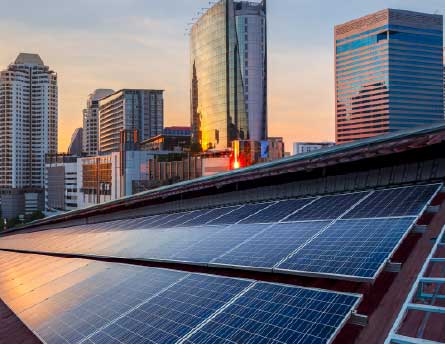
Beyond materials, engineering professionals are also helping cities meet net-zero goals by integrating solar infrastructure, energy-efficient lighting, and passive design principles into city layouts. In the Netherlands, engineering professionals contributed to the development of solar bike paths that double as renewable power generators.
In this sustainability-focused future, professionals must understand climate science, environmental regulations, and advanced materials science; skills that are increasingly taught in programs like Monash University’s Master of Infrastructure Engineering and Management.
Mobility Systems for Seamless Movement
Civil engineering professionals play a critical role in designing multimodal transportation systems that are integrated, intelligent, and environmentally responsible. As cities move away from car-centric planning, engineers are leading efforts to create infrastructure that prioritizes people, not just vehicles.
Modern urban mobility includes autonomous vehicle lanes, bike highways, smart parking, and connected public transport systems. Brisbane Metro, for example, is Australia’s first all-electric rapid transit system. Civil engineers worked alongside environmental planners and software developers to redesign streetscapes, optimize routes, and electrify infrastructure.
In Toronto’s Sidewalk Labs project (before its cancellation), civil engineers were central to designing adaptive road surfaces and modular street layouts, where lanes could shift usage depending on time of day. While the project didn’t proceed, it laid the groundwork for new thinking in dynamic mobility.
Another success story is Barcelona’s “Superblocks” initiative, where engineers reconfigured road networks to reduce car traffic and expand pedestrian areas. This not only decreased emissions but also boosted community health and cohesion.
Smart traffic signals, dynamic signage, and IoT-linked sensors are reshaping traffic management. These systems can adjust light cycles based on congestion and emergency access needs, requiring engineers to understand network modeling and automation.
Civil engineers today must master traffic simulation tools like VISSIM and Aimsun, be proficient in GIS (Geographic Information Systems), and stay informed on policy shifts toward active and shared mobility. Their work is directly enabling smoother, safer, and greener urban movement.
Urban Resilience Against Climate Extremes
In the face of rising sea levels, extreme heat, and unpredictable weather, civil engineers are leading the design of infrastructure that can endure and adapt. Smart cities must be resilient cities, and that means planning for failure, not just success.
Engineers are embedding climate resilience into infrastructure through elevation strategies, heat-resistant materials, and modular systems. In Queensland’s flood-prone regions, for instance, engineers are developing elevated roads, permeable surfaces, and deployable flood barriers in urban centers.
New York City’s “Big U” project offers another powerful case. Designed after Hurricane Sandy, this system of berms, floodwalls, and parks wraps around Manhattan’s Lower East Side, protecting residents while creating public spaces. Civil engineers led the structural design while working with architects and community stakeholders.
Engineers are also helping design resilient power and water systems. In Cape Town, where a major drought nearly drained the city’s reservoirs, civil engineers restructured water storage and delivery networks to ensure long-term supply under changing rainfall patterns.
Digital forecasting is another new tool. Engineers use climate models and real-time data to simulate disaster scenarios and test infrastructure responses. These simulations are increasingly part of city planning, allowing preventive actions rather than reactive ones.
To succeed in this space, civil engineers need expertise in hydrology, environmental risk modeling, and systems design. Training programs like those offered by Engineers Australia or RMIT’s resilience-focused civil engineering electives are vital to prepare engineers for these climate-aware roles.
Digital Skills Defining Engineering Careers
The smart city revolution demands a new kind of civil engineer, one fluent in both structural fundamentals and emerging technologies. Digital literacy is now just as important as knowledge of concrete and steel.
Building Information Modeling (BIM), geographic data systems, digital twins, and automation tools like AutoCAD Civil 3D are becoming baseline competencies. Civil engineers use these platforms to model entire cities in 3D, forecast energy usage, or analyze traffic flows, all before construction begins.

At Aurecon, a global engineering consultancy, civil engineers are integrating AI to optimize site selection and resource allocation. Their “digital smarts” division trains engineers to use machine learning for scenario planning and risk analysis in large-scale projects.
WSP Australia is investing in training programs for civil engineers in generative design, a process where algorithms help create hundreds of design options based on defined goals and constraints. This speeds up decision-making and uncovers more efficient design pathways.
Engineers are also increasingly working in cross-functional teams, requiring soft skills like communication, stakeholder engagement, and agile project management. These competencies are essential in complex smart city projects where engineers collaborate with urban designers, data analysts, software developers, and policymakers.
Universities and TAFEs are adapting quickly. Institutions like UTS and Curtin University now offer civil engineering programs with integrated modules on data analytics, IoT, and sustainability, preparing students for a rapidly digitizing profession.
Engineering the Next Urban Era
As cities become more interconnected, adaptive, and complex, the civil engineer’s toolkit will only expand.
Future roles may include managing self-repairing materials, designing drone-integrated logistics hubs, or building AI-governed stormwater systems. The next frontier isn’t just smart cities; it’s sentient infrastructure that learns and evolves with its users.
To keep pace, civil engineers must not only build structures but also understand the code, climate, and communities shaping them. Those who embrace this convergence of disciplines will be the architects of a truly intelligent urban era.
References
Smart Cities: How Engineers Build the Future of Urban Living
How Smart Cities Are Shaping the Future of Civil Engineering
Smart Cities and Civil Engineering: Paving the Way for Urban Innovation
This article was published September 1st, 2025 and the content is current as at the date of publication.
Back to news