From floating platforms to permafrost-proof infrastructure, engineers are driving resource extraction in one of Earth’s most extreme environments. Discover how cutting-edge Arctic engineering is balancing energy needs with environmental protection.
Why Engineers Are Pivotal in the Arctic
Few places on Earth challenge engineering like the Arctic. With temperatures plunging below -40°C, shifting ice, and a fragile ecosystem, the region is as unforgiving as it is resource-rich. Yet beneath the permafrost and icy seas lie vast reserves of oil, gas, minerals, and rare earth elements that are critical to global energy and technology systems.
As nations and companies explore ways to access these resources, the role of engineering professionals become more vital than ever. From mechanical systems that function in sub-zero temperatures to civil structures that won’t collapse on thawing ground, every step of Arctic development demands a fusion of innovation, precision, and environmental responsibility.
The Arctic’s remoteness and harshness mean there’s no room for error. Infrastructure must last, equipment must perform without constant human supervision, and operations must adhere to strict environmental safeguards. That’s where engineering makes the difference, turning what was once impossible into practical, scalable reality.
Now, with climate change making the region more accessible, Arctic engineering is advancing rapidly. Below are four ways engineers are enabling safer, smarter extraction and infrastructure development in the far north.
1. Designing Ice-Resistant Offshore Platforms
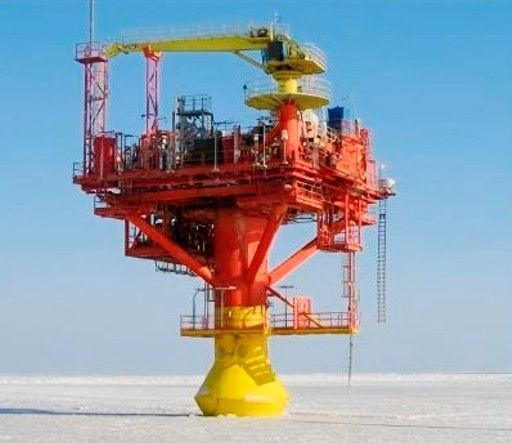
Extracting oil and gas from beneath the Arctic Ocean requires structures that can survive extreme cold, high winds, and drifting sea ice. Engineers have responded by developing ice-resistant platforms and floating production systems specifically designed for Arctic waters.
One of the most notable examples is Gazprom Neft’s Prirazlomnaya platform in the Pechora Sea. It’s the world’s first Arctic-class ice-resistant fixed platform, engineered with a double-hulled base and thick steel-reinforced concrete that can withstand heavy ice loads. The platform operates year-round in water covered by ice up to 1.5 meters thick.
Mechanical and civil engineers collaborated to develop systems that prevent freezing in key components, manage ice accumulation, and absorb the energy of ice collisions. With no nearby support infrastructure, these platforms must also function autonomously, requiring precision engineering and constant innovation.
2. Engineering Infrastructure for Permafrost Stability
Permafrost presents one of the most unique engineering challenges in the Arctic. As frozen ground thaws, it becomes unstable, potentially causing buildings, pipelines, and roads to tilt or collapse. Engineers working in this region must design infrastructure that remains stable despite shifting conditions.
In Alaska, civil engineers have successfully employed thermosyphon technology to protect the Trans-Alaska Pipeline System. These sealed tubes extract heat from the ground and release it into the air, helping keep the permafrost below the pipeline frozen even as ambient temperatures rise. The system prevents soil thaw, which could otherwise jeopardize pipeline integrity.
In Russia’s Yamal Peninsula, engineers building liquefied natural gas (LNG) plants and related facilities have elevated structures on piles drilled deep into the frozen soil. This method isolates heat-generating buildings from the ground, minimizing their impact on permafrost. These adaptations allow safe development of critical infrastructure in a rapidly changing climate.
3. Deploying Autonomous Remote Monitoring Systems
Arctic conditions make traditional field monitoring difficult and dangerous. Engineers have developed autonomous systems that can collect data, monitor environmental conditions, and report anomalies without human intervention, even in extreme weather.
One successful example is the use of remote sensing stations and drones on Svalbard, where engineers are supporting mining and climate research operations. These systems measure permafrost temperatures, detect ground movement, and monitor ice coverage in near real time, helping both scientists and engineers make informed decisions.
Electrical and automation engineers play a central role in designing these systems, which must be low power, highly reliable, and satellite-connected. Solar panels, thermoelectric generators, and long-range wireless communications all contribute to year-round Arctic data collection, supporting everything from safety checks to climate impact assessments.
4. Innovating Low-Impact Extraction Techniques
Because the Arctic environment is so ecologically sensitive, engineers are also tasked with minimizing the environmental footprint of extraction. That includes designing drilling technologies that reduce land disturbance, limit emissions, and prevent contamination.
In Northern Canada, companies like Imperial Oil have employed extended-reach drilling (ERD) from a single well pad to access multiple underground reservoirs without building new roads or pads. This technique, enabled by advanced drilling control systems and precise modelling, reduces surface disruption and allows more efficient resource use.
Additionally, mechanical engineers have developed low-emission generators and energy recovery systems that reduce the need for constant fuel deliveries in remote areas. These innovations support not only extraction but also the basic logistics of operating safely and sustainably in the Arctic.
Engineering Solutions for a Fragile Frontier
The Arctic may be one of the last great engineering frontiers, but it’s also one of the most consequential. Engineers are not just enabling exploration; they are shaping how it is done responsibly, safely, and sustainably.
Every success in Arctic resource development reflects a deep understanding of science, climate, and risk; and the ability to innovate in the face of extremes.
As global demand for energy, minerals, and strategic materials continues to rise, Arctic engineering will play an increasingly central role in securing those resources. It’s a field that calls for highly specialized knowledge, from thermal dynamics and automation to geotechnical resilience and environmental protection.
Institutions like the Engineering Institute of Technology (EIT) offer programs that align with these challenges, supporting professionals in areas like industrial automation, mechanical engineering, and renewable energy systems.
Whether you’re working in the field or planning from afar, the right training ensures you’re ready for the realities of this complex and critical region.
References
This article was published July 31st, 2025 and the content is current as at the date of publication.
Back to news