As floating solar gains traction in Australia’s water-scarce regions, civil engineers are stepping up to ensure these systems are structurally sound and environmentally safe. EIT’s Dr. Mustafa Abed explains what’s at stake, and what’s next for this growing sector. This article unpacks.
Designing for Water, Wind, and Weather
As floating solar panel systems roll out across reservoirs and lakes, civil engineers face a set of distinct challenges. According to Dr. Mustafa Abed, a lecturer in civil engineering at the Engineering Institute of Technology (EIT) in Melbourne, the design of these systems rests on two pillars: structural integrity and environmental responsibility.
From a structural standpoint, floating platforms must withstand fluctuating water levels, wind loads, and wave action. In Australia, these variables are often intensified by seasonal extremes. Engineers must carefully design mooring and anchoring systems to ensure long-term stability, especially in reservoirs prone to storms or droughts.
Material selection is equally critical. UV exposure, corrosion, and continuous water contact can degrade components over time. To combat this, engineers frequently use materials like high-density polyethylene (HDPE), PVC, and other composites engineered for longevity and resilience in harsh environments.
Lifecycle planning is another priority. “It’s not just about deployment,” Dr. Abed emphasizes. Engineers must also consider maintenance cycles and eventual decommissioning, ensuring that the systems are sustainable not just in operation, but through their entire lifespan.
At the environmental level, floating solar systems can provide benefits, like reduced evaporation and algae growth through shading, but only if designed carefully. Site-specific assessments and environmental impact studies are vital to ensure that oxygen exchange and aquatic ecosystems aren’t negatively affected.

Beyond Solar: Broader Water Strategies
While floating solar offers a compelling dual benefit, clean energy and water conservation, civil engineers are exploring additional methods to reduce evaporation and protect water resources. As Abed points out, evaporation has already increased by 5% to 15% in parts of Australia and may rise by up to 40% in the coming decades due to climate change.
One method already in use is the deployment of large-scale modular reservoir covers, similar to those seen in California. These barriers shade the water’s surface and dramatically reduce loss through evaporation.
Vegetation buffers also play a key role. Planting native vegetation around reservoirs not only stabilizes banks but also disrupts surface airflow, reducing wind-driven evaporation. Bioengineering methods, such as the use of geotextiles or riprap, further help reinforce reservoir edges.
Another forward-thinking strategy is managed aquifer recharge, capturing stormwater and diverting it underground. This limits open-surface storage, where water is more vulnerable to evaporation.
Upgrades to irrigation infrastructure also matter. Switching from open-channel systems to enclosed pipelines, or integrating drip irrigation for agriculture, helps reduce unnecessary surface exposure, preserving precious freshwater supplies.
Engineering the Balance of Dual Goals
Floating solar systems present a unique balancing act: they must support renewable energy generation while protecting vital water resources. According to Abed, civil engineers are central to achieving that balance.
Their role begins with structural optimization, ensuring that solar panel placement maximizes shading to limit evaporation, while maintaining enough open surface area for ecological processes like oxygen exchange and circulation.
Hydrodynamic modeling helps assess how anchoring systems might affect sediment movement or natural water flow. The goal is to integrate these technologies without disrupting the existing water body or causing unforeseen environmental impacts.
Engineers also play a key role in assessing trade-offs. By analyzing energy production potential alongside water conservation benefits, they help stakeholders make data-informed decisions that align with environmental, financial, and operational goals.
What emerges is a multi-benefit system, solar panels not just as power generators, but as water protectors; and it is civil engineers who ensure that promise becomes reality through rigorous, context-sensitive design.
Training Engineers for Climate Resilience
Preparing the next generation of civil engineers for challenges like water scarcity is a core mission at EIT. Abed explains that the institute’s programs are designed to reflect real-world needs, emphasizing practical skills, climate awareness, and sustainability-focused innovation.
Specialized programs, such as the 52925WA Graduate Certificate in Water Resources Engineering, cover critical areas like hydrology, water modeling, and risk management. These skills are essential as engineers increasingly work at the frontlines of climate adaptation.
The Graduate Certificate in Renewable Energy Technologies complements this by teaching engineers how to integrate solar, wind, and hydro systems into infrastructure design. Understanding the synergy between water and energy systems is key in today’s multi-sector projects.
Additional training in hydraulics and fluid power rounds out the picture. These courses are offered through graduate and professional certificates, with hands-on experience provided via remote labs, guest lecturers, and industry-led projects.
This practical, cross-disciplinary approach ensures that graduates are ready not only to design strong infrastructure, but to do so in ways that address climate, community, and environmental pressures.
Design Lessons from Harsh Climates
Civil engineering requirements for floating solar vary dramatically by region, and Australia’s unique conditions offer valuable insights for global deployments. Abed highlights that local engineers have had to innovate to meet the demands of high UV exposure, large seasonal water level shifts, and high evaporation rates.
In tropical regions, engineers must account for intense rainfall and cyclone risks. In colder climates, structural systems must bear snow and ice loads. By contrast, Australian projects often deal with prolonged droughts, intense heat, and variable reservoir levels, all of which require resilient materials and adaptable anchoring systems.
Australian engineers have responded with advanced mooring designs, rigorous material testing for UV degradation, and smart integration strategies to blend solar systems into existing water infrastructure.
These innovations are increasingly applicable elsewhere as more regions experience climate extremes. The takeaway, according to Abed, is simple: engineers must design for extremes, not averages. That mindset will shape the next generation of resilient floating solar technologies.
Looking Ahead: Water, Energy, and Engineering
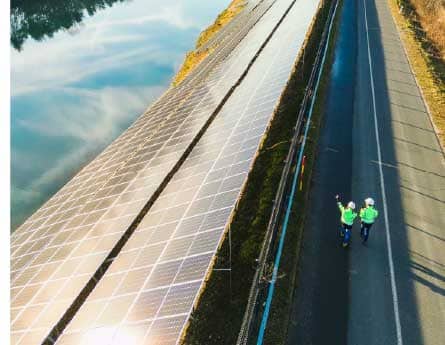
The future of floating solar lies not just in its energy output, but in its ability to solve multiple problems at once, clean electricity, water conservation, and climate resilience. For civil engineers, this presents both a challenge and an opportunity.
As water scarcity deepens globally, demand for these hybrid solutions will grow. Engineers will be expected to innovate across disciplines, applying hydrology, materials science, energy systems, and environmental planning in tandem.
EIT’s Mustafa Abed believes this is exactly where civil engineering is heading, toward a more integrated, future-focused role in shaping infrastructure that not only withstands climate pressures but actively mitigates them. As floating solar expands, engineers won’t just be supporting sustainability; they’ll be defining it.
This article was published August 29th, 2025 and the content is current as at the date of publication.
Back to news