As climate change accelerates, the construction industry is under pressure to reduce its carbon footprint. Enter CO2 concrete—a revolutionary material that combines strength with sustainability. But how can this eco-friendly alternative reshape our built environment?
The construction sector has long relied on concrete for its strength and durability. However, this reliance comes with significant environmental costs. Concrete production is responsible for about 5-7% of global CO2 emissions, primarily due to cement production.
As the impacts of climate change become increasingly evident, there is a pressing need for sustainable alternatives that can maintain structural integrity while minimizing ecological harm. CO2 concrete emerges as a solution, promising to transform the industry.
So, what exactly is CO2 concrete, and how does it work?
CO2 concrete is a form of green concrete that utilizes recycled aggregates which are carbonated before mixing. This process not only repurposes waste materials but also actively incorporates captured CO2 into the concrete itself, thereby reducing its overall carbon footprint.
By turning construction and demolition waste into a valuable resource, CO2 concrete helps tackle the dual issues of landfill waste and the depletion of natural resources. In practice, this innovative material has shown remarkable promise in maintaining compressive strength—an essential property that determines how much load concrete can bear.
EIT’s Dr. Ana Evangelista’s Research
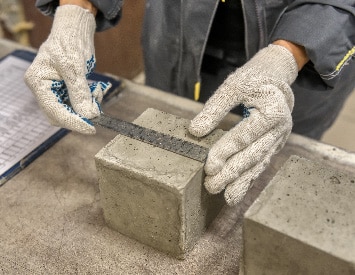
Recent research by the Engineering Institute of Technology (EIT) course coordinator and lecturer for civil and structural engineering Dr. Ana Evangelista, and her team, have developed predictive models to ascertain the compressive strength of CO2 concrete using advanced techniques such as regression analysis and artificial neural networks (ANNs).
Their findings could revolutionize the way builders and engineers approach sustainable construction. Dr. Evangelista’s research involved analyzing a comprehensive dataset of 61 concrete mixtures to create a reliable predictive model for compressive strength.
The artificial neural network achieved a striking correlation with experimental results, boasting a multiple correlation coefficient of 0.98 and an R-squared value of 0.95. Such high accuracy suggests that CO2 concrete can indeed meet the rigorous demands of modern construction.
Furthermore, the ANN was validated with 22 additional laboratory mixes, yielding an impressive average error of just 1.24 MPa, or 3.43%. This validation reinforces the material’s reliability, crucial for encouraging its broader adoption in the industry.
With a significant percentage of tested samples falling within tight error margins, the predictive model offers a strong foundation for confidence in CO2 Concrete.