Germany stands at the forefront of industrial automation, pioneering the use of AI, robotics, and advanced control systems. As the Fourth Industrial Revolution accelerates, the country’s skilled workforce must evolve too. Lifelong learning in areas like PLCs, robotics, and machine learning is no longer optional; it is central to sustaining Germany’s global manufacturing leadership.
Germany’s Manufacturing Edge Faces Disruption
Germany has long been recognized as a global powerhouse in manufacturing, driven by engineering precision, export dominance, and world-renowned industrial systems. With the advent of Industry 4.0, that foundation is undergoing a fundamental shift. Automation and artificial intelligence are no longer experimental tools; they are embedded in every aspect of production.
Manufacturing giants like Siemens, Bosch, and BMW have invested heavily in robotics and data-driven operations. Smart factories now feature fully automated assembly lines, adaptive robotic arms, and digital twins that simulate production in real time. These innovations have enhanced efficiency, reduced costs, and elevated product quality.
But technological evolution also brings new challenges. Traditional mechanical expertise alone is no longer sufficient. Engineers must now be fluent in software, programmable logic controllers (PLCs), industrial networking, and AI-powered control systems. This shift has created a pressing need for reskilling and upskilling across the sector.
While Germany’s education system has a strong vocational backbone, it must now pivot to support continuous adult learning. For engineers and technicians already in the workforce, structured pathways for lifelong training are critical to remain relevant in smart manufacturing environments.
Germany’s future in automation will not be secured by machines alone. It will be secured by people who know how to work with, improve, and innovate through those machines.
PLCs and Robotics Are Core Skills
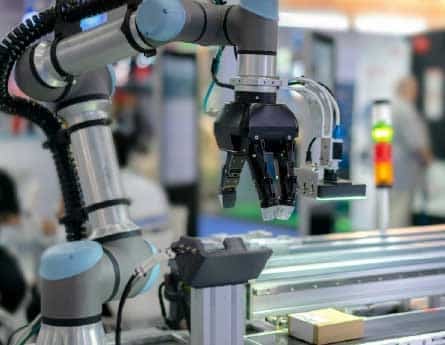
At the heart of Germany’s automated success lies its expertise in PLCs and industrial robotics. PLCs are the nerve centers of factory automation, controlling everything from conveyor belts to robotic welding arms. As production processes become more interconnected and intelligent, the complexity of PLC systems continues to grow.
In companies like Festo and KUKA, robotics engineers now work alongside data scientists and software developers. These multidisciplinary teams design integrated systems that learn from data and adapt to real-time changes on the factory floor. Understanding how to program and maintain these systems is no longer a niche role; it is essential across nearly every engineering position in manufacturing.
Training in PLC programming languages such as ladder logic, function block diagrams, and structured text has become foundational. Engineers must also master human-machine interface (HMI) systems, sensors, and network protocols like PROFINET and EtherCAT. These skills allow for seamless communication between machines and higher-level IT systems.
German technical institutes and employers have responded by offering updated certifications and apprenticeships focused on these core competencies. However, staying current requires more than a single course. It demands ongoing exposure to new platforms, tools, and troubleshooting techniques.
For professionals in this sector, PLC and robotics proficiency is no longer a specialization. It is part of the new baseline for engineering literacy in the Fourth Industrial Revolution.
AI and Machine Learning Redefine Work
Artificial intelligence is increasingly woven into the core of Germany’s smart factories. Machine learning algorithms are being used to predict equipment failure, optimize supply chains, and improve quality control in real time. This level of intelligence adds a new layer of complexity to the manufacturing process.
AI does not replace human engineers; it amplifies their ability to make informed decisions faster. Predictive maintenance models, for example, use sensor data and historical trends to identify anomalies before breakdowns occur. This requires engineers to understand both the mechanical systems and the data models driving AI insights.
The role of the modern engineer is shifting from purely physical operations to data-driven problem solving. Professionals must now be familiar with Python, MATLAB, and open-source machine learning libraries. They must also understand data labeling, model training, and the interpretation of AI-generated analytics.
German universities and industry partnerships are expanding their programs to include AI in automation engineering degrees. Still, the speed of technological change means that many in the current workforce must find ways to keep pace through short courses, digital platforms, or on-the-job training.
In this AI-integrated landscape, those who can bridge traditional engineering with data science will hold a strategic advantage. As automation becomes more intelligent, so too must the engineers who manage it.
Lifelong Learning Is a National Priority
Recognizing the urgency of continual skills development, Germany has placed lifelong learning at the center of its national innovation strategy. Government programs like “Weiterbildungsoffensive” (Continuing Education Initiative) support training in digital skills, automation, and AI across industries.
Large employers are also investing in in-house training academies. For example, Bosch’s “Learning Company” model allows employees to rotate through new roles while continuously acquiring new technical competencies. Siemens offers access to digital learning platforms that integrate AI, cybersecurity, and industrial automation content.
Professional societies such as VDI (Association of German Engineers) and ZVEI (German Electrical and Electronic Manufacturers’ Association) play a crucial role in offering certifications, seminars, and industry updates. These organizations help standardize best practices while keeping engineers informed of emerging trends.
Yet the responsibility does not rest solely on institutions. Engineers themselves must adopt a growth mindset and proactively seek learning opportunities. Whether through online micro credentials, part-time technical diplomas, or on-the-job cross-training, personal initiative is key.
In the context of Industry 4.0, education is no longer a phase of life. It is a lifelong investment in relevance, resilience, and leadership in a world of continuous automation.
Human Insight Remains an Irreplaceable Asset
Despite the rise of machines, the human element remains essential in German manufacturing. Engineers bring critical thinking, ethical judgment, and system-level creativity that no algorithm can replicate. This human-machine collaboration is where the greatest value lies.
Engineers are not just maintaining systems; they are designing the future of work. They ensure that automation aligns with safety standards, environmental goals, and business strategies. They are the ones asking, “Should we automate this?”, not just “Can we?”.
Interdisciplinary thinking is vital. Electrical engineers need to understand cybersecurity. Mechanical engineers benefit from learning user experience design. Collaboration across departments and industries enables more innovative and sustainable solutions.
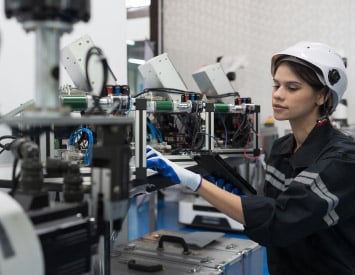
Mentorship, professional networks, and peer communities help engineers share experiences, troubleshoot new technologies, and stay connected to the bigger picture. These human networks are often the bridge between innovation and implementation.
Ultimately, technology may drive efficiency, but people drive purpose. In Germany’s automation future, it is the engineers who adapt, learn, and lead that will ensure the country not only maintains its industrial strength but redefines it for a smarter, more sustainable era.
References
Reskilling and upskilling: Lifelong learning opportunities
This article was published September 2nd, 2025 and the content is current as at the date of publication.
Back to news