Heat is one of the biggest challenges in heavy mechanical systems. From industrial machinery and power generation equipment to automotive drivetrains and aerospace components, excessive thermal loads can reduce performance, accelerate wear, and cause catastrophic failures.
Engineering thermal management is therefore a critical discipline that combines physics, materials science, and smart design to improve reliability, efficiency, and equipment lifespan in high‑load mechanical systems.
Before engineers can control heat, they must first understand how it behaves. Thermal management revolves around three primary heat transfer mechanisms:
1. Conduction
Heat conduction occurs within solid materials as thermal energy moves from hotter regions to cooler ones. Engineers manage conduction by carefully selecting materials with appropriate thermal conductivity and by designing component geometry to control heat flow paths.
High‑conductivity metals such as aluminum or copper are often used to spread heat away from critical areas, while thermal barriers or coatings may be applied where heat isolation is required.
2. Convection
Convection involves heat transfer between a solid surface and a moving fluid, such as air, oil, or coolant. Forced convection—using fans, pumps, or fluid circulation—is especially important in high‑load systems where natural airflow is insufficient.
Engineers optimize convection by increasing surface area (using fins or channels), controlling fluid velocity, and selecting fluids with favorable thermal properties.
3. Radiation
Thermal radiation becomes increasingly relevant at high temperatures. While often secondary in mechanical systems, radiation can still contribute to heat loss or gain, especially in furnaces, exhaust systems, and high‑temperature industrial equipment.
Why Thermal Management Matters in High‑Load Systems
High‑load mechanical systems operate under intense stresses: high speeds, heavy forces, and continuous duty cycles. These conditions generate heat through friction, combustion, electrical losses, and material deformation. If not properly managed, excessive heat can lead to:
- Material degradation, such as softening, creep, or thermal fatigue
- Lubricant breakdown, reducing friction control and increasing wear
- Dimensional instability, causing misalignment or seizure
- Reduced efficiency, as energy is lost as unwanted heat
- Shortened equipment lifespan and unplanned downtime
Effective thermal management ensures that components remain within safe operating temperatures, allowing systems to perform reliably even under extreme loads.
Smart Thermal Design Strategies
Thermal management is most effective when integrated early in the design process. Engineers use several proven strategies to control heat at the system level.
Heat Dissipation and Spreading
Rather than concentrating heat in one area, designers aim to distribute thermal loads evenly. Heat sinks, spreader plates, and integrated cooling channels help prevent localized hot spots that can cause premature failure.
Thermal Isolation
In some cases, protecting sensitive components is more important than removing heat. Thermal isolation techniques—such as insulating materials, air gaps, or thermal breaks—are used to shield electronics, seals, or bearings from nearby heat sources.
Geometry and Layout Optimization
Component placement plays a major role in thermal performance. Engineers position heat‑generating elements near cooling paths and ensure that airflow or coolant flow is not obstructed. Compact designs may improve strength, but they must be balanced against thermal constraints.
Materials Selection for Thermal Performance
Materials choice is one of the most powerful tools in thermal management engineering. In high‑load mechanical systems, materials must balance thermal, mechanical, and environmental requirements.
High‑Conductivity Materials
Aluminum alloys, copper, and certain composites are commonly used where rapid heat dissipation is needed. These materials help reduce temperature gradients and prevent localized overheating.
High‑Temperature Alloys
In extreme environments like turbines or exhaust systems, materials must retain strength at elevated temperatures. Nickel‑based superalloys and advanced steels are designed to resist creep, oxidation, and thermal fatigue.
Coatings and Surface Treatments
Thermal barrier coatings (TBCs) reduce heat transfer into underlying components, while surface treatments can improve emissivity or reduce friction‑generated heat.
Active and Passive Cooling Solutions
Thermal management systems generally fall into two categories: passive and active.
Passive systems rely on natural heat transfer mechanisms and require no external power. Examples include fins, heat sinks, and radiation surfaces. Passive solutions are highly reliable and low maintenance but may be insufficient for extreme thermal loads.
Active cooling, meanwhile, uses powered components such as pumps, fans, or compressors to enhance heat removal. Liquid cooling systems, oil circulation, and forced‑air cooling are common in high‑load mechanical applications where precise temperature control is required.
The most effective designs often combine passive and active methods to achieve optimal performance and efficiency. Hybrid strategies such as vapor chambers (passive) feeding liquid loops (active) often give the best performance‑per‑watt while preserving reliability.
Thermal Management and System Reliability
Reliable thermal management directly impacts equipment uptime and lifecycle cost. Components operating within their intended temperature range experience:
- Lower mechanical and thermal stress
- Reduced fatigue and crack initiation
- Improved lubrication performance
- Greater dimensional stability
For industries such as manufacturing, energy, and transportation, these benefits translate into fewer failures, reduced maintenance costs, and improved safety.
Simulation and Testing
Modern thermal engineering relies heavily on simulation tools such as computational fluid dynamics (CFD) and finite element analysis (FEA). These tools allow engineers to predict temperature distributions, identify hot spots, and optimize cooling strategies before physical prototypes are built.
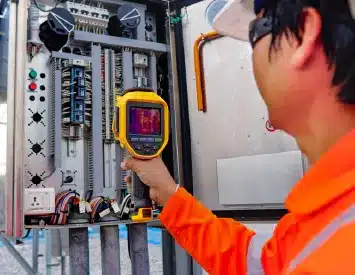
Thermal testing—using sensors, infrared imaging, and environmental chambers—validates simulations and ensures that real‑world performance meets design expectations.
Engineering thermal management in high‑load mechanical systems is not an afterthought—it is a core design requirement. By applying heat transfer principles, selecting appropriate materials, and integrating smart cooling strategies, engineers can significantly improve reliability, efficiency, and equipment lifespan.
As mechanical systems continue to push the limits of performance and power density, effective thermal management will remain a key differentiator between designs that merely function and those that excel over the long term.
This article was published February 21st, 2026 and the content is current as at the date of publication.