


Driven by curiosity and a passion for smarter maintenance, James Garnham from Australia embraced online study with EIT to deepen his technical skills. Discover how his journey is transforming his approach to machinery reliability and setting the stage for future engineering goals.
Discovering Passion for Diagnostic Maintenance Technology
For James Garnham, a maintenance and inspection professional from Australia, the decision to specialize in vibration analysis and precision maintenance wasn’t just about career growth; it was about satisfying a deeper curiosity for the “why” behind machinery failures.
“Having a background in maintenance and inspection, it felt like the right path to take,” James explains. “I’ve always been drawn to the technical and diagnostic side of maintenance, wanting to understand the reasons behind faults, not just fix them.”
This desire to diagnose, understand, and prevent problems before they escalate led him to vibration analysis, balancing, and predictive maintenance. These tools allow professionals to detect faults early and respond proactively, reducing downtime and extending equipment lifespan.
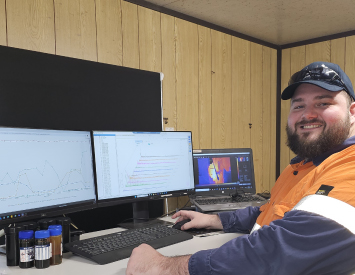
“Being able to identify faults ahead of time and schedule repairs strategically helps us avoid unplanned disruptions,” James says. “It makes the entire maintenance process more efficient.”
His approach has evolved from reactive fixes to strategic foresight, and this mindset shift has significantly impacted how he works and how he sees the future of maintenance across industries.
“I wanted to build my skills in ways that align with where the industry is heading,” he says. “Vibration analysis is one of those critical tools for modern reliability-focused maintenance.”
Advancing Skills Through EIT’s Online Learning
To take his skills to the next level, James enrolled in the Professional Certificate of Competency in Vibration Analysis, Balancing, Alignment, Predictive and Precision Maintenance of Machinery at the Engineering Institute of Technology (EIT).
He chose EIT not only for its industry-focused course content but for its flexibility and reputation for delivering practical engineering education online.
“Industry is always evolving,” James notes. “This course with EIT was a great opportunity to stay current with best practices and build on what I already knew. I wanted to keep discovering more efficient and accurate ways to approach maintenance.”
The online format proved to be the ideal fit for James, allowing him to study without interrupting his full-time work. With careful planning and the right support, he successfully balanced study, professional responsibilities, and personal commitments.
“The platform was user-friendly, and the instructor was always accessible,” he says. “That made it easier to stay motivated, especially when things got busy.”
James found the experience not only manageable but energizing. “It was designed with real people in mind, people who have lives, jobs, and families. That flexibility was huge for me.”
Turning Learning into Practical Application Fast
What set this course apart for James wasn’t just the content; it was the immediate practicality of what he learned. The modules were filled with real-world case studies and scenarios that helped him bridge the gap between theory and hands-on implementation.
“I found the real-world case studies especially valuable,” he says. “They helped me understand how to actually apply what I was learning.”
James began using the skills he gained through the course right away on-site, applying vibration analysis to real equipment and using predictive maintenance techniques to plan better interventions.
“The course gave me a clearer understanding of how to interpret vibration data and make more accurate assessments,” he explains. “That’s already helped us improve planning and carry out more effective maintenance strategies.”
This has translated into better reliability outcomes and greater confidence in diagnosing and solving complex machinery problems, benefits that extend beyond just technical improvements.
“It’s also helped me approach things with a more structured, analytical mindset. That shift alone has had a big impact.”
Overcoming Obstacles and Staying Committed
Studying while working full time inevitably brought challenges. For James, the biggest was time management, especially during periods when work demands were at their peak.
“There were definitely times when juggling everything felt overwhelming,” he admits. “But I created a consistent study schedule, stayed organized, and leaned on the support that EIT provided.”
The remote learning tools and responsive support from the EIT teaching team played a major role in helping him stay on track. “Having an instructor who was there for feedback and questions made a big difference.”

Another key to success was building a sense of community with fellow students.
“There were people from different backgrounds and industries, and that diversity was valuable. Don’t be afraid to ask questions or engage; it’s a great way to stay motivated.”
His advice to others is clear. “Be disciplined, use the resources, and stay engaged. It’s worth it.”
Looking Ahead to Engineering Career Growth
Now that James has successfully completed the professional certificate, he’s already thinking about what’s next. The course didn’t just give him technical tools; it also reignited his passion for learning and advancing in the engineering field.
“My next goal is to take on an 52884WA Advanced Diploma of Mechanical Engineering Technology with EIT,” he says. “And hopefully down the line, a full engineering degree.”
For James, this course wasn’t the end; it was a steppingstone. One that reaffirmed his belief in continuous improvement and staying ahead in a field that’s constantly evolving.
“This certification helped me see the bigger picture,” he says. “I want to keep progressing, keep learning, and eventually move into more advanced engineering roles.”
His experience is a testament to what’s possible when motivation, practical education, and flexibility come together.
“With the right mindset and the right support, even busy professionals can continue to grow. EIT helped me do just that.”
Are you ready to embark on a similar journey?
Contact Us