


Richmond Micah Okine, an ambitious engineer from Accra, Ghana, transformed his career by completing two Professional Certificates at EIT. His journey from student to Assistant Electrical Engineer showcases the power of industry-aligned education, practical skills, and unwavering determination.
From Ghana to Global Engineering Excellence With EIT
Richmond Micah Okine’s fascination with industrial automation began during his National Service at Tema Thermal Power Complex, VRA, in Ghana.
Witnessing the seamless integration of sensors and control systems in power plants sparked his passion for instrumentation and automation. Determined to build a career in this field, Richmond sought opportunities to deepen his knowledge and skills.
During the COVID-19 pandemic, Richmond discovered the Engineering Institute of Technology (EIT) through a Facebook advertisement for free webinars.
Impressed by the industry expertise and practical focus of the sessions, he enrolled in and completed two programs: a Professional Certificate of Competency in Programmable Logic Controllers (PLCS) & SCADA Systems, and the Professional Certificate of Competency in Instrumentation, Automation & Process Control.
Today, Richmond works as an Assistant Electrical Engineer at Thermenergy Services Limited, an EPC company specializing in power generation and oil and gas. This is his story.

What inspired you to pursue the Professional Certificates in PLCs & SCADA Systems and Instrumentation, Automation & Process Control, and how did your experience at VRA during your National Service influence this decision?
“I’ve always been fascinated by how automation sensors and instrumentation systems seamlessly integrate to manage complex industrial operations, like those in modern power plants.
“My time at VRA exposed me to these systems, and I knew I wanted to specialize in this field.”
How did you discover EIT, and what made you choose their Professional Certificate programs over other options available online?
“I first learned about EIT through a Facebook ad promoting their free webinar series. The sessions were led by instructors with decades of field experience, and the practical case studies resonated with my career goals. EIT’s focus on industry-aligned education made it the perfect choice for me.”
How did the knowledge and skills you gained from EIT’s courses help you ace your first job interview and kick-start your career in industrial automation?
“The courses emphasized troubleshooting and problem-solving, which are critical in automation roles. During my interview, I was able to articulate how to approach and solve real-life industrial challenges, thanks to the practical skills I gained at EIT.”
Can you share an example of how you applied what you learned at EIT to your roles at Premium Foods Limited or Thermenergy Services Limited?
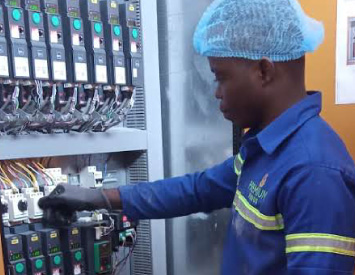
“At Premium Foods Limited, I applied my knowledge to troubleshoot and adjust systems during the initial testing phase of a project. The problem-solving techniques I learned at EIT were invaluable in ensuring the systems operated efficiently.”
What was your experience like with EIT’s remote laboratory, Electromeet, and how did it help you gain practical skills relevant to your work?
“Electromeet provided access to real engineering software and simulators remotely. This hands-on experience allowed me to engage in experiments and simulations that were directly applicable to my work, bridging the gap between theory and practice.”
How did the flexible scheduling, quizzes, assignments, and support from Learning Support Officers contribute to your success in the program?
“The flexible scheduling allowed me to study during my most productive hours, while the quizzes and assignments reinforced my learning. The support from Learning Support Officers was exceptional, they were always available to guide me through challenges.”
What role do you think industrial automation and control systems play in Ghana’s power generation, oil and gas, and agri-food processing industries?
“Automation systems optimize power plant performance, ensuring efficient and reliable energy production. In agri-food processing, automation improves quality control and efficiency. These technologies are critical for Ghana’s industrial growth and global competitiveness.”
How has your experience at EIT influenced your brother’s decision to enroll in a Bachelor of Science (Civil and Structural Engineering) with EIT, and what advice would you give to others considering EIT for their career growth?
“He decided on the Bachelor of Science (Civil and Structural Engineering) after he saw how EIT had transformed my own career. So, their Civil Engineering program just made sense to him. My advice to others is simple: EIT provides industry-relevant skills and knowledge that can open doors to incredible opportunities. Take the leap and invest in your future.”
What challenges did you face as a student from Ghana, and how did EIT’s programs and support systems help you overcome them?
“Time zone differences made attending live lectures challenging, but EIT’s flexible scheduling and recorded sessions allowed me to keep up. The support from Learning Support Officers was invaluable in helping me navigate these challenges.”
Looking back at your journey, what do you consider the most valuable lesson or experience from your time at EIT, and how has it shaped your approach to your career and the mentorship of others?
“The most valuable lesson was learning to bridge theory with real-world practice. This principle, deeply embedded in EIT’s curriculum, has shaped my career and inspired me to mentor others. EIT gave me the tools to succeed, and I’m committed to paying it forward.”
Are you ready to embark on a similar journey?
Contact Us