


A Cameroonian electrical engineer shares how his studies through EIT have helped him integrate academic learning with practical experience in industrial automation. As he approaches the completion of his Graduate Diploma of Engineering (Industrial Automation), he reflects on the challenges, lessons, and ambitions that continue to shape his engineering journey.
Early Career Journey and Motivation to Study Engineering
Engineering Institute of Technology (EIT) student Daniel’s passion for industrial automation took root during his undergraduate studies in electrical and electronics engineering at a previous college. What sparked this interest wasn’t just textbooks or labs, it was a particular lecturer who left a lasting impression.
“One of my lecturers at the time was a practicing automation engineer. His insights from the field, both during lectures and in our personal conversations, deeply inspired me,” Daniel recalls.
This mentor didn’t just teach engineering principles, he embodied them. He was also the first person to introduce Daniel to EIT, planting a seed that would later grow into a transformative academic journey.
Since completing his undergraduate degree, Daniel has built a career around his growing interest in automation and control systems. With several years of hands-on industry experience under his belt, he began to see the limitations of relying solely on practical knowledge.
To elevate his impact and adapt to the rapidly evolving demands of the field, he knew further study was essential.
“Industrial automation is reshaping how industries operate. I didn’t want to be left behind; I wanted to lead the change.”
This mindset led him to EIT and the Graduate Diploma of Engineering (Industrial Automation), a program designed to bridge the gap between engineering theory and industrial application.
Choosing EIT for Flexibility and Global Recognition
Daniel initially set out to pursue a Master of Engineering, but after careful consideration, he decided to first enroll in the Graduate Diploma. It was a strategic choice, driven by practical reasons.
“Cost was one factor,” he explains. “But more importantly, I wanted to test the waters and experience EIT’s teaching approach and course content before committing to the full two-year program.”
That decision paid off. As he nears completion of the Graduate Diploma, he is already enrolled in the Master of Engineering (Industrial Automation) second year.
“I’m very happy I took this route. The experience has exceeded my expectations. The content is rich, the structure is effective, and everything is directly applicable to what’s happening in the industry right now.”
What drew Daniel to EIT in the first place was its strong reputation and flexible delivery. As a full-time working professional, the ability to study online while continuing his job was a major advantage.
“EIT’s online format is designed for professionals like me. It allowed me to continue working, while pursuing a qualification that’s globally respected.”
Overcoming the Challenges of Remote Learning
For Daniel, the journey through remote learning has been rewarding, but not without its difficulties. Living and working in Cameroon, he’s had to contend with a range of logistical challenges.
“Internet access is both expensive and unreliable. Add in the time zone difference, and you find yourself studying late into the night or waking up at odd hours,” he admits.
Despite these hurdles, he has remained committed and credits EIT’s structured learning platform and clearly defined learning outcomes for helping him stay focused.
“The course is demanding, but in a good way. The assessments force you to dig deep and really understand the material. You’re not just memorizing concepts, you’re applying them.”
He also acknowledges how the experience has helped him develop not only academically, but personally.
“I’ve grown in more than just knowledge. I’ve improved my time management, discipline, and financial planning. These are life skills I’ll carry with me well beyond graduation.”
Courses That Shaped His Engineering Interests
Throughout the Graduate Diploma, certain units have left a profound impact on Daniel, both in terms of personal growth and professional application.
“The PLC unit was a standout,” he says. “It’s directly aligned with my current role and gave me valuable technical insights.”
He also cites the Professional Engineering Management unit as another highlight.
“That unit reshaped how I think about leadership and systems. It went beyond engineering; it taught me how to think strategically in a project environment.”
Daniel particularly appreciated that assessments were more than academic exercises; they required applying course concepts to real-world problems.

This practical approach deepened his understanding and gave him confidence in applying what he learned in the field. “Each assessment was a chance to reinforce my knowledge and see how it connects to the work I do daily.”
Through the program, Daniel has built strong competence in PLC programming, process control design, and industrial communication protocols such as Modbus and Profibus. These skills, he notes, are central to solving real-world automation challenges in his current and future roles.
Preparing for Future Leadership and Industry Impact
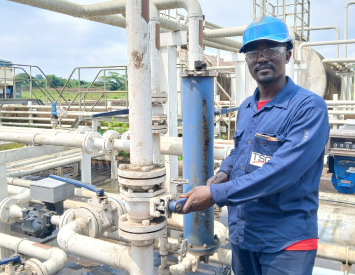
Daniel currently works as a Senior Technical Support Lead, where he supervises a team and serves as the primary technical advisor for clients across Cameroon and Gabon.
He has begun implementing some of the leadership strategies learned at EIT, such as structured problem-solving and risk-based planning. He says it has helped him guide his team more effectively and make better long-term decisions.
“My current job touches on automation, but not yet at the depth I’d like,” he explains. “That’s why my long-term goal is to transition into the upstream oil and gas sector or other areas of process automation.”
The Graduate Diploma has laid a solid foundation, and Daniel is now looking to build on it through the Master’s program. His ambitions are clear: to be a key player in Africa’s industrial transformation.
“Industrial automation is critical for Africa’s growth. Many industries here are underdeveloped or operating below capacity. Automation can bridge that gap.”
Daniel envisions a future where African engineers lead large-scale projects that revolutionize local industries; improving efficiency, productivity, and competitiveness.
“With the right education and leadership, we can build smarter, more resilient systems that serve our communities and economies.”
Advice for Aspiring Engineers
Daniel is passionate about encouraging other engineers in Cameroon, and across Africa, to take the leap and invest in their education. “My advice is simple: if you’re serious about growth, don’t hesitate. EIT offers exactly what it promises.”
That said, he emphasizes the importance of preparation and commitment.
“Before enrolling, think carefully about your finances and time. The program is intensive. It demands sacrifice. But if you’re disciplined and dedicated, it’s absolutely worth it.”
Daniel views his educational journey as not just a personal milestone, but as part of a broader mission to contribute to Africa’s engineering future.
“This Graduate Diploma is more than a qualification, it’s a platform. A launchpad to innovate, inspire, and drive meaningful change.”
Looking ahead, Daniel is eager to contribute to larger-scale engineering projects, particularly in upstream oil and gas and automation-driven industrial systems. “I’m open to opportunities where I can use my skills and passion to make an impact, whether in Africa or globally,” he says.
Are you ready to embark on a similar journey?
Contact Us