


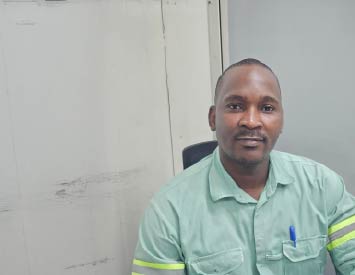
From optimizing mining operations to advancing sustainable infrastructure, Raquim Eduardo Senda is leveraging the knowledge from the EIT Master of Engineering (Mechanical) program to drive innovation and growth in Mozambique’s mechanical engineering sector. This is his story!
EIT Student Raquim Eduardo Senda’s Engineering Journey
Raquim’s decision to pursue a Master of Engineering (Mechanical) through the Engineering Institute of Technology (EIT) was deeply rooted in his professional experiences. He says his inspiration to pursue this degree stems from his extensive experience as a senior utility engineer.
Working at Moatize Mine, one of Mozambique’s largest coal mining operations, he was involved in critical systems such as pump stations, water treatment plants, and coal processing plants. These systems are vital to the mine’s operations, ensuring the efficient capture and treatment of water used in coal processing and other industrial activities.
However, Raquim noticed recurring inefficiencies and technical challenges that hindered optimal performance. “I recognized that advancing my education would provide me with the tools needed to enhance these systems effectively,” he explained.
The EIT program has been transformative for Raquim, equipping him with advanced analytical tools and methodologies. “The Master’s program has shaped my understanding of mechanical systems,” he said.
Courses in fluid dynamics, thermodynamics, and system optimization have allowed him to approach problems with a more nuanced perspective. He now applies these skills to optimize compressor systems, water treatment plants, and firefighting systems, among others.
For example, he has been able to reduce energy consumption in pump stations by 15% through improved system design and operational adjustments. Looking ahead, Raquim is eager to contribute to new power plant projects at Moatize Mine.
“I believe my enhanced skills will enable me to develop innovative, efficient solutions that align with our sustainability goals,” he shared.
The Value of Online Learning
Balancing a demanding career with academic pursuits is no small feat, but Raquim has found the online learning format at EIT to be incredibly beneficial. “The flexibility of online learning allows me to balance my studies with my professional responsibilities,” he said.
As a senior utility engineer, Raquim’s work often involves long hours and unexpected challenges, making traditional classroom-based learning impractical. The asynchronous nature of EIT’s online program has allowed him to study at his own pace, fitting coursework around his work schedule.
He praised the program’s high-quality instruction, noting that the lecturers bring a wealth of real-world experience to the virtual classroom. “Their expertise enhances my understanding of complex concepts and provides invaluable insights,” he added.
For instance, one of his lecturers, a seasoned mechanical engineer with decades of industry experience, shared practical case studies that directly related to Raquim’s work at Moatize Mine. These real-world examples helped bridge the gap between theory and practice, making the learning experience more relevant and impactful.
The program’s integration of industry-standard software tools has also been a game-changer. Tools like Automation Studio, ANSYS Mechanical, SolidWorks, and SolidCAM have allowed Raquim to perform simulations and tackle real-world engineering problems.
“These tools have been instrumental in helping me grasp essential engineering principles and apply them directly to my work,” he said. For instance, using ANSYS Mechanical, he was able to simulate the stress distribution in a pump shaft, identifying weak points that were causing frequent failures.
This hands-on experience has not only deepened his technical knowledge but also boosted his confidence in tackling complex engineering challenges. For Raquim, the combination of flexible study options, expert instruction, and access to cutting-edge software has been the cornerstone of his academic and professional growth.
Key Skills and Future Applications
One of the most significant skills Raquim has gained during his studies is proficiency in advanced engineering software. “Using tools like ANSYS Mechanical and SolidWorks has enabled me to perform simulations that address real-world engineering problems,” he said.
These simulations provide insights into design optimization and performance evaluation, which are critical for developing innovative solutions. For instance, he used SolidWorks to redesign a component of a coal processing plant, reducing material waste by 20% while maintaining structural integrity.
Raquim is particularly excited about applying these skills to future projects. “Being able to simulate and analyze systems allows me to develop solutions that significantly improve efficiency and functionality,” he explained.
He envisions using these tools to optimize mechanical systems in Mozambique’s infrastructure and industrial sectors, contributing to the country’s development while adhering to sustainability principles.
One area of focus is renewable energy systems, where he plans to design and optimize solar-powered water pumps for rural communities. “These systems can provide reliable water access while reducing reliance on fossil fuels,” he said.
Another project close to Raquim’s heart is the optimization of the KSB MTC150/2 pump, which he worked on during his studies. This pump, designed for a flow rate of 475 m³/h and a head of 180 m, had been experiencing premature damage issues, including fractures in the shafts and volutes.
“The significance of this project was heightened by its direct impact on the coal mining operations at Moatize,” he said. By analyzing the pump’s performance using simulation tools, Raquim identified the root causes of the failures and proposed design modifications that extended the pump’s lifespan by 30%. “This project not only improved operational efficiency but also demonstrated the power of advanced engineering tools in solving real-world problems,” he added.
A Vision for Mozambique’s Engineering Future
Raquim sees immense potential for mechanical engineering in Mozambique, particularly in infrastructure development, natural resource management, and renewable energy.
“The biggest opportunity lies in creating a consulting group to solve complex, chronic problems related to mechanical systems,” he said.
Mozambique’s rapid urbanization and industrial growth have created a demand for innovative engineering solutions that can address challenges such as inefficient water supply systems, unreliable energy infrastructure, and outdated industrial machinery.

Collaboration is at the heart of Raquim’s vision. He aims to work with local industries and educational institutions to foster knowledge sharing and capacity building. “By bringing together skilled professionals, we can tackle pressing issues and drive technological advancements.”
For example, he plans to partner with universities to develop training programs that equip students with practical skills in mechanical engineering software and sustainable design practices. “Education is the foundation of progress, and by investing in the next generation of engineers, we can ensure Mozambique’s long-term growth,” he added.
Raquim’s global perspective further enriches his approach to engineering challenges. Exposure to international practices has inspired him to incorporate sustainable and innovative solutions into his work. “Understanding how different countries tackle similar challenges encourages me to think outside the box and align my projects with global sustainability goals,” he said.
For instance, he has studied Germany’s success in renewable energy integration and hopes to adapt some of these strategies to Mozambique’s context. “By combining global best practices with local knowledge, we can create solutions that are both effective and culturally relevant,” he explained.
A Bright Future Ahead
Raquim Eduardo Senda’s journey is a powerful example of how education, passion, and a global perspective can drive meaningful change. As he nears the completion of his Master’s degree, he is poised to make significant contributions to Mozambique’s engineering sector.
Through his expertise, collaborative spirit, and commitment to sustainability, Raquim is not only shaping his own future but also paving the way for a brighter, more innovative future for his country.
His vision of a consulting group that tackles chronic engineering challenges, combined with his dedication to mentoring young engineers, ensures that his impact will be felt for generations to come.
“I want to leave a legacy of innovation and excellence in Mozambique’s engineering sector,” he said. With his determination and expertise, there’s no doubt that he will.
Are you ready to embark on a similar journey?
Contact Us