


As Benjamin Nkosi nears completion of EIT’s Master of Engineering (Mechanical) program this year, he is on a mission to close critical gaps in engineering education and industry by combining practical field experience with academic excellence. Read how he is using his work and education to uplift future engineers.
From South Africa to Master of Engineering
Benjamin Nkosi is a mechanical engineer from South Africa currently completing his Master of Engineering (Mechanical) at the Engineering Institute of Technology (EIT).
Balancing work, family, and study, he is committed to merging academic depth with hands-on experience. His motivation stems from early observations during his undergraduate years, where he witnessed a clear divide between purely academic teaching and practical industry knowledge.
“When I was an undergraduate student, I experienced two different types of lecturers. Lecturers with high academic qualifications like PhDs and field-experienced lecturers. The two groups of lecturers would insult each other’s shortfalls,” Benjamin explained.
This “insulting” wasn’t about personal attacks but more about a professional divide. Academic lecturers focused heavily on theory, sometimes overlooking practical challenges engineers face daily.
Meanwhile, experienced lecturers emphasized real-world applications but often didn’t provide the theoretical depth expected at university level. The result was a classroom where students received mixed messages, struggling to connect theory with practice.

Complicating this divide was a language barrier: many academic lecturers came from foreign countries and taught primarily in English, while the experienced lecturers were mostly Afrikaans-speaking South Africans. This created communication gaps and sometimes left students caught in the middle.
Benjamin saw this divide as a problem to solve. “I saw the gap and felt responsible for closing the gap. I felt like God blessed me to be in this industry to contribute to society.”
Since 2012, Benjamin has dedicated himself to gaining practical experience in the field while pursuing further education. His ambition is to combine both theoretical knowledge and practical skills so he can one day teach and inspire the next generation of engineers.
Why He Chose EIT’s Flexible Online Program
Benjamin’s initial attempt to pursue a master’s degree at his undergraduate institution proved difficult.
“I really struggled to work and grow as an engineer while studying. I lacked a lot of support and by the time I finished my colloquium, I saw EIT on LinkedIn and contacted a friend who studied his master’s through EIT.”
The flexibility and support at EIT impressed him most. “What stood out for me was the capability for engineers to study while working. The study platform is great for students studying online and the NQF level was even better than the previous master’s I was attempting to complete.”
He appreciated the convenience of the online format, enabling him to learn from anywhere.
“I attended lectures whilst traveling to clients, conducting inspections on machines on site and even in my office at work. The tools to write exams are so awesome because I can write from anywhere in the world.”
Time management was the biggest challenge for Benjamin, juggling work, parenting, and study.
“The biggest challenge is time. While working and being a parent, it is sometimes difficult to have time to study or attend classes. I overcame the challenge by downloading the calendar and importing it to my work calendar. This helped to have reminders and scheduling my classes and submissions.”
He praised EIT’s flexible deadlines: “By having an opening and closing (usually a week) to submit assignments or do exams is so awesome by allowing students to schedule tests and submissions.”
Learning Real-World Skills Through Global Collaboration
Benjamin highlighted the practical value of remote labs and software tools during his studies.
“The remote labs have bridged the gap by being exposed to different tools like ANSYS and SolidWorks. The tools provide different approaches used in industry to solve engineering problems. With engineering being so vast, one gets exposed to limited tools required by the industry one works in.”
Engaging with EIT lecturers and students worldwide broadened his perspective.
“Having this access to lecturers and students makes the world feel smaller. We can relate on industry problems and provide solutions that you might not be exposed to.”
Despite time zone challenges, the global classroom format suited Benjamin’s needs.
“The global classroom can sometimes be difficult but overall beneficial for students traveling and it accommodated me for most of my attendance. With the ability to attend online one is not restricted and can easily schedule the lectures in your day.”
Applying Knowledge to Real Local Engineering Problems
Benjamin’s favorite unit was the Design and Failure Analysis of Materials project.
“He said his favorite project was assessment 4 from MME501A; Design and Failure Analysis of Materials. The assessment was a research project about material failure.
“I was excited because this was a topic I was familiar with in the field I work in. It was so fun being able to share real-life experiences in the assessment by combining my knowledge with the learnings I acquired through the unit.”
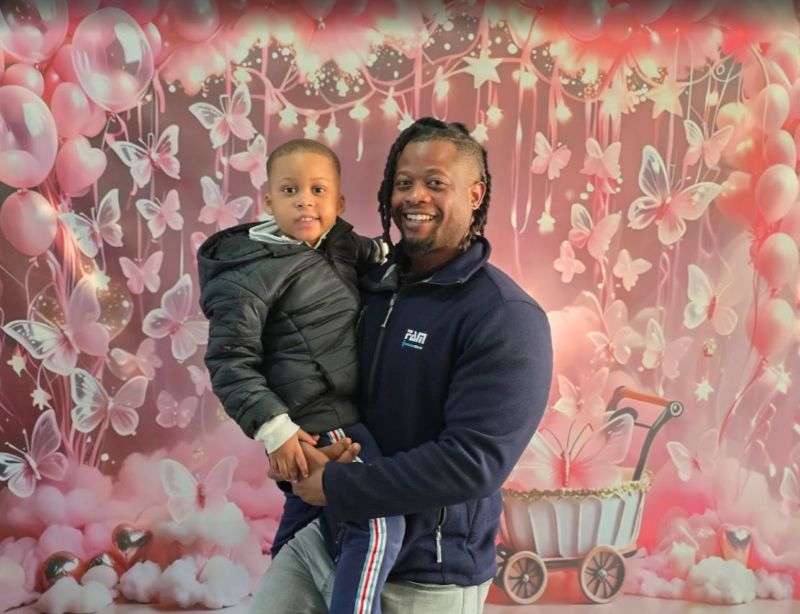
He is already applying his knowledge in the field. “I have used knowledge in solving a real-life problem with a damaged shaft where the client wanted to weld but from my knowledge gained from unit MME501 – Materials for Engineers, I was able to advise a different solution.”
Benjamin also draws on his leadership learning from the MXX507 – Professional Engineering Management unit in his current management role. “Today I also use a lot of learnings from Professional Engineering Management because I work in a management position and work in a project-based environment.”
He sees great potential for South Africa’s engineering industry to benefit from global knowledge.
“South Africa’s engineering industry will benefit from students being exposed to global solutions to problems we face in South Africa. We as students will be able to see the gaps like loadshedding and learn from what is done around the world to fix the electricity crisis. With South Africa always having to import skills, EIT closes the gaps by exposing the students to international specialists.”
His advice to other professionals? “My advice would be not to think twice. As an individual who tried to study full-time it was very hard because I took five steps forward to take three steps back. With EIT you have a schedule and structure. The system keeps you accountable and you have remote tools in order to complete your studies.”
Benjamin plans to share his knowledge widely to help solve local engineering challenges. “With my knowledge I will share problem-solving tools with my industry and community with research-based knowledge to solve local problems.”
Are you ready to embark on a similar journey?
Contact Us