


Driven by a passion for automation and control systems, Prosper Menjah from Cameroon has harnessed the power of online study with EIT. Explore how his journey has enhanced his professional skills, contributing to his home country’s engineering landscape.
Discovering Passion for Automation and Control Systems
For Prosper Menjah, the journey into engineering began at a young age. “I’ve always been fascinated by the way things work,” he explains. “As a child, I was constantly curious about how things on TV were made and how people interacted with them. I wanted to understand more, and engineering seemed like the right path.”
His interest in automation and control systems grew while pursuing his Bachelor’s degree in Electrical Engineering.
“During my final year, I was working and studying simultaneously,” Prosper recalls. “At my workplace, I noticed excessive fuel wastage at our thermal power plant. I decided to design and implement an automated system to reduce this wastage. That marked the beginning of my focus on automation.”
The practical impact of his automation efforts left a lasting impression. “Seeing how effective automation was in reducing inefficiencies and improving system performance was eye-opening,” Prosper says. “It made me realize the potential of automation in shaping the future of industries.”
His passion for the field grew further as he explored more advanced concepts in automation. “The idea of creating systems that can run efficiently with minimal human intervention intrigued me,” Prosper adds. “I knew then that I wanted to continue learning and diving deeper into control systems and PLCs.”
Through this, Prosper developed a commitment to advancing his skills in automation, recognizing its value in the future of engineering and industry.

Why EIT Was the Ideal Choice
Prosper’s decision to study the Professional Certificate of Competency in Programmable Logic Controllers (PLCs) & SCADA Systems at the Engineering Institute of Technology (EIT) was years in the making. “I first discovered EIT 16 years ago through their Facebook page,” he recalls. “Back then, I wasn’t able to enroll, but I always remembered the courses they offered.”
When the opportunity finally arose, Prosper didn’t hesitate. “EIT’s reputation and flexible online learning model were major factors in my decision,” he says. “The variety of programs they offered, especially in automation and control systems, matched exactly what I had been looking for.”
The ability to study from anywhere also made EIT an ideal fit for Prosper. “I appreciated that I didn’t have to leave my job or home to study. It gave me the flexibility to learn while continuing my professional work,” he explains. “That convenience was important, and I could stay fully engaged without the disruption of traditional learning.”
Moreover, Prosper valued the high-quality content delivered by EIT. “EIT’s programs are practical and closely tied to industry needs, which made the course extremely relevant to my career goals,” he says. “I knew the education would be top-notch, helping me stay ahead in a fast-evolving field like automation.”
For Prosper, enrolling at EIT was a natural next step in his career development, aligning his personal goals with professional growth.
Studying PLCs and SCADA Online with EIT
Prosper describes his experience with EIT’s online format as “formidable.” “The course structure, along with the weekly webinars, was incredibly exciting and enriching,” he says. “The interaction with students from all over the world was one of the highlights. I gained diverse insights and perspectives that truly enriched my learning.”
He especially appreciated the balance between theory and practical application. “The course was well-structured, with real-world case studies and scenarios that were directly applicable to my work,” he explains. “It wasn’t just theory; we learned how to apply our knowledge immediately.”
The flexible nature of the online learning platform made it easier for Prosper to juggle study, work, and personal life. “I could study at my own pace and at times that suited me,” he says. “Having a flexible schedule made the learning process manageable, especially during busy times at work.”
“I also found the support from instructors and peers to be invaluable,” he adds. “Whenever I had questions or needed clarification, the team was always ready to assist. This made the journey smoother and more rewarding.”
Looking back, Prosper calls the experience “exceptional” and one that he’ll always cherish for the knowledge gained and relationships built.
Remote Labs and Real-World Application
One of the key aspects of Prosper’s learning experience was the remote lab sessions. “These sessions were crucial in reinforcing what I learned theoretically,” he explains. “Having access to industry-standard simulation tools and enterprise software allowed me to practice designing, programming, and testing systems in a controlled environment.”
The hands-on experience proved valuable for Prosper as he was able to develop confidence in applying his newly acquired skills. “It’s one thing to read about systems, but actually working with them in the labs gave me practical insight into how things work,” he says. “It made me more capable of handling real-world challenges.”
For Prosper, the opportunity to experiment with SCADA systems was a major highlight. “One assignment, where we had to design a SCADA system using CitectSCADA software, was a real eye-opener,” he recalls. “I had to create a visual interface and simulate the transfer of liquid between tanks. It was a proud achievement and demonstrated how far I had come.”
In his current job, Prosper is already applying these hands-on skills to real-world problems. “I’m using my SCADA and PLC knowledge to optimize operations and reduce downtime at our power plant,” he says. “The skills I gained have directly impacted how I approach maintenance and troubleshooting, making systems more reliable.”
Prosper believes that the ability to practice in remote labs directly contributed to his success. “Without those sessions, I wouldn’t have felt as prepared to implement automation solutions in my work environment,” he adds.
Balancing Work, Study, and Personal Life
Balancing work, family, and study was a challenge for Prosper, but he approached it with careful planning. “Organisation was key,” he says. “I discussed the course with my manager, who was very supportive and gave me flexibility to prioritize study time when needed.”
At home, the balance was more difficult. “It wasn’t easy to manage family commitments with my study schedule,” he admits. “I had to make sacrifices and let go of certain things to stay on track. But with a well-thought-out plan, I was able to manage everything effectively.”
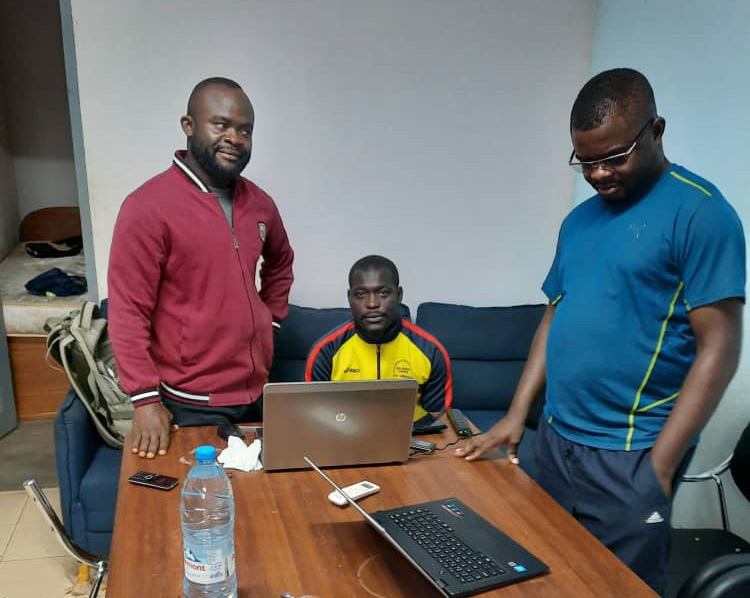
One of the biggest challenges was ensuring that work didn’t interfere with his studies. “There were busy periods at work that made it difficult to find study time, but I managed by sticking to a consistent schedule,” Prosper says. “Having a clear plan and knowing what I needed to achieve helped me stay focused.”
He also emphasized the importance of support. “The flexibility of online learning was huge,” he says. “Being able to study at my own pace and schedule allowed me to meet both personal and professional commitments while still making progress in my studies.”
For Prosper, managing his time and responsibilities was essential to his success. “I couldn’t have done it without good time management and a supportive environment,” he adds.
Looking Forward to Continued Engineering Success
After completing the course, Prosper is focused on putting his new skills into practice. “I’m already contributing to power plant operations and maintenance,” he says. “I’m working to make systems more reliable and ensure minimal downtime, which is essential for our country’s energy needs.”
He has broader goals in mind as well. “In the future, I want to pursue a Master’s degree and perhaps even a PhD in Industrial and Automation Engineering,” Prosper shares. “I’m focused on expanding my expertise and becoming a leader in this field.”
Prosper sees his current role as just the beginning. “The skills I gained from EIT have opened new doors,” he says. “I want to apply these skills to larger projects and contribute more significantly to Cameroon’s engineering sector, particularly in the automation space.”
He also plans to share his knowledge with others. “I hope to mentor younger engineers and help build local expertise in industrial automation,” Prosper adds. “By doing so, I can help improve the efficiency of industries in Cameroon and contribute to sustainable development.”
Prosper’s journey is far from over. “This course was just one step on my path,” he says. “I’m excited for what’s next and look forward to continuing my growth as an engineer.”
Are you ready to embark on a similar journey?
Contact Us