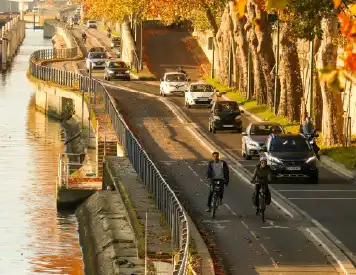
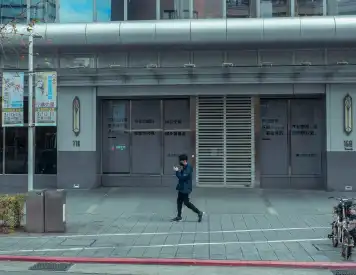
Imagine a city where work, school, groceries, and parks are all just 15 minutes away.
City life often involves long commutes and crowded streets, which can steal hours from our days. In this article, we’ll see how cities became stretched by distance, why closer living creates meaningful impact, and how engineering-led design is redefining what modern urban living can be.
Why Distance Became the Problem
Homes, offices, schools, and shops were placed in different zones, forcing people to travel farther just to meet daily needs, with negative results. Streets were designed to move vehicles efficiently, often at the expense of walkability, safety, and human comfort. With long distances to travel, time is lost to commuting; this increases stress and erodes personal time.
The 15-Minute Solution
The 15-minute city flips the script by bringing daily life closer to home. It is a practical engineering response to urban inefficiency.
Engineers enable this model after seeing the same patterns repeated across cities: overloaded roads, rising maintenance costs, unsafe streets, and systems stretched beyond their intended capacity.
From a technical perspective, designing cities on a human scale produces clear, measurable outcomes:
- Reduced expenditure on infrastructure, such as roads and bridges, and on their maintenance.
- Improved safety with slower speeds and shorter distances leading to fewer accidents and injury rates.
- Reduced congestion with walking, cycling, and micro-transit is becoming possible for everyday trips.
- Improved environmental outcomes with fewer vehicle kilometers traveled.
- Enhanced quality of life with less time spent commuting.
Blueprint in Action
Turning the 15-minute city from concept to reality requires careful planning and real engineering work. The following examples reveal how small changes can improve cities.
Paris, France – Wider sidewalks and pedestrian-only streets allow residents to walk to shops, schools, parks, and daily services within 15 minutes, reducing traffic and reliance on cars.
Melbourne, Australia – Smart use of sensors and GPS helps plan bike lanes and pedestrian paths.
Portland, USA – Protected bike lanes and raised crosswalks slow traffic and make it easier for people to reach nearby destinations without driving.
Barcelona, Spain – Superblocks limit through-traffic, turning clusters of streets into walkable neighborhoods where daily needs are accessible close to home.
Copenhagen, Denmark – Cycling-first streets with synchronized green wave traffic signals make bikes the fastest way to reach work and schools within short distances·
Balancing Vision and Reality
Turning the 15-minute city from concept into reality is a technical challenge. Engineers and other experts face complex hurdles when retrofitting existing urban areas, because changes must work with current infrastructure and deliver equitable access for all residents. For technical professionals, the challenge lies in solving all these problems simultaneously without disrupting the city’s current functioning. This includes:
Engineering constraints: Engineers and technical professionals face the challenge of updating streets and neighborhoods while working around existing utilities, building codes, and drainage systems, which can be costly and technically complex.
Political and budget limitations: Engineers and technical professionals must carefully phase large-scale urban redesigns over the years, balancing ambitious solutions with available funding and regulatory approvals.
Complex civil engineering needs: Engineers and technical professionals must reroute utilities and redesign street grids, and these tasks demand precise coordination across multiple disciplines.
Equity and accessibility concerns: Engineers and technical professionals must ensure that green spaces, schools, and essential services are accessible to all residents, and this would add layers of planning and logistical complexity.
Integration with existing systems: Engineers and technical professionals must carefully maintain traffic flow, public transit, and safety standards while retrofitting streets for walking, cycling, and micro-mobility.
The Future of Urban Living
With smarter urban planning, accessing essential services by bike or on foot becomes the focus, with a reduced need for motorised vehicles. Here’s how engineers and technical professionals are making it happen:
Smart traffic lights: Adjust automatically to reduce waiting times and help pedestrians and cyclists move safely.
Bike lane sensors: Track usage to make bike routes safer and less crowded.
Energy-saving streetlights: Turn on when needed to save energy and keep streets bright and safe.
Cyclist-friendly streets: Designed so bikes can travel faster and safer than cars.
Street monitoring: Sensors check how streets are used and help planners improve traffic and safety.
A wonderful and unexpected consequence of this initiative is the health and well-being of city-dwellers.
This article was published March 3rd, 2026 and the content is current as at the date of publication.