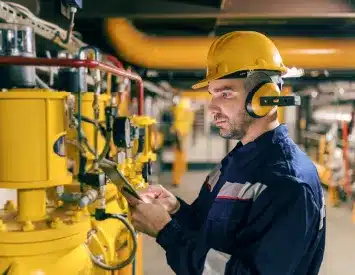
Industrial processes rely on control strategies to maintain stable operations. These strategies provide a clear, standardized approach that helps systems remain secure and steady, even when unexpected changes occur.
Modern industrial facilities enhance this stability through advanced automation systems that optimize performance and allow operations to respond quickly to changing production demands.
This article walks you through six strategic control steps that guide industrial processes toward consistent stability. The process begins with measurement and comparison, moves to decision-making and execution, and continues with ongoing monitoring. Together, these steps form a continuous loop that enables engineers to maintain reliable and smooth operations in industrial systems.
Measure First
Accurate measurement is considered to be the starting point of any control strategy for it provides engineers with the current operating state of the system. At this stage, engineers decide which areas are needed to be monitored, identify critical variables, and set safe operating limits. With careful planning and assessment, this stage provides a strong base for effective system control.
This measurement involves:
- Keeping a close eye on industrial boiler temperatures in mechanical systems to prevent overheating, such as monitoring a mill boiler during long production runs.
- Watching levels in civil storage tanks and reservoirs to maintain stability, like tracking water levels in a municipal treatment facility to ensure a steady water supply.
- Checking motor output through current readings in electrical systems to make sure everything is running safely, such as observing motors in a packaging plant.
- Monitoring PLC or DCS process data for abnormal scan-time increases, communication delays, or irregular controller responses, such as detecting latency in fieldbus networks that could affect real-time control performance.
Compare Next
Once data has been collected, the next step is to carefully compare the results against set targets. This allows engineers to see how well the system is performing and where possible gaps may exist. By spotting differences early, teams can decide which areas need immediate attention. This step is important for catching potential issues ahead of time, thus preventing small faults from turning into major operational problems.
This comparison involves:
- Reviewing process variable trends and comparing them against predefined alarm thresholds, for example, evaluating rising reactor pressure against high safety limits to identify potential process risks before they escalate.
- Comparing the output of mechanical systems to expected rates, like checking a factory conveyor belt’s speed against its production target to spot possible slowdowns.
- Checking voltage readings in electrical systems against a standard set of operating values, such as checking the voltage supplied in industrial motors in a manufacturing plant to ensure it stays within safe limits.
- Examining PLC or DCS controller performance metrics, such as scan times, loop response times, and network communication rates, against standard operational benchmarks to identify potential slowdowns or control degradation.
Decide Corrective Actions
The next stage is to determine the appropriate corrective actions. In this stage, engineers need to assess all available solutions to find the best method that will make operations return to their normal state without causing any disruptions to ongoing work. This step is important because the quality of the decisions directly affects how quickly the system can return to its normal operation, thus ensuring that resources are being used wisely.
This would involve:
- Deciding whether to switch a process loop to manual mode and reduce flow through a control valve or initiating an automated interlock to shut down the affected unit based on abnormal pressure readings from the transmitters.
- Choosing whether to adjust the speed of a mechanical conveyor belt in mechanical systems or redistribute items across machines to keep production output on target.
- Determining whether to reroute an electrical power source or replace a failing motor to maintain system stability.
- Deciding whether to pause robotic operations or change software settings to prevent delays in automated performance.
Implement Corrections
Once the corrective actions are decided, the next stage is to implement them. In this stage, engineers must apply the planned solutions accurately to restore stability. This involves adjusting system parameters, coordinating interventions, and monitoring the immediate impact of the actions. This step is important because even the best decisions are ineffective if not correctly executed in a timely manner.
This would involve:
- Adjusting a control valve’s position or activating a backup pump to maintain safe process flow when abnormal system conditions are detected.
- Redistributing work across multiple mechanical pumps to meet production requirements.
- Replacing a faulty electrical circuit breaker or adjusting a transformer setting to stabilize power delivery.
- Updating PLC or DCS control logic to correct process sequencing errors or improve system reliability.
Ensure Stability
Even after corrective actions are applied, the next stage is continuous monitoring. In this stage, engineers track the system by keeping a close eye on performance to ensure that stability is maintained. This step is important because even after corrective actions, process dynamics can shift, and new issues may arise.
This would involve:
- Continuously trending critical process variables, such as temperature, pressure, or flow and verifying that control loops and field devices are responding correctly after corrective actions to ensure the process remains stable and within safe operating limits.
- Tracking flow rates, temperatures, or mechanical pressure levels to ensure flow consistency.
- Monitoring electrical voltage levels to ensure that power supply remains within safe limits.
- Continuously reviewing automated production logs to confirm that corrective actions have restored stable operations.
Improve Performance
After stability is restored and the system is being monitored, the final stage is optimization. In this stage, engineers analyze collected data to find opportunities to improve productivity and consistency. This step is important because it helps operational systems function at their best over the long term.
This would involve:
- Optimizing control loop performance by recalibrating sensors, fine-tuning PID parameters, or upgrading control algorithms to improve process efficiency and handle higher production demands.
- Fine-tuning a production line by upgrading machine speeds to increase output.
- Calibrating electrical controls to balance current load effectively.
- Reformatting algorithms to improve automated performance.
By following these six stages of measure, compare, decide, implement, monitor, and optimize, engineers create a continuous loop that keeps industrial processes stable and efficient. Programs and webinars from EIT help engineers master these strategies effectively.
This article was published March 10th, 2026 and the content is current as at the date of publication.