


Researchers at the Missouri University of Science and Technology have invented a 3-D microwave video camera. The team says the camera would be able to conduct industrial inspection and security screening. The camera operates at 20-30 gigahertz and uses non-ionizing electromagnetic waves which are not harmful to humans.
Talking to Missouri S&T News, Dr. Mohammed Tayeb Ghasr, assistant research professor at Missouri S&T, said: “It’s like an airport scanner but much smaller. It’s portable, so it can be used on-site wherever it is needed.” The microwave 3D camera can take photos and produce high resolution at 30 frames per second.
Ghasr has expressed his confidence in the camera and it said it could even serve a purpose for first responders in the medical field. He spoke of how a first responder could take photos of a burn victim and they would be able to determine the severity of the burn.
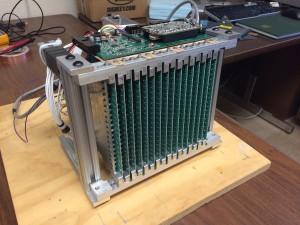
The researchers are also confident in its ability to find contraband within covered up compartments like bags that go through airport terminals. The portability of the camera compared to current cameras in airports might make this particular camera quite popular in the future.
The camera is ideal for inspection of composite structures that are increasingly used in the transportation, infrastructure, space, aerospace and other similar industries. Because microwave signals can penetrate non-metallic materials, this system is expected to find signficant use in inspecting ceramics, fiberglass, plastics and high-density polyethylene pipes
– news.mst.edu