On World Oceans Day, we are recognizing the pivotal role engineers play in improving the health of earth’s oceans. Here are three engineering initiatives that are helping to protect and clean up the seas.
World Oceans Day is an international day that takes place annually on 8 June. The UN recognized observance aims to offer gainful narratives from scientists and environmentalists on the role each human can play to save the earth’s oceans.
Under the theme, The Ocean: Lives and Livelihoods, the 2021 edition of UN World Oceans Day will be a digital event that allows participants to learn more about navigating the rough seas of sustainability and preserving the earths vital aquatic ecosystem.
The ocean produces at least 50% of the planet’s oxygen, it is home to most of earth’s biodiversity, and is the main source of protein for more than a billion people around the world. The UN has estimated that the human population will hit nine billion by 2050 and the rapid degradation of the ocean desperately needs to be counterbalanced to accommodate this. That means new efforts of conservation and redefining our relationship with the ocean.
Engineers are important to this preservation because they can help to make significant breakthroughs in ocean sustainability, and several inventions have already implemented significant changes to preserve the blue planet.
Simple engineering solutions work
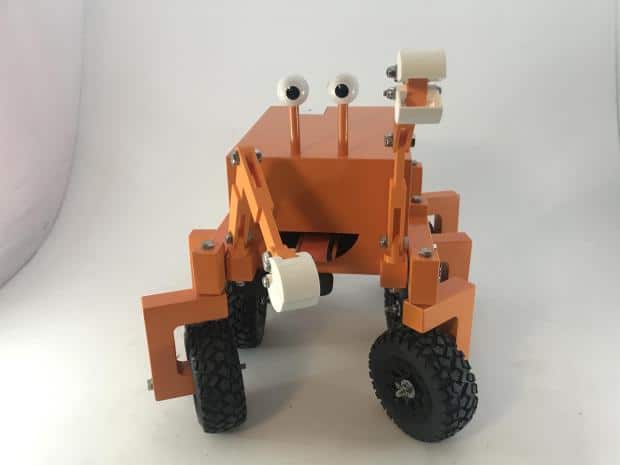
A robot that looks like an anamorphic character might seem more at home in a cartoon, but in Great Britain, the KRABB-E robot can scour beaches to pick up cigarette butts. It’s simple and efficient design won a national award in 2019 for its sole function to pick up pollutants at the source.
KRABB-E is the brainchild of young engineers Helena Livesey, Jonathon Witty, George Fulton, and Alexander Morgan who submitted the design during the 2019 Engineering and Technology Innovation Awards.
KRABBY-E shows that small machines can make a big impact to save the oceans. The crab-like robot features a sand-facing camera for cigarette butt detection, a camera to avoid obstacles, and a speaker that will let crowds know of its presence.
But its functionality is what makes the little robot so marvelous. Its mesh claws pick up cigarette butts and leave fine sand behind. It is programmed to also leave behind rocks that it might pick up. Cigarettes are then stored as it moves along the beach to pick up more butts.
Robots like KRABB-E shows that simple innovations can make all the difference in promoting healthier and cleaner ocean environments.
Smart cities make less trash
The Ocean Cleanup is a non-governmental organization that aims to find new technology to combat ocean pollution. According to the organization’s latest findings, inland rivers that flow into the sea are a major contributor to plastic that ends up in the sea.
According to the latest data, 1000 rivers are responsible for 80% of plastic waste from freshwater sources that flow into the ocean.
To tackle this problem, engineers should be looking at the future of smart cities. Around the world, smart cities are analyzing and adapting urban environments to improve the quality of life for their residents.
High-speed and low-cost sensors, open data and data science are transforming public transportation, making garbage collection better, improving air quality and helping urban planners redesign streets and public spaces.
The Plastic Smart Cities Initiative was launched in 2018, by WWF, to mobilize city authorities and communities to prevent plastic leakage into nature. In less than 2 years, 27 cities spanning across three continents have joined the initiative.
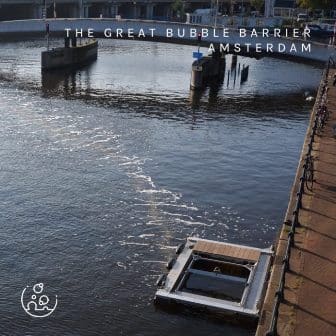
In Amsterdam, a bubble screen barrier was created that can push floating waste in a waterway to the surface so it can be removed easily. The bubble barrier consists of an aeration tube on the bottom of the waterway. By pumping air in this tube, it creates a screen of air bubbles that pushes the floating plastic to the surface.
By cleaning up the marine waters and implementing smart solutions, cities have the opportunity to create a safer, healthier and greener environments.
Polyps against pollution
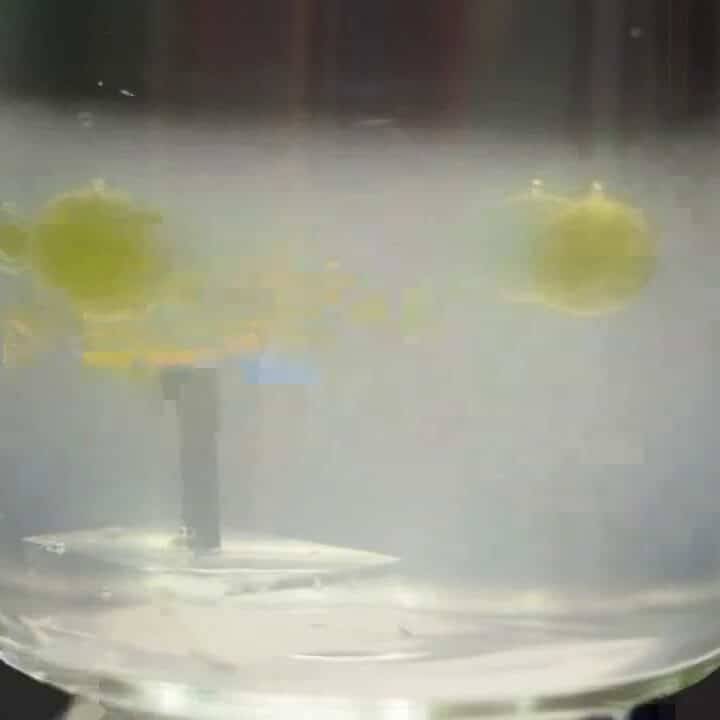
Coral in the ocean is made up of coral polyps, a small creature that aids the survival of coral by generating self-made currents through motion. Scientists from the University of Warwick, led by Eindhoven University of Technology in the Netherlands, have developed a 1cm by 1cm wireless artificial aquatic polyp that can remove contaminants from water.
The polyp’s tentacles function almost like a coral reef and are triggered by light. A rotating magnetic field under the device drives a rotating motion of the artificial polyp’s stem. This motion results in the generation of an attractive flow which can guide suspended targets, such as oil droplets, towards the artificial polyp.
“Corals are such a valuable ecosystem in our oceans, I hope that the artificial aquatic polyps can be further developed to collect contaminant particles in real applications,” Dr Harkamaljot Kandail, from the University of Warwick, commented.
This soft robot technology shows that emulating the function of marine life, like coral reefs, through soft robotics can help save the oceans.