As the construction industry seeks greener solutions, rice husk ash (RHA) concrete emerges as a game-changer. This innovative material not only reduces environmental impact but also enhances performance in civil engineering. Here, we explore seven ways RHA concrete is transforming construction practices and promoting sustainability.
The construction sector is at a pivotal moment, with increasing scrutiny on its environmental footprint.
Traditional concrete production, primarily reliant on cement, contributes significantly to carbon dioxide emissions.
However, a new and exciting wave of innovation is on the horizon, led by researchers harnessing rice husk ash (RHA) to create sustainable concrete alternatives that is not only more durable but environment friendly.
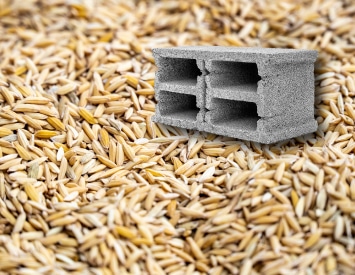
Key Benefits of RHA Concrete
To better understand the transformative potential of rice husk ash concrete, we take a look at six of its key advantages:
Eco-Friendly Resource Utilization
Rice husks, often discarded as agricultural waste, are being repurposed into RHA, a sustainable alternative for cement. This process not only reduces landfill waste but also transforms a problem into an opportunity.
By utilizing RHA, we can enhance resource efficiency in construction, showcasing a creative approach to resource management that aligns with global sustainability goals.
Lower Carbon Footprint
Cement production is responsible for approximately 7% of global CO2 emissions. By incorporating RHA, we can significantly reduce the amount of cement required in concrete mixes. This directly lowers carbon emissions and contributes to global sustainability efforts. The use of RHA can cut emissions associated with concrete production, promoting a greener construction industry.
Enhanced Durability and Strength
Research indicates that RHA concrete exhibits superior properties, including improved compressive strength, abrasion resistance, and moisture barrier capabilities. These enhancements lead to longer-lasting structures that require less maintenance, benefiting both builders and the environment. The increased durability of RHA concrete can reduce the need for repairs and replacements, ultimately lowering lifecycle costs for projects.
Cost-Effective Alternative
Traditional methods for determining concrete strength can be costly and time-consuming. By leveraging AI-driven predictive models, researchers have made it easier and cheaper to assess RHA concrete’s performance. This innovation provides builders with a more economical option while maintaining high quality. The reduction in material costs and labor associated with RHA concrete can lead to significant savings on construction projects.
Reduced Drying Shrinkage
Drying shrinkage is a significant factor in concrete durability. This advancement can lead to fewer repairs and extended lifespans for buildings and infrastructure. By minimizing shrinkage, RHA concrete also improves the aesthetic quality of finished surfaces, reducing cracks and imperfections.
Promotion of Sustainable Practices
Adopting RHA concrete signifies a commitment to sustainable construction practices. As the industry faces growing demands for eco-friendly materials, RHA encourages a shift towards a more sustainable future. This innovation inspires other sectors to explore similar waste repurposing strategies, fostering a culture of sustainability in building practices. By setting an example, the adoption of RHA can drive further advancements in sustainable construction methods.