HomeNewsRedefining Engineering Through Transformative AI Systems
Redefining Engineering Through Transformative AI Systems
The future is here, and it’s quietly transforming engineering. The age of AI is upon us, and it works faster than we ever could, and the challenge is clear: we must learn to build alongside it. Here are four ways AI is shaking up modern engineering, and what’s exciting about each of them.
The future is here, and it’s quietly transforming engineering. The age of AI is upon us, and it works faster than we ever could, and the challenge is clear: we must learn to build alongside it. Here are four ways AI is shaking up modern engineering, and what’s exciting about each of them.
Rather than competing with engineers, AI is emerging as a collaborator, quietly reshaping how technical professionals design and build the structures around us. It helps them work faster and make smarter choices through the use of smart and adaptive systems, predictive and preventive maintenance, simulation-driven design and material innovation, as well as process optimization and decision support. In this article, we’ll look at four ways AI is transforming engineering today and why it matters to engineers and technical professionals in the future.
Smart and Adaptive Systems
Unlike traditional systems that stick to fixed routines, AI-powered smart and adaptive systems learn as they operate. They observe what is happening and adjust in real time, rather than simply following preset rules. This approach is transforming every field of engineering by improving performance and reliability. Engineers and technical professionals benefit from this because it helps them manage complex systems and focus on higher-level decisions rather than routine monitoring.
Civil & Structural Engineering: AI-powered systems can watch the condition of buildings and roads in real time. They detect cracks, unusual vibrations, and other anomalies early on, which ensures that repairs or replacements are carried out in a timely manner. In case of emergencies, they can adjust traffic signals automatically to prevent congestion, which can help keep cities safer and more efficient. Mechanical & Industrial Engineering: AI monitors machines and factory equipment continuously. It adjusts operation speeds, temperatures, and workloads to prevent breakdowns, accidents, and save energy. Electrical & Energy Engineering: AI adjusts electricity distribution, lighting, and HVAC systems in real time. This reduces energy waste and optimizes performance.
Aerospace & Automotive Engineering: AI adapts flight controls, vehicle engine settings, and navigation systems in real time to improve safety, comfort and fuel economy.
Materials & Chemical Engineering: AI adjusts production processes in real time to control temperature, pressure, and chemical composition. It ensures consistent quality, safety, and reduces waste.
Environmental & Sustainability Engineering: AI monitors water, air, and waste systems. It adapts treatment processes and resource use to maintain environmental safety and efficiency.
How EIT prepares students for Smart and Adaptive Systems:
As AI-powered systems become part of everyday infrastructure, engineering education must evolve too, and this is where EIT steps in. EIT prepares future engineers to not simply work with smart control systems through their Data Comms & Industrial IT courses, but to understand how they think and learn. Students are introduced to AI-driven control concepts alongside traditional engineering fundamentals, thus helping them see technology as a new tool rather than a threat.
EIT’s Data Comms & IT Courses
Predictive and Preventive Maintenance
Unlike traditional maintenance that reacts only after a machine breaks, AI-powered predictive and preventive maintenance monitors equipment continuously. It tracks vibrations and stress to spot potential problems early. This approach is extending the life of machines. Engineers and technical professionals benefit from this because it lets them identify issues early, minimize downtime, and extend the operational life of equipment.
Civil & Structural Engineering: AI keeps an eye on structures all the time. It watches for small shifts, material wear, and stress in key parts and predicts when maintenance is needed.
Mechanical & Industrial Engineering: AI watches factory machines, motors, and conveyor belts. It detects unusual vibrations and predicts when parts might fail, allowing these parts to be repaired or replaced before a breakdown occurs.
Electrical & Energy Engineering: AI monitors generators, transformers, and electrical grids. It tracks performance, irregularities, and also predicts failures before they happen. Engineers can schedule maintenance ahead of time, preventing outages and improving energy efficiency.
Aerospace & Automotive Engineering: AI keeps track of engines, braking systems, and navigation controls in vehicles and aircraft. It notices early signs of wear or malfunctions and predicts when maintenance is needed. This helps avoid accidents and ensures vehicles stay reliable and safe.
Materials & Chemical Engineering: AI watches reactors, mixers, and other production equipment. It monitors temperature and chemical reactions to spot problems early. Preventive maintenance ensures consistent product quality and reduces waste and costly downtime.
Environmental & Sustainability Engineering: AI monitors water treatment plants, air filters, and waste management systems. It predicts when pumps and other treatment processes might fail.
How EIT prepares students for Predictive and Preventive Maintenance:
At EIT, students don’t just learn how predictive maintenance works; they learn to think in partnership with AI. Through EIT’s Industrial Automation, Instrumentation and Process Control courses, students practice reading data, understanding alerts, and making smart decisions so they can use technology effectively without relying on it blindly.
Simulation-Driven Design and Materials Innovation
Unlike traditional design methods that rely on trial and error, AI-powered simulation and materials innovation allow engineers to test systems and materials virtually before anything is built. This approach speeds up development, improves overall quality, and gives engineers and technical professionals greater confidence by helping them identify potential issues before real-world implementation.
Civil & Structural Engineering: AI simulates how buildings, bridges, and roads respond to loads and natural events. It predicts material behavior and helps engineers and technical professionals choose the strongest materials to design safer and longer-lasting structures.
Mechanical & Industrial Engineering: AI tests machines, motors, and production lines virtually before they are built. It predicts wear and performance under different conditions, and this allows engineers and technical professionals to optimize designs and reduce downtime in factories.
Electrical & Energy Engineering: AI simulates electrical grids, generators, and circuits to see how they respond to varying loads and faults. It helps engineers and technical professionals select the best components and materials for efficient systems.
Aerospace & Automotive Engineering: AI models aircraft vehicle systems to predict performance under stress. It helps engineers and technical professionals in choosing the right materials in designing automotives and aircraft for passenger safety.
Materials & Chemical Engineering: AI tests chemical reactions and material behavior in virtual environments. It helps engineers and technical professionals optimize formulations and production for higher quality and reduced waste.
Environmental & Sustainability Engineering: AI simulates water, air, and waste systems to predict how materials and processes perform over time. It helps engineers and technical professionals select sustainable materials and design processes that maximize efficiency while protecting the environment.
How EIT prepares students for Simulation-Driven Design and Materials Innovation:
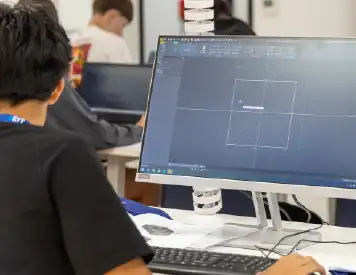
At EIT, students gain hands-on experience with simulation tools while also learning how to check inputs and interpret results critically. Through EIT’s Professional Certificate of Competency in Digital Twins and Simulation Monitoring, students get hands-on practice with real simulation and modeling software, including tools for 3D visualization and data analysis. This approach ensures graduates can use simulation effectively, combining smart virtual testing with sound engineering judgment to create designs that are both innovative and reliable.
Process Optimization & Decision Support
Unlike traditional methods that rely on manual analysis and fixed procedures, AI-powered process optimization and decision support continuously analyze operations and workflow data. It identifies inefficiencies and recommends the best course of action. This approach improves productivity and ensures that engineering processes run as efficiently as possible. Engineers and technical professionals benefit from this, as it helps them optimize operations and avoid costly mistakes before they happen.
Civil & Structural Engineering: AI helps engineers and technical professionals plan construction projects and schedule maintenance efficiently. It analyzes traffic patterns and material use to support smarter decisions and keep projects on track.
Mechanical & Industrial Engineering: AI monitors factory operations and production lines to spot inefficiencies. It guides engineers and technical professionals in adjusting processes and improves overall productivity.
Electrical & Energy Engineering: AI analyzes energy demand and system performance in real time. It helps engineers and technical professionals make informed decisions on load balancing, maintenance scheduling, and energy optimization.
Aerospace & Automotive Engineering: AI supports engineers and technical professionals by evaluating design and operational data. It helps optimize manufacturing schedules and make informed decisions for vehicle and aircraft performance.
Materials & Chemical Engineering: AI tracks production processes and chemical reactions. It helps engineers and technical professionals adjust parameters and maintain high-quality outputs.
Environmental & Sustainability Engineering: AI analyzes resource usage and system efficiency. It guides engineers and technical professionals in making decisions that reduce waste and design more sustainable processes.
How EIT prepares students for Simulation-Driven Design and Materials Innovation:
Through EIT’s Industrial Automation, Instrumentation and Process Control courses, students gain hands-on experience with digital twins and materials modeling tools; they develop the skills to check data critically, interpret results accurately, and know when physical testing is needed. This approach ensures graduates can use advanced tools effectively while applying sound engineering judgment, creating materials and designs that are both innovative and reliable.
AI is transforming engineering through smart and adaptive systems, predictive and preventive maintenance, virtual simulations and breakthrough materials, and process optimization and decision support. But it’s not here to replace us; it is here to work alongside us. Engineers and technical professionals guide these tools, turning raw data into practical, real-world solutions. The future is not ahead of us. It is already here, and AI is helping us shape it.
This article was published January 27th, 2026 and the content is current as at the date of publication.