Technology is growing, with 3D printing being no exception. What started out with printing toys and trinkets has morphed into bigger ideas with massive potential for engineering and the environment.
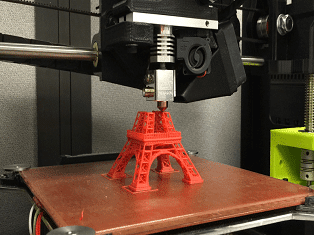
Since Chuck Hull created the first 3D printer way back in 1983, it’s clear that advancements in this technology have grown at a rapid rate. Also known as additive manufacturing (AM), this technology is having a significant impact on the future of engineering and design across all sectors.
Besides small-time hobbyist printing trinkets for sale online and at flea markets, or the professional printer helping artists create their next big installation, 3D printing is also changing the way industry giants construct and design their products. And the latter is already reflected in current engineering degrees.
In his article, Making It Work: 3D Printing and Engineering, Adam Kohut explains that by using 3D printing, engineers can create new prototypes (even those with complex internal structures and geometries) address problems, and find solutions, without ever leaving their working environments.
The right 3D printer, noted Kohut, holds the potential to shrink development time from months to days, encourages collaboration between peers, and enables the creation of rapid prototypes and end-use parts – ensuring that projects are finished on deadline, within budget, and bring about desired results.
It’s also predicted that as this transformative technology grows so too will the engineering degree.
Not only is 3D printing proving how important it is to engineering by having parts created on-site and to exact requirements, but it has also reduced the time it takes for engineers to design and test prototypes—meaning new innovations can be introduced to the market at a faster rate. Suffice it to say, that printing technology has truly captured the imagination of not only the public and businesses but also that of engineers.
And rightfully so, especially when considering that 3D-printed buildings are increasingly becoming a reality in a few parts of the world.
World’s Tallest 3D Printed Building
Dar Al Arkan, a real estate development company located in Riyadh, Saudi Arabia just revealed their first project: a three-story 3D printed villa made with an AM construction printer from market leader COBOD International. The project is in Shams Al Riyadh, just northwest of the city Riyadh, the capital of Saudi, in a new development project of 12 million m2 of land, which is part of Saudi Arabia’s Vision 2030.
The Kingdom’s Vision 2030 is a sustainable vision for the future of Saudi Arabia with sustainability at the heart of everything the Kingdom does, from policy development and investment to planning and infrastructure.
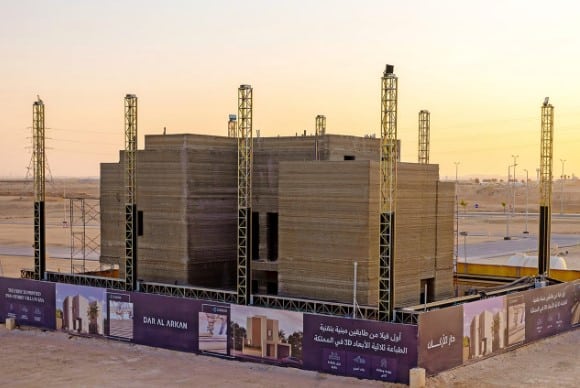
Wael Al Hagen, 3D construction printing project manager from Dar Al Arkan said: “Our efforts focused on developing the kingdom’s real estate sector by integrating the latest trends and technologies, drawn from global best practices to enhance our industry locally and deliver on the objectives of vision 2030. Introducing 3D construction printing enables us to focus on greater flexibility of design, strengthen productivity and achieve higher cost efficiency”.
Engineers and designers say 3D printing could herald a green industrial revolution—but how realistic are their claims?