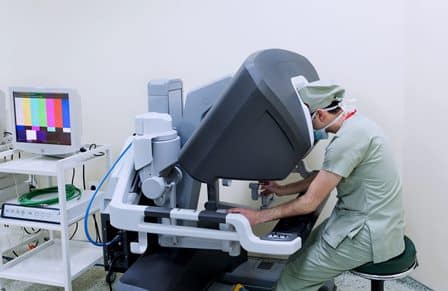
This course is designed to provide a practical and comprehensive introduction to the clinical engineering sub-specialty of biomedical engineering. This course covers the principles of operation, maintenance, and application of key medical equipment used in general and specialist healthcare settings, including radiology, cardiology, neurology, and critical care. Students will also gain a working understanding of human anatomy and physiology to support effective communication and decision-making in clinical environments.
Course Benefits:
After completing this course, you will be able to:
This course offers an intensive, practical, and interactive learning experience that covers foundational knowledge, common equipment, applications, and trends in the field of clinical engineering.
Throughout the 12-week program, students will explore equipment used in hospital departments including, operating rooms, intensive care units, medical imaging, and laboratories. Topics include fault detection, safety standards, service protocols, and emerging technologies in medical imaging and diagnostics. By the end of the course, students will be able to assess equipment requirements, support installation and maintenance, and identify trends in medical equipment innovation. This course is ideal for engineers, technicians, and healthcare professionals seeking to enhance their technical competencies and career prospects in the clinical/biomedical field.
The course is composed of 12 modules. These modules cover a range of aspects to provide you with maximum practical coverage in the field of Biomedical Engineering.
To obtain a certificate of completion for EIT’s Professional Certificate of Competency, students must achieve a 65% attendance rate at the live, online fortnightly webinars. Detailed summaries/notes can be submitted in lieu of attendance. In addition, students must obtain a mark of 60% in the set assignments which could take the form of written assignments and practical assignments. Students must also obtain a mark of 100% in quizzes. If a student does not achieve the required score, they will be given an opportunity to resubmit the assignment to obtain the required score.
For full current fees in your country go to the drop down filter at the top of this page or visit the Fees page.
Learn more about payment methods, including payment terms & conditions and additional non-tuition fees.
Our courses are delivered by experienced engineers and technical experts from around the world. Many have tackled real-world engineering challenges and bring practical, applied knowledge directly into the classroom.
We draw from a global pool of instructors and lecturers across our organisation. Explore our full team of expert educators on the Instructors & Lecturers page here.
Please note: Not all lecturers and instructors listed on this page will teach every course. The team teaching your course will be confirmed as part of your course enrolment.
You are expected to spend approximately 5-8 hours per week learning the course content. This includes attending fortnightly webinars that run for about 90 minutes to facilitate class discussion and allow you to ask questions. This program has a 65% attendance requirement in the live webinars in order to graduate from the program. If you are unable to attend the live webinars, you have the option of watching the recording of completed webinars and sending a summary of what you have learnt from the webinar to the Learning Support officer. The summaries go towards your attendance requirement for the program.
This program is run online on an intensive part-time basis and has been designed to fit around full-time work. It will take three months to complete.
We understand that sometimes work commitments and personal circumstances can get in the way of your studies, so if at any point you feel that you are struggling with the pace of the course or finding a particular module challenging, you are encouraged to contact your designated Learning Support Officer for assistance.

Please ensure you book your place at least one week before the course start date.
If the course is not currently scheduled, please contact us. We can let you know when it will be offered next, or explore the possibility of creating a special intake if there is a group.