Professional Certificate of Competency in Product Design for Engineering Professionals

Course Duration
Duration
  • 3 Months
Course Study
Study Mode
  • Online
  • Mechanical Engineering
Course Location
Location
  • Online
Course Code
Course Code
CAE
Course Intakes
Intakes
  • 1 September 2026
Course Type
Course Type
  • Professional Certificate
  • Mechanical Engineering
Course Fees
Fees

Course Overview

The Professional Certificate of Competency in Product Design for Engineering Professionals equips engineers, technicians, and technologists with the expertise to create customer-focused, cost-effective, sustainable, and technology-driven products.

The course covers key topics, including design thinking and user-centric design, core design principles, and the selection of materials and manufacturing processes to meet design requirements.

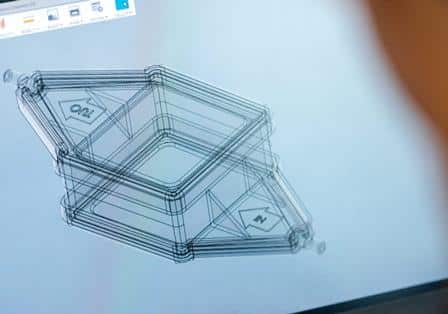
Participants will gain hands-on experience with computational tools such as Computer-Aided Design (CAD), Computer-Aided Engineering (CAE), and additive manufacturing for prototyping. The course also incorporates emerging technologies, including the Internet of Things (IoT), artificial intelligence (AI) in generative design, and virtual and augmented reality, to optimize and enhance the design process.

By the end of the course, participants will be industry-ready to design products and components for diverse sectors, including manufacturing, mining, agriculture, and consumer goods. This program is ideal for engineers, technicians, and technologists seeking to upskill, reskill, or transition into design-focused roles.

Course Benefits

  • Receive a Certificate of Completion from EIT.
  • Learn from well-known faculty and industry experts from around the globe.
  • Flexibility of attending anytime from anywhere, even when you are working full-time.
  • Interact with industry experts during the webinars and get the latest updates/announcements on the subject.
  • Experience global learning with students from various backgrounds and experience which is a great networking opportunity.

After completing this course, you will be able to:

  • Understand the techniques for collecting, evaluating, and interpreting client needs for successful product development.
  • Convert client inputs into innovative conceptual designs, applying a variety of design principles.
  • Understand how material and manufacturing process choices influence the efficiency, performance, and sustainability of the design.
  • Gain hands on experience in using CAD, and CAE tools to design, model, and analyze product components.
  • Understand and integrate modern technologies like IoT, AI-driven generative design, and augmented reality to create efficient and cost-effective designs.

Course Details

The course is composed of 12 modules. These modules cover a range of aspects to provide you with maximum practical coverage in the field of Product Design for Engineers

Module 1: – Design as a process
• Historical evolution of product design
• Types of design projects
• Product design process
• Contribution of design to humanity and the environment
• Case studies of successful and unsuccessful product design

Module 2: Design Thinking
• Six steps of design thinking
• Product research methods
• Brainstorming guidelines
• Analytical Hierarchy process
• Translating needs to requirements

Module 3: Human centric design

• Four phases of human centric design
• Incorporating user feedback to product development
• Ergonomics and Usability
• Universal and Inclusive design
• Human centric design case studies

Module 4: Concept development and selection

• Conceptual design process model
• Hand sketching as concept generation tool
• Functional decomposition
• Concept screening – Pugh method
• Concept scoring and selection criteria

Module 5: Engineering design principles

• Design for manufacture
• Design for assembly
• Design for sustainability
• Design for reliability
• Design for quality

Module 6: – Engineering materials in design I – Ferrous and Nonferrous Metal alloys

• Types of steels
• Aluminium alloys
• Magnesium alloys
• Copper and nickel alloys
• Material selection based on design requirements

Module 7: Engineering materials in design II – Polymer, Ceramics and Composites

• Thermoplastic and thermosets
• Elastomers and Rubber
• Biodegradable plastic
• Ceramic and glass
• Types of composites
• Material selection based on design requirements

Module 8: Manufacturing processes and design considerations-I

• Casting
• Extrusion
• Powder metallurgy
• Machining and cutting
• Joining techniques

Module 9: Manufacturing processes and design considerations-II

• Tolerances and fits
• Cost implications of manufacturing choices
• Process capabilities
• Recycling and Reuse – Remanufacturing

Module 10: Computational tools in product design

• Overview of Computer Aided Design (CAD) and Computer Aided Engineering (CAE)
software
• Part modelling and assemblies in CAD
• Finite element analysis (FEA) in product design
• Generative design and AI in product design

Module 11: Additive manufacturing for product design prototyping

• Fundamentals of rapid prototyping
• Liquid based rapid prototyping systems
• Solid based rapid prototyping systems
• Powder based rapid prototyping systems
• Rapid prototyping data format

Module 12: Emerging Technologies in Product Design

• Integration of Internet of Things (IoT) in product design
• Designing products for Industry Revolution 5.0
• Digital twins, Virtual Reality/Augmented Reality in Product Design
• Case study on emerging technologies in product design


To obtain a certificate of completion for EIT’s Professional Certificate of Competency course, students must achieve a 65% attendance rate at the live, online fortnightly webinars.  Detailed summaries or notes can be submitted in lieu of attendance.  In addition, students must obtain a mark of 60% in the set assignments which could take the form of written assignments and practical assignments. Students must also obtain a mark of 100% in quizzes.  If a student does not achieve the required score, they will be given an opportunity to resubmit the assignment to obtain the required score.

For full current fees in your country go to the drop down filter at the top of this page or visit the Fees page.

Payment Methods

Learn more about payment methods, including payment terms & conditions and additional non-tuition fees.

Our courses are delivered by experienced engineers and technical experts from around the world. Many have tackled real-world engineering challenges and bring practical, applied knowledge directly into the classroom.

We draw from a global pool of instructors and lecturers across our organisation. Explore our full team of expert educators on the Instructors & Lecturers page here.

Please note: Not all lecturers and instructors listed on this page will teach every course. The team teaching your course will be confirmed as part of your course enrolment.

You are expected to spend approximately 5-8 hours per week learning the course content. This includes attending fortnightly webinars that run for about 90 minutes to facilitate class discussion and allow you to ask questions. This program has a 65% attendance requirement in the live webinars in order to graduate from the program.  If you are unable to attend the live webinars, you have the option of watching the recording of completed webinars and sending a summary of what you have learnt from the webinar to the Learning Support officer.  The summaries go towards your attendance requirement for the program.

This program is run online on an intensive part-time basis and has been designed to fit around full-time work. It will take three months to complete.

We understand that sometimes work commitments and personal circumstances can get in the way of your studies, so if at any point you feel that you are struggling with the pace of the course or finding a particular module challenging, you are encouraged to contact your designated Learning Support Officer for assistance.

Please ensure you book your place at least one week before the course start date.

If the course is not currently scheduled, please contact us. We can let you know when it will be offered next, or explore the possibility of creating a special intake if there is a group.

Hear from our students

  The delivery methodology and the information available in the e-library can’t be beaten. The other important aspect of online education is recorded lectures. You can review the tutorial and lessons on repeat when you need to understand the concept.  
M Masemola, South Africa
  What I liked most about the course and EIT is the flexibility is offered regarding education. It gave me the opportunity to study and work full-time.  
C Groenewald, South Africa
  I enjoyed interacting with students all around the world, and seeing how the principles I have learned applies to them as well.  
S Zeelie, South Africa
  My line of work requires me travel quite often. I could not attend every class due to my remote locations, but still I could recap and stay on top of the study material thanks to the recordings. Also, all the Instructors were world class.  
P Pretorius, South Africa

Helpful Information

Why EIT?

We are one of the only institutes in the world specializing in engineering.

Industry Orientated Programs Icon Industry-Oriented Programs
Australian Accredited Icon World-Class Australian Accredited Education
Leaders in Industry Icon Industry Experienced Lecturers
Technology Careers Unique Delivery Model
Engineering Institute of Technology