Almost a year after the inauguration of its Botswana Learning Hub, the Engineering Institute of Technology (EIT) continues to boost its presence in South Africa with a week-long series of engagement activities that connected students, graduates, and professionals alike.
From an inspiring Engineers Tech Talk to a vibrant Open Day and site visits to some of Botswana’s key industries, the events showcased EIT’s growing footprint and commitment to developing engineering talent on the ground, proof of what happens when education and ambition come alive.
Learning Beyond the Classroom
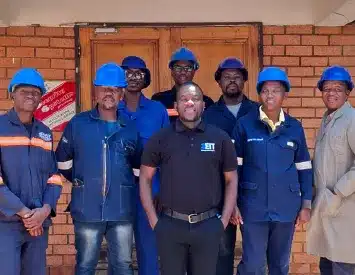
Tours to Coca-Cola, Medical Devices Botswana, and Botswana Meat Commission offered a behind-the-scenes look at large-scale plant operations and the critical role EIT plays when it comes to safety, productivity, and innovation.
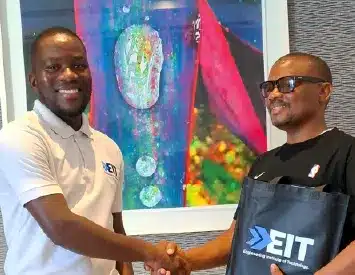
“It was great to see firsthand the amazing work of our students. We often don’t fully realize our impact until we hear directly how EIT has positively influenced their lives, both personally and professionally,” said Recruitment Coordinator Berry Dikotla.
Bernard Ipotseng, EIT 52857WA Advanced Diploma of Plant Engineering (DPE) alumnus and Excellence Awardee, shared how both his education and recognition gave him leverage. Now part of Botswana Power Corporation’s esteemed engineering committee, Bernard looks forward to ultimately getting his bachelor’s degree.
“I want to build my confidence. I don’t want to be limited just because I came from a rural place.”
Tech Talks and Campus Engagement
At the heart of EIT Week in Botswana was the inaugural Engineers Tech Talk, which made space for meaningful dialogue between students, prospective learners, and industry professionals.
EIT Student Ambassador Alex Galebonwe, who holds a 52886WA Advanced Diploma of Industrial Automation Engineering (DIA) and 14 years of solid, hands-on experience as a maintenance technician for the Botswana Telecommunications Corporation, talked about practical applications of sensors, actuators, and control technologies in modern industrial settings.
Real-world scenarios, such as conveyor systems and robotic packaging lines, were used to demonstrate the seamless interaction between sensing, decision-making, and action.