As climate-related disasters become more frequent and severe, engineers across Australia are leading efforts to protect communities and infrastructure. This article explores how professionals in electrical and mechanical engineering are developing systems for early bushfire detection, grid resilience, and sustainable energy storage. Their work highlights the crucial role of innovation, continuous certification, and interdisciplinary expertise in building a climate-resilient future.
Detecting and Managing Bushfires Smarter
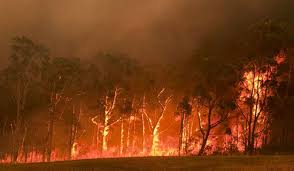
Bushfires remain one of Australia’s most devastating natural threats. Engineers are now using cutting-edge tools to detect, monitor, and respond to fires faster and more effectively than ever before.
One standout initiative is Pano AI, a wildfire detection platform co-founded by engineer Arvind Satyam. Pano AI uses ultra-high-definition cameras paired with artificial intelligence to detect smoke and fire in real time.
These AI systems, trained on billions of images, can identify smoke up to 20 kilometers away, even in challenging visual conditions. Already deployed in several Australian states, this technology offers a vital early-warning system that can dramatically improve response times and reduce property loss.
At the Australian National University, Professor Marta Yebra and her team are leading the Bushfire Research Centre of Excellence. They are integrating satellite data, Internet of Things (IoT) sensors, drones, and advanced analytics to assess fire risk conditions across landscapes. This research is now being applied to support fire services in both prevention and emergency response.
In Victoria and New South Wales, CSIRO partnered with the Bureau of Meteorology to roll out AQFx, a system that models and predicts smoke movement from bushfires. This tool helps emergency services and health departments prepare for and respond to smoke-related hazards, ensuring public safety and better air quality management.
Together, these initiatives demonstrate how modern engineering, when informed by continuous learning and cross-sector collaboration, is transforming how Australia addresses bushfire threats.
Strengthening Electrical Infrastructure During Disasters
Electrical systems are particularly vulnerable during natural disasters, especially bushfires and heatwaves. Australian engineers are actively working to reduce risks and improve power reliability through advanced grid technologies and infrastructure upgrades.
One of the major breakthroughs in fire-prone regions is the deployment of Siemens Fusesaver, an ultra-fast circuit breaker capable of isolating electrical faults in under 10 milliseconds. Traditional breakers can take up to a second, significantly increasing the risk of fire ignition from faulty lines.
The Fusesaver not only improves fire safety but also supports remote control and diagnostics, reducing the need for field crews during emergencies.
At a broader scale, governments and grid operators are investing in large-scale battery storage systems to boost energy resilience. The Waratah Super Battery in New South Wales, for example, is being developed to act as a “shock absorber” for the grid, absorbing demand spikes and maintaining stability during heatwaves or bushfire-related outages.
Engineers involved in these projects are required to stay current in battery technologies, power electronics, and grid management through certifications and industry training.
These projects underscore the growing importance of electrical engineers in disaster mitigation and response, where split-second decisions and smart systems can make the difference between safety and catastrophe.
Materials and Mechanical Design for Resilience
Mechanical engineering professionals and materials scientists are also contributing significantly to disaster preparedness by improving the built environment’s ability to withstand climate extremes.
At the University of New South Wales, researchers have developed a new type of fire-retardant paint that can shield structures from intense heat. Led by Professor Guan Yeoh, the team designed a coating that is non-toxic and can be easily applied to homes and buildings.
When exposed to fire, it forms a char layer that insulates the underlying structure, delaying damage and providing critical time for evacuation or firefighting.
Meanwhile, engineering consultancy Covey Associates, in collaboration with Cedaryn, developed Inferno, a bushfire modeling software that predicts fire impact and radiant heat levels across different building zones.
This tool is now used by urban planners, fire agencies, and construction firms to identify high-risk areas and implement more effective design standards.
These developments are examples of how mechanical engineering intersects with public safety and environmental resilience. By continuously improving design standards and material performance, engineers are making homes, infrastructure, and entire communities safer.

Engineering Leadership in Climate Adaptation
Australia is home to numerous engineering professionals whose leadership is shaping the country’s response to climate challenges. Their influence extends beyond technical expertise to strategic planning, policy development, and cross-industry collaboration.
Merryn York, former Chief Executive of Powerlink Queensland and now a senior leader at AEMO (Australian Energy Market Operator), has helped drive national efforts to modernize energy systems and prepare the grid for extreme climate conditions. Her engineering background informs policy decisions on renewable integration, system reliability, and long-term infrastructure resilience.
At South East Water, Managing Director Lara Olsen, a chemical engineer, is pioneering the integration of smart water networks and on-site battery storage. Her work ensures that essential services continue to operate during bushfires and heatwaves, especially in remote or high-risk areas.
Mechanical and energy engineer Morley Muse, co-founder of iSTEM, is advancing research in renewable energy storage while also advocating for diversity in engineering. Her work helps ensure that the future of climate resilience includes diverse voices and equitable access to education and leadership.
These professionals exemplify the importance of lifelong learning, not just to advance individual careers but to lead change at a national and global level. Their commitment to ongoing certification and professional development allows them to navigate complex systems and develop real-world solutions.
Certification and Skills for the Future
The technologies driving climate resilience are evolving rapidly, making continuous certification and upskilling essential for engineering professionals.
From grid analytics and energy storage to robotics and environmental modeling, engineers are being called upon to learn new tools, languages, and frameworks. Programs focusing on power systems design, renewable energy, data-driven disaster modeling, and smart infrastructure are more accessible than ever, with short courses and micro-credentials offered online and through industry partnerships.
Professional bodies such as Engineers Australia, IEEE, and the Australian Power Institute offer pathways for engineers to stay current. Employers are also investing in internal training programs, especially in areas related to automation, remote sensing, and AI for environmental applications.
Ultimately, resilience is not just about infrastructure, it is also about the knowledge and capabilities of the professionals behind it. Engineers who embrace continuous learning will remain at the forefront of disaster preparedness and climate adaptation, ensuring that Australia’s systems are not only reactive but future-ready.
References
5 ways technology will change the way we fight bushfires
Aussie bushfires: Earth’s system at risk to disrupt climate
Improving Australian climate change adaptation strategies
*Article written by Hayden Horner
This article was published September 16th, 2025 and the content is current as at the date of publication.
Back to news