


Webinar details
The Finite Element Method (FEM), or Finite Element Analysis (FEA), is a powerful numerical technique used to solve complex engineering problems involving structures, heat transfer, fluid flow, vibrations, electromagnetics, and other physical phenomena. It originated from the need to solve complex elasticity and structural analysis problems in civil, mechanical, and aerospace engineering. It enables engineering professionals to predict the behavior of components and systems under various loading conditions before physical prototypes are manufactured.
With the advancement of computational technology, finite element procedures are now an important and indispensable part of engineering analysis and product development. Industries such as aerospace, automotive, civil engineering, manufacturing, biomedical engineering, and energy extensively use FEM software to improve product performance, reduce development costs, shorten design cycles, and enhance safety and reliability.
Finite Element Analysis (FEA) software divides complex geometries into smaller elements connected at nodes, allowing mathematical equations to approximate the behavior of the entire structure. Modern FEA packages integrate seamlessly with Computer-Aided Design (CAD) systems, enabling engineering professionals to analyze digital models, evaluate multiple design alternatives, and optimize products efficiently.
Industries such as aerospace, automotive, civil engineering, manufacturing, and biomedical engineering worldwide rely on commercial FEA software such as ANSYS, Abaqus, COMSOL, NASTRAN, Altair HyperWorks, and NISA to perform structural, thermal, dynamic, fatigue, and multiphysics analyses. Engineering professionals equipped with FEM knowledge are highly sought after across research institutions and manufacturing industries.
This webinar aims to introduce the fundamental principles of the Finite Element Method, explain the complete FEA workflow, discuss industrial applications, demonstrate integration with CAD tools, and highlight emerging trends in simulation-driven engineering.
- The webinar will be recorded and will be sent out to registered attendees afterwards.
- A certificate of attendance will be provided to attendees who request one near the end of the live webinar session.
- Please note: the time stated on this event is in UTC. You will need to convert this to your own time zone.
Key takeaways from this webinar
- Understand the basic workflow of Finite Element Analysis.
- Understand the role of meshing and boundary conditions in obtaining accurate simulation results.
- Understand the integration of CAD and FEA in modern product development.
- Gain insights into industrial applications of FEM across multiple engineering sectors.
- Explore various commercial FEA software packages and emerging trends in simulation-driven engineering
Related courses
This multi-disciplinary webinar/topic relates to our schools of Mechanical, Electrical, and Instrumentation and Process Control Engineering and is particularly found in the courses below:
- Graduate Certificate in Mechanical Engineering
- Graduate Diploma of Engineering (Mechanical)
- Master of Engineering – Applied Research (Mechanical)
- Master of Engineering (Mechanical)
- 52884WA Advanced Diploma of Mechanical Engineering Technology
- Professional Certificate of Competency in Mechanical Engineering
- 52914WA Graduate Certificate in Mechatronics
- Graduate Diploma of Engineering (Industrial Automation)
- Online – Master of Engineering (Industrial Automation)
- 52886WA Advanced Diploma of Industrial Automation Engineering
- Bachelor of Science (Mechanical Engineering)
- Graduate Certificate in Power Engineering
- Graduate Certificate in Power System Analysis and Design
- Graduate Diploma of Engineering (Electrical Systems)
- Master of Engineering – Applied Research (Electrical Systems)
- 52894WA Advanced Diploma of Applied Electrical Engineering (Renewable Energy)
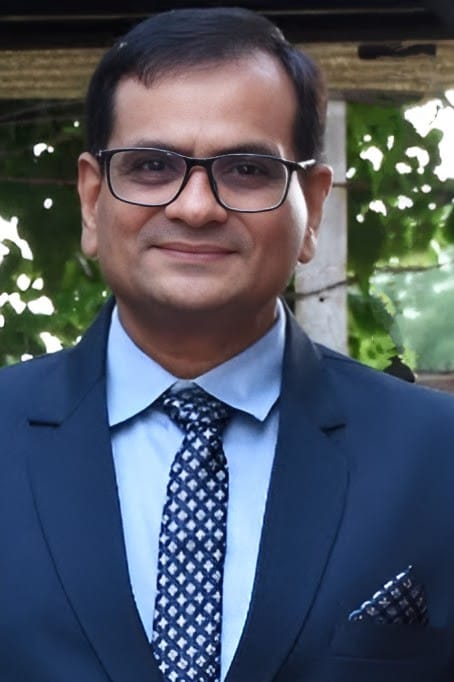
Dr. Pratik Shah, EIT Lecturer
Dr. Pratik Shah is presently working as an Associate Professor in the Department of Mechanical Engineering and Head of the Aeronautical department at Sardar Vallabhbhai Patel Institute of Technology, Vasad. He holds a Ph.D. degree in Mechanical Engineering. He has over 25 years of teaching experience, over 6 years of research experience and 2 years of industrial experience. He has completed a Masters degree in CAD/CAM from Gujarat University and Ph.D. from CHARUSAT. He has published around 30 research papers in various National/International Journals and Conference proceedings.
He is also a reviewer for journals of international repute. He has supervised one Ph.D. scholar and currently has two research scholars pursuing their Ph.D. under his guidance. He is actively involved in supervising postgraduate projects. He has been granted two patents for his inventions titled “Multicutter Groove Cutting Machine” and “Two-Piece Plus Type Cruci-trap Welded Joint (CTWJ)”. He is regularly invited to deliver expert talks at various universities. Mr. Shah is a member of several professional bodies, including ISTE and IIW. His areas of interest include manufacturing, welding, and finite element analysis.